
Table of Contents
- Why Regular Cleaning Matters for Made-to-Measure Vertical Blinds
- What You'll Need Before You Start
- How to Dust Vertical Blinds Safely
- Spot-Cleaning Marks and Stains on Fabric Slats
- How to Wash Vertical Blinds While Attached
- How to Remove Vertical Blinds from Track for Deep Cleaning
- How to Remove Mould from Vertical Blinds
- Preventing Water Marks, Shrinkage, and Warping
- Frequently Asked Questions
Last Updated: October 10, 2026
Why Regular Cleaning Matters for Made-to-Measure Vertical Blinds
Made-to-measure vertical blinds are a significant investment in your home. They're custom-fitted to your windows, which means they're built to last. But that durability depends on proper care.
Dust and dirt accumulate on fabric slats over time. This buildup traps moisture and can lead to mould and mildew, especially in kitchens and bathrooms. Regular cleaning prevents damage and keeps your blinds looking fresh.
The good news: learning how to clean made to measure vertical blinds doesn't require special skills or expensive products. A simple routine protects your investment and extends the life of your blinds by years.
At Just Blinds, we recommend a maintenance schedule that matches your home's environment. Homes with pets, children, or high humidity need more frequent cleaning. A dry, low-traffic space might need attention just once or twice a year.
What You'll Need Before You Start
Tools and Materials for Routine Cleaning
Gather these items before you begin. You probably have most of them already.
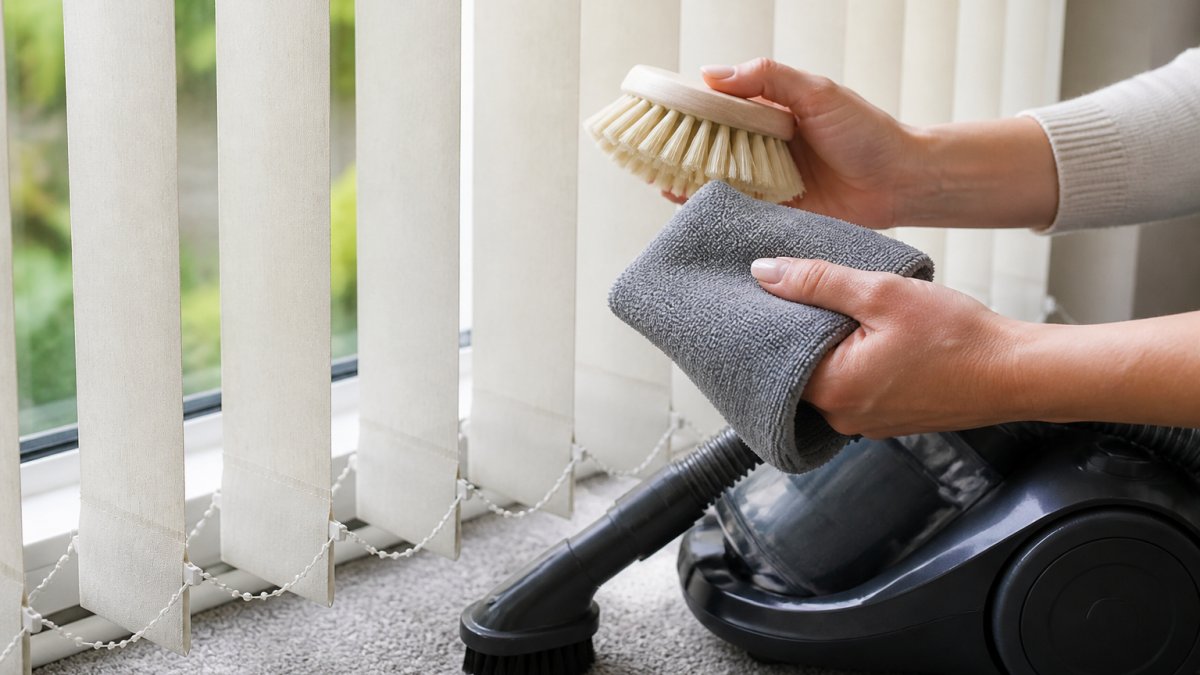
Essential tools:
- Soft-bristled brush or feather duster
- Vacuum cleaner with brush attachment
- Microfibre cloth
- Sponge (non-abrasive)
- Mild detergent or dish soap
- Lukewarm water
- Clean container or bucket
- Dry towels
For deeper cleaning:
- Soft-bristled hand brush
- Second clean cloth for rinsing
- Newspaper or plastic sheet (to protect your floor)
The right tools make cleaning faster and safer. A soft brush prevents damage to coated fabric and aluminium components. A microfibre cloth lifts dust without scratching.
What to Avoid
Never use harsh chemicals or abrasive materials on made-to-measure vertical blinds. Bleach, ammonia, and strong solvents can damage the fabric surface and discolour polyester or coated materials.
Avoid these mistakes:
- Washing machine or dishwasher (unless the manufacturer explicitly permits it)
- Stiff brushes or scouring pads (these scratch fabric and aluminium)
- Hot water (can cause shrinkage and warping)
- Excessive water (leads to water marks and mould)
- Twisting or wringing slats (damages the fabric and headrail connections)
Always check your care instructions before using any cleaning solution. Different fabrics respond differently to moisture and chemicals.
How to Dust Vertical Blinds Safely
Dusting is your first line of defence against dirt buildup. Do this weekly or bi-weekly, depending on your environment.
Step 1: Close the blinds fully. Slats should lie flat and face one direction.
Step 2: Use a soft-bristled brush or feather duster. Gently brush each slat from top to bottom.
Step 3: Vacuum the headrail and track. Use the brush attachment on your vacuum cleaner. Move along the top rail where dust collects.
Step 4: Flip the slats and repeat. Close the blinds in the opposite direction and dust the reverse side.
Step 5: Vacuum the floor. Catch any dust that fell during cleaning.
A vacuum cleaner with a brush attachment is the most effective tool for this task. It captures dust rather than pushing it around your room.
For made-to-measure blinds with heavier fabrics, this routine keeps them clean without deep cleaning. Lighter fabrics may need more frequent attention.
Spot-Cleaning Marks and Stains on Fabric Slats
Marks, spills, and stains happen. The key is treating them quickly before they set into the fabric.
Preparing Your Cleaning Solution
Mix a mild cleaning solution before you start. This prevents damage from overly strong concentrations.
Basic recipe:
- 1 litre of lukewarm water
- 1 teaspoon of mild dish soap or detergent
- Mix gently until soap dissolves
Test the solution on a hidden area of the blind first. Apply a small amount to an inconspicuous slat and let it dry. Check for discolouration or fabric damage before treating visible stains.
Lukewarm water is important. Hot water can shrink fabric and warp the slat structure. Cold water is less effective at lifting dirt and oils.
Treating Common Stains
Different stains require slightly different approaches. Act quickly, fresh stains are easier to remove.
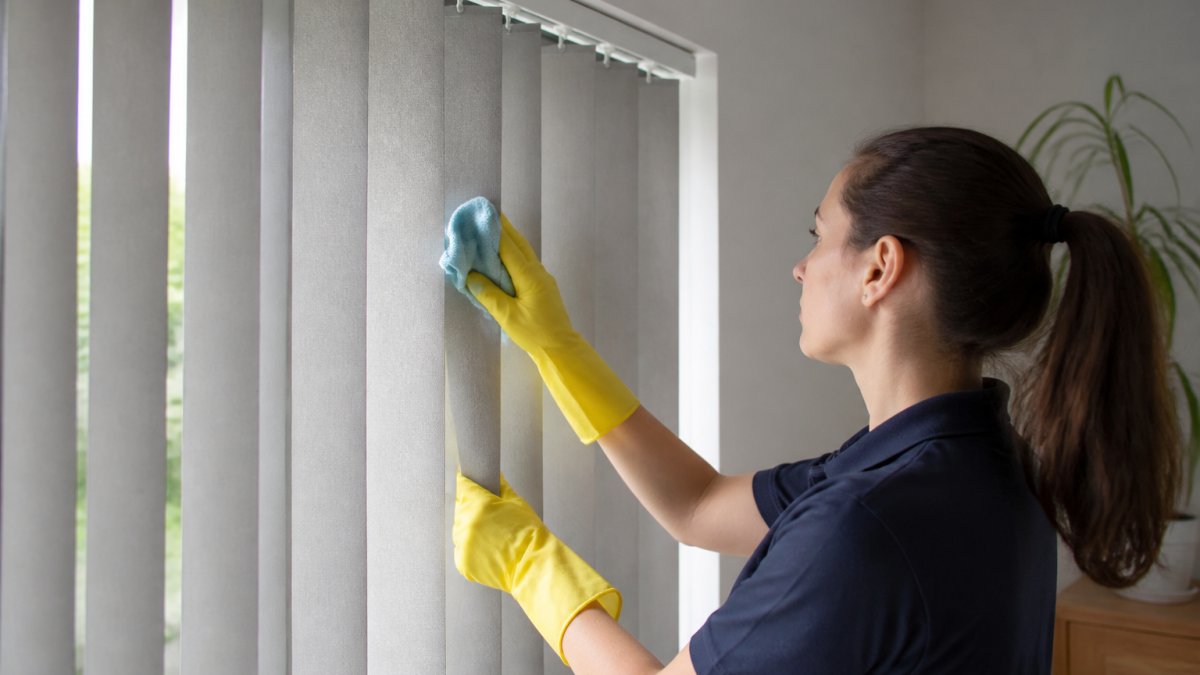
Dust and light dirt: Dampen a microfibre cloth with your cleaning solution. Wipe the slat gently. Rinse with a cloth dampened in clean water. Dry immediately with a dry towel.
Grease or food marks: Apply a small amount of solution directly to the stain. Let it sit for 2-3 minutes. Wipe gently with a soft cloth. Rinse and dry.
Water spots or mineral deposits: These often appear near windows or in humid areas. Use distilled water for rinsing instead of tap water. This prevents new marks from forming.
Mould or mildew spots: Treat these promptly. Apply your cleaning solution and let it sit for 5 minutes. Wipe gently. Rinse thoroughly with clean water. Dry completely.
Never scrub aggressively. The fabric surface can pill or fray if you apply too much pressure.
How to Wash Vertical Blinds While Attached
Step 2: Open the blinds fully. Slats should be vertical and slightly angled.
Step 3: Prepare your cleaning solution. Use the mild soap and lukewarm water recipe from earlier.
Step 4: Dampen a soft cloth or sponge. Wring it out so it's not dripping wet.
Step 5: Wipe each slat individually. Start at the top and work downward.
Step 6: Rinse with a clean, damp cloth. Use clean water only. This removes soap residue.
Step 7: Dry each slat immediately. Use a dry towel or soft cloth. Don't let water sit on the fabric.
Step 8: Angle the slats the opposite direction and repeat. This ensures both sides are clean.
This method takes longer than dusting but requires less effort than full removal. It's ideal for routine maintenance between deep cleans.
How to Remove Vertical Blinds from Track for Deep Cleaning
When your blinds need a thorough clean, removing them from the track is sometimes necessary. This allows you to clean both sides and the full blind system safely.
Safe Removal Steps
Step 1: Close the blinds fully. This keeps the slats aligned and makes removal easier.
Step 2: Locate the removal mechanism. Most vertical blinds have clips or brackets at each end of the headrail. These release the rail from the track.
Step 3: Lift the headrail gently. Start at one end. The rail should slide out of the track smoothly.
Step 4: Support the blind as you remove it. Have a second person help if possible.
Step 5: Lay the blind flat on a clean surface. A large table or clean floor works well. Place newspaper underneath to protect the surface.
Step 6: Inspect the track and headrail. Dust and debris often collect here. Vacuum the track thoroughly before rehanging.
Never force the blind out of the track. If it won't budge, check your care instructions or contact the manufacturer for guidance.
Drying and Rehanging Without Damage
Drying is the most critical step after deep cleaning. Moisture trapped in the fabric or headrail causes warping and mould.
Step 1: Air dry completely. Leave the blind flat and horizontal for at least 24 hours. Position it in a warm, dry area with good air circulation.
Step 2: Check the slats and headrail. They should be completely dry before rehanging. Run your hand along the fabric to confirm.
Step 3: Inspect the track. Make sure it's clean and dry. Wipe it with a dry cloth if needed.
Step 4: Rehang the blind carefully. Align the headrail with the track. Insert one end first, then slide the other end into place. Engage the release mechanisms fully.
Step 5: Test the blind operation. Open and close it several times to ensure smooth movement.
Proper drying prevents water marks, shrinkage, and warping. Rushing this step can damage your investment.
How to Remove Mould from Vertical Blinds
Mould and mildew appear in damp environments like bathrooms and kitchens. They're a sign of excess moisture, not poor quality blinds.
Prevention is easier than treatment:
- Ensure good ventilation in damp rooms
- Wipe condensation from windows regularly
- Keep humidity levels below 50% if possible
- Clean your blinds regularly to remove dust that traps moisture
If mould appears:
Step 1: Act immediately. Mould spreads quickly in fabric.
Step 2: Prepare a mild cleaning solution. Use the standard recipe: lukewarm water and mild dish soap.
Step 3: Dampen a cloth and wipe affected slats. Apply gentle pressure. Don't rub aggressively.
Step 4: Rinse thoroughly with clean water. Remove all soap residue.
Step 5: Dry completely. Use a dry towel and ensure the blind dries fully within a few hours.
Step 6: Improve ventilation in the room. Open windows or use a dehumidifier to prevent recurrence.
If mould returns quickly or covers large areas, the room's humidity is too high. Addressing the underlying moisture problem is essential.
For severe mould that won't come clean, contact Just Blinds about replacement slats. We supply replacement blind slats compatible with most rails, including Hilarys, Argos, and Dunelm systems.
Preventing Water Marks, Shrinkage, and Warping
These three issues are the most common damage to made-to-measure vertical blinds. All are preventable with proper care.
Water marks form when tap water dries on the fabric. Minerals in the water leave visible spots.
Prevention:
- Use distilled water for final rinses
- Dry the blind immediately after cleaning
- Avoid excessive water during cleaning
Shrinkage happens when fabric gets wet and dries too quickly or in direct heat.
Prevention:
- Use lukewarm water only, never hot
- Avoid wringing or twisting slats
- Air dry in a cool, shaded area
- Never use a tumble dryer or direct heat source
Warping occurs when the slat structure becomes bent or twisted, usually from moisture or rough handling.
Prevention:
- Never twist slats to wring out water
- Support slats gently during cleaning
- Allow complete drying before rehanging
- Store removed blinds flat, not rolled
Made-to-measure blinds from Just Blinds are built with durable materials. Polyester and coated fabrics resist damage when treated correctly. Aluminium and wooden components stay straight and stable with proper moisture management.
The key is balance: clean regularly to prevent dirt buildup, but use minimal water and dry thoroughly. This routine keeps your blinds looking new for years.
Keeping your made-to-measure vertical blinds clean protects your investment and maintains their appearance.
Frequently Asked Questions
How often should you clean vertical blinds?
Light dusting once or twice a month keeps dust and dirt from building up on fabric slats. Spot-clean stains as they appear. Deep cleaning, whether washing slats while attached or removing them for a full wash, works best once or twice a year, depending on your home's dust levels and humidity. High-moisture areas like kitchens and bathrooms may need more frequent attention to prevent mould.
Can you wash made-to-measure vertical blind slats in a washing machine?
Most made-to-measure vertical blinds with fabric slats should not go in a washing machine, as the agitation can damage the fabric surface, warp the slats, and weaken the attachment to the headrail. Hand-washing in a lukewarm soapy solution while slats remain attached, or gentle soaking in a cleaning container after safe removal, is much safer. Always check your care instructions first, some coated fabrics are more robust than others.
What's the safest way to remove stains from vertical blind slats?
Start with spot-cleaning: blot (don't rub) the stain with a damp microfiber cloth and a mild detergent solution. For stubborn marks, let the solution sit for a few minutes before gently wiping. Rinse with clean water and a separate cloth, then dry immediately with a soft towel. Avoid abrasive brushes and harsh chemicals, which can damage the fabric surface or cause discolouration.
How do I prevent mould and mildew on my vertical blinds?
Mould thrives in damp, poorly ventilated spaces. Keep humidity low by opening windows regularly, using an extractor fan in bathrooms and kitchens, and wiping down slats with a damp cloth if you notice moisture building up. Never leave wet slats hanging, always dry them completely before rehanging to prevent regrowth.
