
Table of Contents
- Why Do Blinds Warp? The Three Main Causes
- How to Stop Blinds From Warping: Prevention First
- How to Fix Warped Slats Step by Step
- Best Blinds for South Facing Windows
- How to Replace Vertical Blind Slats Instead of Repairing
- How to Clean Faux Wood Blinds Without Causing Damage
- When to Call It: Replacing vs. Repairing
- Frequently Asked Questions
Last Updated: September 9, 2026
Warped blinds are one of the most frustrating window treatment problems because the damage often appears slowly, then seems irreversible. The bending and bowing you see is usually the result of heat, moisture, or low material density, and understanding these causes is the first step in learning how to stop blinds from warping before you spend money on replacements. At Just Blinds, we manufacture made-to-measure window treatments in our UK factory.
The good news is that many warped slats can be rescued with a simple heat treatment, and future damage is largely preventable with the right material choices. Below, we will walk through the three main causes of warping, a step-by-step repair method, and the specific blind types that resist heat and humidity best.
Why Do Blinds Warp? The Three Main Causes
Blind warping happens when the material expands, softens, or degrades unevenly, causing the slat to lose its straight structural integrity. Three factors drive most of this damage: direct sunlight exposure, indoor climate conditions, and the quality of the material itself. Understanding which one affects your blinds determines whether you should repair them or replace them with a more durable option.
Heat and UV Exposure
Heat damage is the most common culprit, particularly for PVC and vinyl slats. When blinds face strong sun, the material absorbs thermal energy and begins to soften, especially along the lower edge where the slat hangs freely (pubs.acs.org). Over time, this repeated heating and cooling cycle causes slat deformation that no amount of rehanging will fix. UV protection matters here too, because ultraviolet light breaks down the plasticisers that keep slats flexible, leading to brittleness and discoloration before the bending starts.
Humidity and Condensation
Moisture affects blinds differently depending on the material. Faux wood blinds and timber alternatives can absorb ambient humidity, causing them to swell and bow, while PVC slats in kitchens and bathrooms may warp from repeated steam exposure (peer-reviewed research). Humidity control in the room is often the missing piece of the puzzle; a dehumidifier or extractor fan can be just as important as the blind itself. Condensation on windows during winter months drips onto slats and creates uneven drying, which pulls the material out of shape.
Material Quality and Manufacturing
Low material density is the silent killer of cheap blinds. Thin, hollow PVC slats have little resistance to heat and will soften far quicker than a high-grade aluminium or reinforced wood product. Manufacturing quality also plays a role. When you buy budget blinds, you are often accepting a shorter window covering longevity, which is why replacement costs can stack up over a few years.
How to Stop Blinds From Warping: Prevention First
Prevention is always cheaper than repair, and the most effective strategy is matching the blind material to the room and its sun exposure. For south-facing windows that receive hours of direct sunlight, avoid PVC and thin vinyl entirely; choose faux wood with a high material density or aluminium slats that dissipate heat rather than absorbing it. In kitchens and bathrooms, prioritise moisture-resistant options and keep the room ventilated to prevent humidity from settling into the slats.
A few simple habits extend the life of any blind. Pull blinds up during the hottest part of the day on sun-facing windows to reduce heat buildup, and wipe slats down regularly with a microfiber cloth to remove dust that traps heat. For motorised shades, consider whether the fabric or slat material is rated for continuous sun exposure before installation. These steps cost nothing but can double the usable life of your window treatments.
How to Fix Warped Slats Step by Step
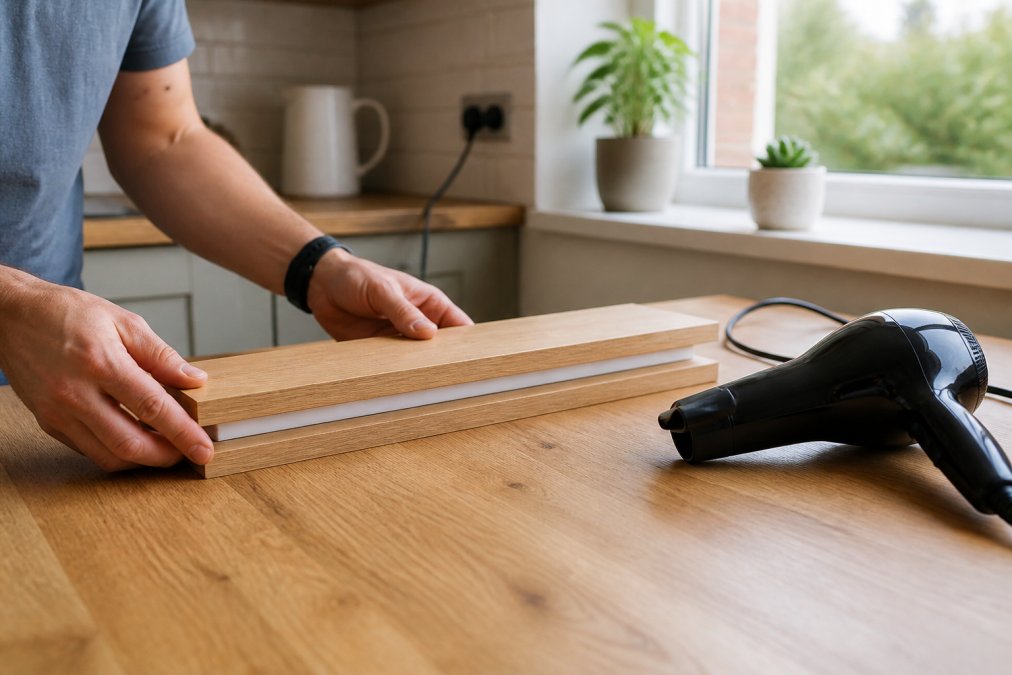
Repairing a warped slat is possible when the material is thermoplastic, meaning it softens when heated and holds a new shape when cooled. PVC and vinyl slats respond well to this treatment, while timber, aluminium, and composite materials generally do not. The process takes about 15 minutes per slat and requires only a hairdryer, two flat boards, and a clamp.
The Hairdryer and Clamp Technique for PVC Slats
- Remove the warped slat from the blind and lay it flat on a heatproof surface.
- Set the hairdryer to medium heat and pass it evenly along the full length of the slat, keeping the nozzle about 15 cm away (hse.gov.uk). The goal is to soften the plastic without melting it, so keep the hairdryer moving constantly.
- Once the slat feels warm and slightly pliable, sandwich it between two flat, rigid surfaces like wooden boards or thick MDF offcuts.
- Clamp the boards together firmly, applying even pressure along the entire length of the slat. Do not overtighten, as this can crush the edges.
- Leave the clamped slat to cool completely for at least 30 minutes. The plastic sets in its new straight shape as it returns to room temperature.
- Unclamp and rehang the slat, checking that the bow has been removed.
This clamping technique works because it reshapes the softened plastic while it cools, resetting the material's memory. If the slat is severely deformed or has visible creases, repair is unlikely to produce a clean result, and replacement is the better option.
When Repair Is Not Worth It
Heat treatment has clear limitations. Faux wood blinds with a wood-grain finish will not respond to this method because the composite material does not soften evenly, and attempting it can blister the surface. Aluminium slats that have bent from impact will not straighten with heat at all; they require careful manual bending or replacement. Slats that show discoloration, cracking, or structural damage beyond simple bowing should be replaced, since their material integrity has already been compromised.
Best Blinds for South Facing Windows
South facing windows receive the most intense and prolonged sunlight of any orientation, making material choice critical for preventing warp. The best blinds for south facing windows are those made from materials that reflect heat or withstand high temperatures without softening. Aluminium Venetian blinds are an excellent choice because the metal dissipates heat rapidly and never warps from UV exposure. Faux wood blinds made from a dense PVC composite with UV inhibitors also perform well, provided the material is thick enough to resist thermal deformation.
For rooms where blackout is a priority, such as nurseries, consider layered solutions: a blackout roller blind fitted close to the glass with a decorative front. This setup keeps the sun-facing layer simple and replaceable while protecting the room from light and heat. Avoid thin PVC vertical blinds on south facing windows, as they are the most likely to droop and bow within a single summer. If you already have vertical blinds in a sunny room, upgrading to stitched fabric louvres or high-grade aluminium will save you repeated replacement costs.
| Blind Material | Warping Resistance | Best Room Placement | Repair Potential |
|---|---|---|---|
| Aluminium | High | South facing, kitchens | Manual bending only |
| Faux wood (dense) | Medium-High | Living rooms, dining | Not heat-repairable |
| PVC vertical slats | Low | Shaded rooms only | Hairdryer and clamp |
| Fabric louvres | Medium | Bedrooms, offices | Spot clean, replace if frayed |
How to Replace Vertical Blind Slats Instead of Repairing
When slats are beyond repair, replacing only the damaged vertical blind slats is far more cost-effective than buying a whole new blind. Vertical blind slats are designed to be interchangeable, and most rails accept standard 89mm louvres regardless of the original manufacturer. At Just Blinds, we offer made-to-measure replacement slats in white, cream, and grey from just £0.85 per slat, cut to your exact drop.
To replace a slat, slide the damaged louvre up and out of its hook or carrier at the top of the rail, then remove the bottom weight and chain. Slide the new slat into the carrier, ensuring the hook engages fully, and reattach the bottom weight. The entire process takes under two minutes per slat and requires no tools. Our replacement slats include new bottom weights and chain, and they are compatible with most major rail systems, so you do not need to replace the headrail. For a more premium fabric option, the Medina Breva prestige cream louvres at £1.85 per slat are stitched rather than glued, which means they will not fall apart in the heat of the sun.
How to Clean Faux Wood Blinds Without Causing Damage
Cleaning faux wood blinds incorrectly can cause more damage than the dirt you are trying to remove, since harsh chemicals and excess moisture weaken the material's surface. The safest method is dry dusting with a microfiber cloth or a soft duster attachment on a vacuum, working from the centre of each slat outward. For deeper cleaning, use a solution of warm water and a few drops of mild dish soap, applied with a damp cloth that has been wrung out thoroughly. Never soak the slats or use abrasive scrubbers, as this can strip the protective coating and allow moisture into the core.
For faux wood blinds in kitchens where grease accumulates, a 50:50 mix of white vinegar and water can cut through residue without damaging the finish. Always dry the slats immediately after wiping with a clean microfiber cloth to prevent water spots and minimise moisture exposure. Avoid commercial cleaning sprays that contain solvents or bleach, as these can cause discoloration and weaken the material over time. Regular preventative maintenance like this preserves the surface and keeps the slats flexible, reducing the risk of cracking and bowing.
When to Call It: Replacing vs. Repairing
The decision to repair or replace comes down to the extent of the damage and the material involved. A single PVC slat with a slight bow is worth repairing with the hairdryer and clamp technique, especially if the rest of the blind is in good condition. Multiple warped slats, discoloration across the set, or damage to the headrail mechanism all point toward replacement. Similarly, if your current blinds have warped once due to poor material quality, repairing them will only delay the inevitable; investing in a denser, more heat-resistant product is the smarter long-term move.
When replacement is the right call, consider whether you need the whole blind or just the slats. If your existing rail and mechanism are functional, ordering replacement vertical blind slats from a manufacturer like Just Blinds saves you the cost and hassle of a full new installation. Our made-to-measure slats are cut to your exact drop and delivered nationwide with free UK delivery on orders over £175. If you are unsure whether your current rails are compatible, our team can advise on the correct fit before you order.
Warped blinds are a symptom of a mismatch between the material and its environment, not a sign that all blinds are doomed to fail. By choosing the right material for sun-facing windows, controlling indoor humidity, and cleaning with care, you can extend the life of your window treatments significantly. When damage does occur, the hairdryer and clamp technique rescues PVC slats, and affordable replacement slats handle the rest. For durable, made-to-measure blinds built to resist warping, explore the range at Just Blinds and get the perfect fit for your space.

Frequently Asked Questions
Why are my blinds bowing in the middle?
Bowing in the middle usually means the bottom rail is too heavy for the lifting mechanism, or the slats have lost tension from prolonged heat exposure. For vertical blinds, it often points to a stretched or worn chain. Check the tension first. If the slats themselves are curved, use the hairdryer and clamp method to reshape them. If the mechanism is the issue, replacing the slats alone won't fix it, and you may need a new headrail.
Do faux wood blinds warp in direct sunlight?
Yes, they can. Faux wood blinds made from thinner PVC are prone to warping when exposed to intense direct sunlight through south-facing windows. The heat causes the material to soften and deform. To prevent this, look for high-grade aluminium or blinds made with reinforced wood composite. Adding a UV-protective window film also reduces heat buildup and helps stop blinds from warping before they start.
How do I know if my warped blinds are covered by warranty?
Most UK blind manufacturers offer a 1-2 year warranty against manufacturing defects, but warping from heat or sunlight is usually classed as environmental damage and excluded. Check your original order confirmation or the manufacturer's website for their specific terms. Take clear photos of the damage before contacting customer service. If the warping appears across all slats uniformly, it is more likely a material defect than a usage issue.
Can I straighten warped vertical blind slats or should I replace them?
You can often straighten slightly warped PVC vertical slats using the hairdryer and weight method, but the results are not always permanent. If slats are badly twisted, discoloured, or have lost their structural integrity, replacement is the more reliable option. Replacement slats cost from £0.85 each and are made to measure, so you can refresh the whole blind without buying a new headrail.
