
Last Updated: October 22, 2026
Quick Summary
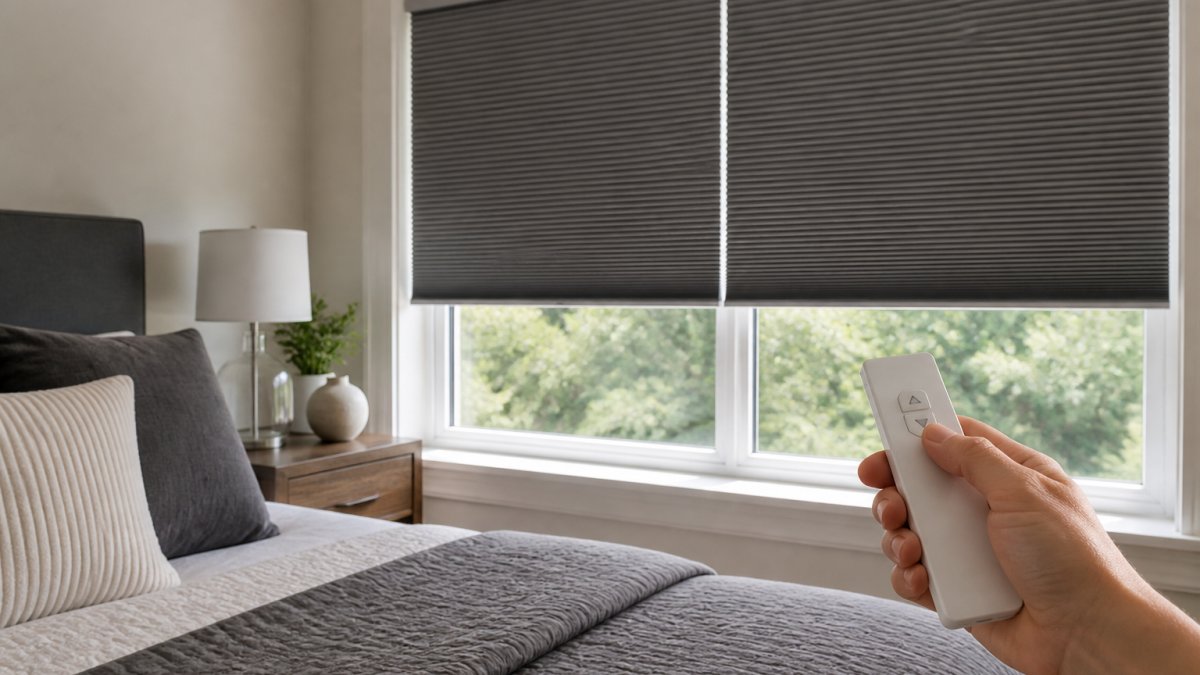
The best battery operated blinds for bedrooms are motorised blackout rollers fitted with an outside mount and a cassette, because blackout depends on closing the side, top and bottom gaps rather than on the motor. Choose a model with a detachable rechargeable pack, a low-battery warning and a manual override, and expect roughly six to twelve months per charge with one open and one close a day.
- Measure the recess three times for width and drop, then give the supplier the smallest figure.
- Quiet DC motors typically run around 35-45 dB at close range; ask for a decibel figure or a demo.
- Schedules stored on the blind still run if your broadband drops, unlike cloud-dependent models.
- Day and night blinds are not blackout blinds; sheer bands and horizontal lines let light through.
- Just Blinds offers free delivery on made-to-measure orders over £175.
Table of Contents
- How We Chose the Best Battery Operated Blinds for Bedrooms
- Comparison Table: Battery Operated Blinds at a Glance
- Motorised Blackout Blinds: Getting Total Darkness in a Bedroom
- Battery Life and Charging Practicality: What the Tests Show
- Electric Roller Blinds: Fit, Mounting and Measuring for Bedrooms
- Smart Blinds for Bedrooms: Control, Scheduling and Noise at Night
- Day and Night Blinds: The Flexible Option for Bedrooms
- What to Ignore When Buying Battery Operated Blinds
- Frequently Asked Questions
How We Chose the Best Battery Operated Blinds for Bedrooms
Battery operated blinds solve a specific bedroom problem: you want blackout control at the window without an electrician, and without a cord dangling beside a cot. This guide sets out what actually matters when you choose them, and what to ignore.
Our selection criteria are built around the bedroom rather than the showroom. We weigh five things: how completely the blind blocks light at the edges, how long the battery lasts between charges, how loud the motor is at night, how accurately the blind can be sized to your recess, and whether it still works when the battery is flat.
Below, we explain exactly how to judge each of those factors, where light gets past a blind, and the mistakes that turn a good purchase into a return.
Comparison Table: Battery Operated Blinds at a Glance
| Blind type | Light control | Battery demand | Best for |
|---|---|---|---|
| Motorised blackout roller | Highest | Moderate | Light sleepers, shift workers |
| Electric roller blind | Good | Low to moderate | General bedroom use |
| Smart blind with app and timer | Good, depends on fabric | Higher | Routines and scheduling |
| Day and night blind | Adjustable | Low | Rooms used in the day and night |
| Pleated blackout with side channels | Very high | Low | Nurseries and skylights |
Use this as a starting filter. The sections below explain what each row means in practice.
Motorised Blackout Blinds: Getting Total Darkness in a Bedroom
Total darkness comes from the fabric and the edges, not the motor. A blackout fabric stops light passing through, but light still enters around the sides, over the top and through the gap at the bottom unless the blind is fitted to close those gaps.
Where light gets in, and the fix for each:
- Side gaps: fit the blind inside the recess with a small overlap, or add side channels that the fabric runs within.
- Top gap: mount the roller close to the ceiling or use a cassette with a top cover.
- Bottom gap: extend the fabric below the sill line, or use a bottom bar that sits against the wall.
- Skylights and sloping windows: these need side channels or a framed blackout system, because gravity works against a loose-hanging fabric.
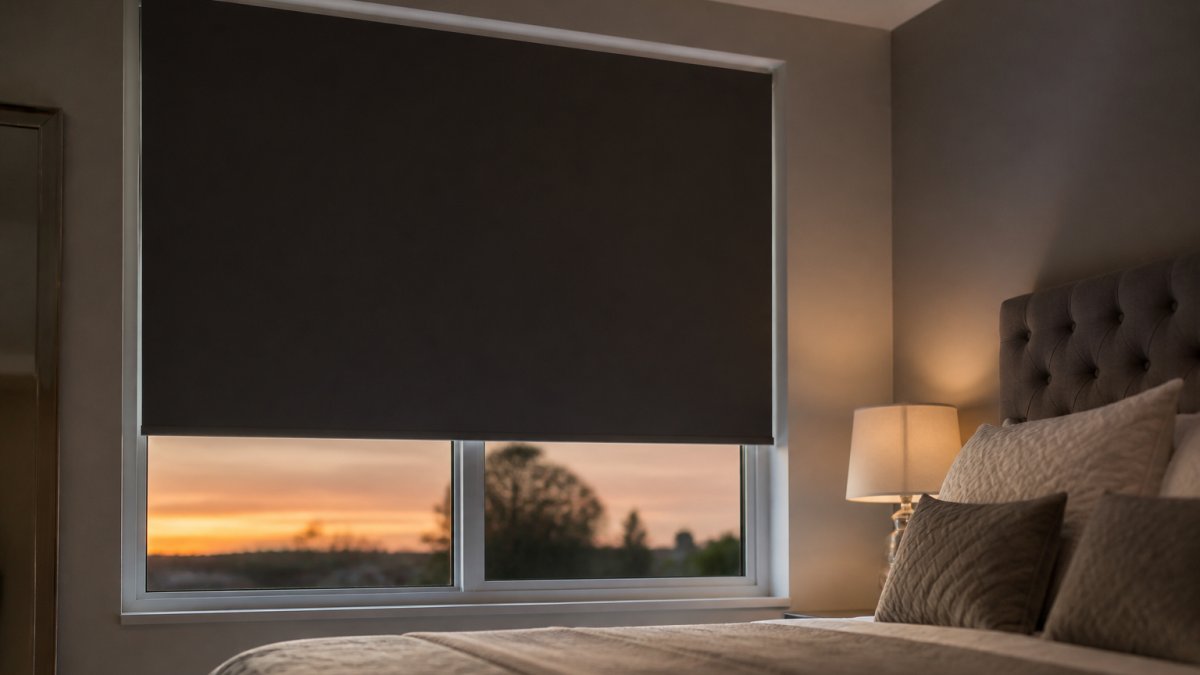
If you are buying for a nursery, measure the recess and tell the supplier it is for a child's room so the fit is specified for blackout, not just for appearance.
Battery Life and Charging Practicality: What the Tests Show
Battery life is the specification most buyers underestimate, and it is the one that decides whether an automated blind becomes a habit or a nuisance. The honest answer is that published figures vary enormously because test conditions vary: a blind that opens and closes twice a day draws far less than one cycled ten times, and a large, heavy blackout roller demands more torque, and therefore more current, than a small pleated blind.
Rather than quote a single headline number, judge a blind on these practical measures:
- Realistic battery-life ranges. Most rechargeable roller and pleated blinds in typical bedroom use, one open and one close per day, last somewhere between six and twelve months per charge. High-use smart blinds with frequent app commands, scheduled scenes, or large fabric drops sit at the lower end. Treat any claim of "years" with suspicion unless the supplier states the cycles per day it assumes.
- Rechargeable versus disposable. Rechargeable lithium packs cost more upfront but avoid repeat purchases and keep disposable cells out of landfill. Disposable AA or C-cell models are cheaper to replace but need a steady supply and are easy to forget until the blind stops.
- Charging method and access. Find out whether the battery pack detaches for charging at a socket or needs a cable run to the window. Detachable packs are far more practical in a bedroom, where a trailing cable across a sill is both a trip hazard and an eyesore. Check the charge time, many packs need several hours for a full charge.
- Low-battery warning. A blind that warns you at around 20% is far less annoying than one that dies mid-close. Look for an app alert, an LED indicator, or an audible beep.
- Replaceability. Confirm whether the battery is user-replaceable or sealed. A sealed pack that fails out of warranty can write off the whole blind.
- Manual override. Confirm you can operate the blind by hand when the battery is flat, a pull cord, a manual release, or a clutch mechanism.
A sensible routine is to charge a detachable pack during the day once every few months, before the low-battery warning appears, rather than waiting for the blind to stop. If you are buying for a nursery or a room used for daytime naps, favour a model with a longer stated cycle life and a clear low-battery alert, because a blind that fails at bedtime is far more disruptive than one that fails in an empty room.
Electric Roller Blinds: Fit, Mounting and Measuring for Bedrooms
Fit decides whether electric roller blinds deliver the blackout you paid for. Measure the recess in three places for width and three for drop, then give the supplier the smallest figure. That accounts for walls that are out of square, which is common in older properties.
Inside mount versus outside mount:
- Inside mount (recess): the blind sits within the window opening. Neater, but light can pass the sides unless the fabric is sized to overlap.
- Outside mount (face fix): the blind covers the opening and overlaps the wall. Better for blackout, and the usual choice where the recess is shallow or obstructed by handles.
For a bedroom, we would specify an outside mount with a cassette where the window allows it. It is the simplest route to a darker room, and it hides the roller mechanism.
Smart Blinds for Bedrooms: Control, Scheduling and Noise at Night
Smart blinds for bedrooms add scheduling and app control, and the practical benefit is a blind that closes itself at the same time each evening.
Noise at night. Motor noise is the most under-reported specification in the category. Ask for a decibel figure, or listen to a demo before buying.
Scheduling and timers. A timer that closes at dusk and opens at a set time is the feature most owners actually use.
Smart-home compatibility. Check the blind works with the system you already have, and that it still functions if your broadband drops.
Manual fallback. Confirm the blind can still be operated by hand, via a pull cord, a button on the motor, or a manual release, if the hub, app, or battery fails.
Day and Night Blinds: The Flexible Option for Bedrooms
Day and night blinds use alternating opaque and sheer horizontal bands, so you can align them for privacy or open them for light. They suit a bedroom used during the day, such as a home office that doubles as a guest room, because you are not choosing between full blackout and full daylight.
The limitation is straightforward: day and night blinds are not blackout blinds. The sheer bands let light through, and the horizontal bands create fine lines of light even when closed. For a light sleeper or a nursery, a dedicated blackout fabric is the better answer. For a room where you want adjustable privacy and some light control, day and night blinds are a sensible, lower-demand choice on the battery.
What to Ignore When Buying Battery Operated Blinds
Ignore the features that sound impressive and change nothing about how you sleep.
- Voice control as a headline feature. It is a convenience, not a benefit, in a bedroom.
- App ecosystems with features you will not use. Scenes, groups and geofencing sound useful until you have one window.
- "Smart" as a substitute for fit. A well-fitted manual blind beats a poorly fitted automated one for blackout, every time.
- Unstated battery claims. If a supplier will not say how the battery is charged or replaced, assume the worst.
- Price as the only filter. Cordless designs and child-safe operating systems cost more to make, and that difference shows up in the hardware.
At Just Blinds, we make made-to-measure blinds to the measurements you supply, including blackout options for bedrooms and nurseries, with free delivery on orders over £175. If you are unsure about measuring a bay or a sloping window, send us the dimensions and we will advise on the fit before you order.
Frequently Asked Questions
Which battery operated blinds are best for bedrooms?
Look for three things: a true blackout fabric, a battery drain figure you can verify, and a quiet motor. In CNET's 2026 testing, Aqara, Ikea, SwitchBot and SmartWings reported battery drain of 2% or less, while OmniaBlinds came in at 10%, though the test duration and conditions were not published. For a bedroom, pair a blackout fabric with side channels or an outside mount to cut edge light, and check the motor's noise rating before you buy. Made-to-measure sizing matters more than brand here.
Do battery-powered blinds come in blackout options?
Yes. Blackout fabric is widely available across motorised blackout blinds, including roller and day and night formats. The fabric stops light passing through, but light still creeps around the edges unless you address the gaps. Ask for side channels, a cassette header, or an outside mount that overlaps the recess by at least 50mm on each side. For a nursery, that edge detail is what separates near-darkness from genuine blackout.
How long do batteries last in motorised blinds?
It depends on the motor, the blind size and how often you open and close it. Published comparisons vary widely: CNET's 2026 test recorded drain of 2% or less for Aqara, Ikea, SwitchBot and SmartWings against 10% for OmniaBlinds, but the test period and conditions were not disclosed, so treat those figures as relative rather than absolute. A larger, heavier blind draws more power per cycle. Check the manufacturer's stated cycles per charge and whether the battery is rechargeable or replaceable before buying.
Are battery-operated blinds noisy at night?
Motor noise varies by model, and it matters more in a bedroom than a living room. Ask for a decibel figure, or listen to a demo before buying. Quieter motors tend to be the ones with lower torque, which suits smaller bedroom windows. Scheduling also helps: set the blind to open after your alarm rather than at first light, so the motor does not wake you. If noise is a priority, avoid the cheapest motors and check reviews that mention nighttime operation specifically.
Getting a bedroom genuinely dark is a measuring and fitting problem before it is a technology problem. If you want blackout performance without guesswork, Just Blinds offers made-to-measure blackout blinds, cordless and child-safe options for nurseries, and replacement slats compatible with most rails. Get started with Just Blinds and specify the fit once, correctly.
