
Table of Contents
- How Blackout Blinds Work to Reduce Noise
- Decibel Reduction: What Blackout Blinds Actually Achieve
- Soundproof Curtains vs Blinds: Which Works Better
- How to Soundproof a Window: Combining Blinds with Sealing
- Thermal Blackout Blinds Benefits for Noise and Energy Saving
- Best Blackout Blinds for Noise Reduction: Material and Style Comparison
- Installation and Maintenance for Acoustic Performance
- Frequently Asked Questions
Last Updated: October 3, 2026
How Blackout Blinds Work to Reduce Noise
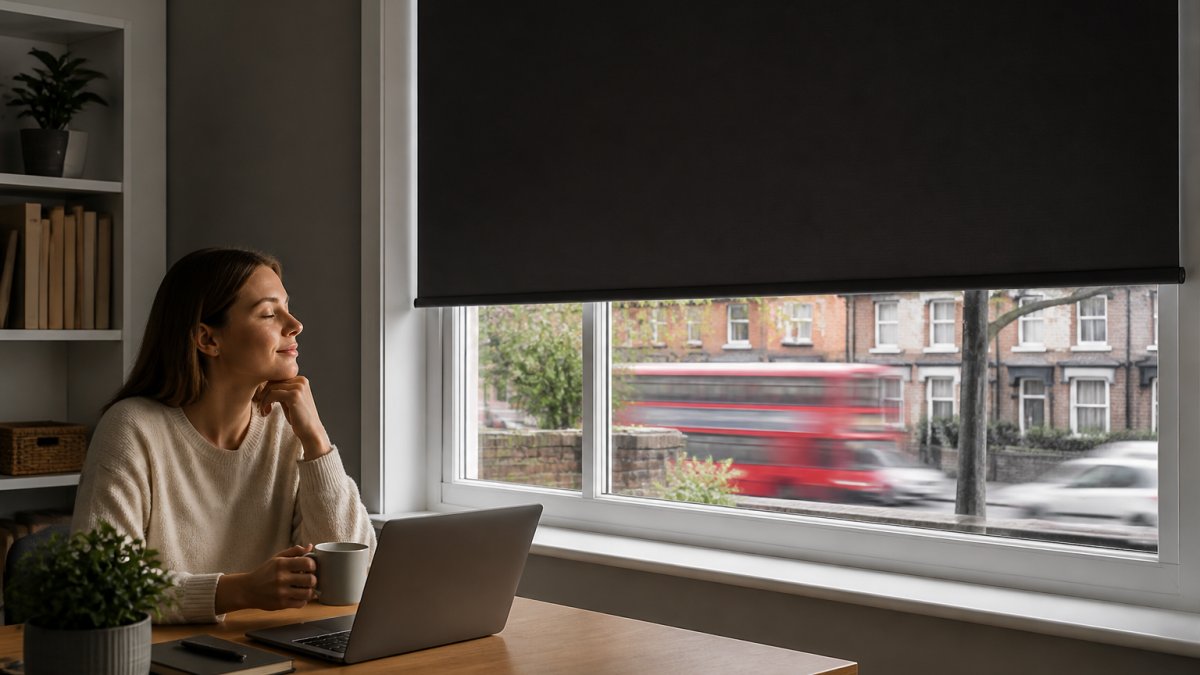
Sound travels through air and vibrations. When noise hits a window, it passes through the glass and frame into your room. Blackout blinds reduce noise by adding mass and absorption to this pathway, interrupting the sound's journey before it reaches you.
The mechanism is straightforward: denser materials absorb sound energy rather than reflecting it back outside. When sound waves strike a blackout blind, some energy is trapped within the fabric's structure instead of passing straight through. This is why blackout blinds reduce noise more effectively than lightweight curtains or thin roller blinds.
Sound absorption through fabric density
Fabric density determines how much sound a blind can absorb. Heavier fabrics with tightly woven fibres trap air pockets, and these pockets dissipate sound energy. A blackout fabric with a substantial weight, such as those in Just Blinds's vertical blinds range, creates multiple layers of material between the window and your room, compounding this effect.
The louvres themselves matter too. Vertical blinds with wider slats (typically 89mm) create more surface area for sound absorption than narrower alternatives. When slats are positioned at an angle, they scatter sound waves rather than allowing them to pass straight through, adding another layer of noise reduction.
The role of honeycomb structure in acoustic insulation
Cellular shades, sometimes called honeycomb blinds, use a different approach. Their honeycomb structure creates air chambers that trap sound and heat, providing both acoustic insulation and thermal efficiency. These chambers act as tiny soundproofing cells, each one absorbing vibrations independently.
The honeycomb design is particularly effective for ambient noise because the air pockets slow sound waves and convert acoustic energy into heat. This is why thermal blackout blinds often perform well for noise reduction; the same structural properties that insulate against temperature fluctuations also dampen sound infiltration.
However, vertical blinds with dense fabric offer a more practical solution for most homes.
Decibel Reduction: What Blackout Blinds Actually Achieve
Many homeowners expect blackout blinds to function as soundproof barriers. They don't. Understanding what blackout blinds actually reduce, and how that reduction is measured, is essential to setting realistic expectations.
Decibel reduction by material type
Blackout blinds typically reduce noise by 3-5 decibels when tested in isolation. To contextualise this: a 3 dB reduction is perceived as roughly half as loud to the human ear, but it's not silence. The variation depends entirely on fabric density and structure.
PVC blackout fabrics (300+ gsm) achieve closer to 5 dB reduction because of their mass and tight weave. Honeycomb cellular blinds can reach 4-6 dB reduction due to air-chamber absorption, though this varies by cell depth (single-cell vs. double-cell designs perform differently). Standard polyester blackout fabrics (200-250 gsm) typically deliver 2-3 dB reduction, the lower end of the spectrum.

For comparison, a 10 dB reduction is perceived as half as loud again, but achieving that requires layered solutions, not a blind alone. A sealed window frame plus blackout blind plus heavy curtains can collectively achieve 8-12 dB reduction, transforming a noisy street-facing bedroom into a usable sleeping space.
How soundproofing is measured in a home environment
Most acoustic testing is conducted in laboratory conditions using standardised equipment and controlled sound sources. Real-world performance differs because homes have variables: window frame gaps, wall cavities, furniture, and ambient noise types (traffic, aircraft, voices) that behave differently.
When evaluating blackout blinds for noise reduction, understand that manufacturers often cite laboratory figures, not home performance.
To measure your own setup: use a smartphone decibel-meter app (free options exist, though not laboratory-grade) to record ambient noise before and after installing blinds. Take readings at the same time of day, from the same position, with the same background conditions.
Why blinds alone have acoustic limits
A blackout blind is a thin layer of fabric. True soundproofing requires mass, air gaps, and acoustic decoupling, separating the sound source from the receiver. A blind provides mass and some absorption, but it cannot decouple your window from the external noise source.
This is why blackout blinds excel at light control and provide supplementary noise reduction, but they're not a standalone acoustic solution. Where they shine is in combination: paired with window frame sealing, heavy curtains, or secondary glazing, their contribution becomes meaningful and measurable.
Soundproof Curtains vs Blinds: Which Works Better
This comparison often confuses people because the terms overlap. Soundproof curtains are typically heavy, lined fabrics hung from ceiling to floor. Blackout blinds are mounted within or over the window frame.
Soundproof curtains have a major advantage: mass and coverage.
Blackout blinds fit snugly within the window recess or mount flush to the frame. They control light completely and reduce noise through fabric density, but they don't provide the air-gap isolation that heavy curtains do.
For noise reduction alone, heavy soundproof curtains win. For a practical, low-maintenance solution that handles both light and noise, blackout blinds are a great choice.
| Feature | Blackout Blinds | Soundproof Curtains |
|---|---|---|
| Light blocking | Total | Total (if floor-to-ceiling) |
| Noise reduction | 3-5 dB (standalone) | 5-8 dB (standalone) |
| Maintenance | Easy (wipe clean) | Difficult (dry clean required) |
| Installation | Quick (frame-mounted) | Complex (ceiling track needed) |
| Cost | Lower | Higher |
| Moisture resistance | Yes (PVC options) | No (fabric only) |
How to Soundproof a Window: Combining Blinds with Sealing
Blackout blinds are most effective when part of a layered approach. The biggest source of noise infiltration isn't the glass itself, it's the gaps around the frame. Sound finds the path of least resistance, and gaps around window frames are weak points.
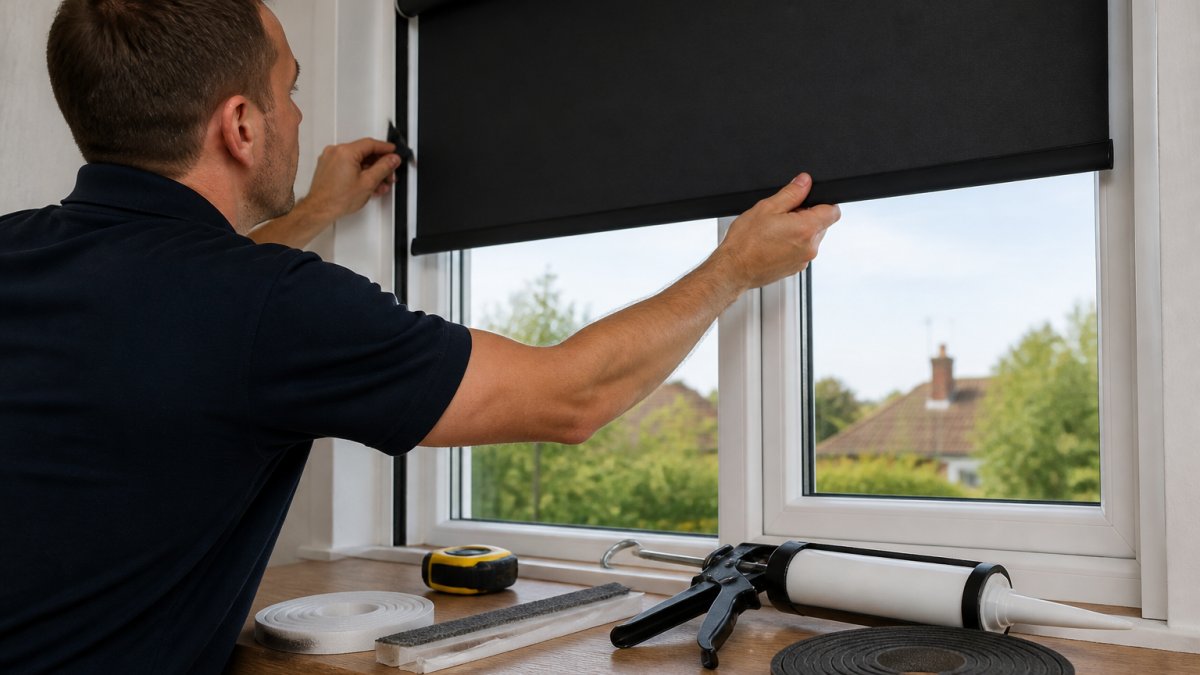
Start by sealing. Use weatherstripping tape or acoustic sealant around the frame perimeter. This alone can reduce noise by 3-4 decibels. Then add your blackout blind. Finally, consider secondary measures like heavy curtains or acoustic panels on the wall.
Window frame sealing and gap reduction
Window frames are the weak link in noise control. Even small gaps allow sound to bypass your blinds entirely. Weatherstripping tape is inexpensive and effective; apply it to the moving parts of the frame (where the sash slides) and around the fixed edges.
For permanent solutions, acoustic sealant is superior. It's thicker than standard caulk and remains flexible, preventing sound transmission while allowing the frame to expand and contract. Apply it around the entire frame perimeter on both sides if possible.
Unilux Cream PVC Blackout Vertical Blinds →
The goal is simple: eliminate paths for sound to travel around the blind. A blackout blind that fits perfectly in the frame but sits loose on the sides won't perform well.
Mounting styles that minimise noise infiltration
How you mount your blind affects its acoustic performance. A recessed fitting (blind mounted inside the window frame) provides better sound absorption than a face-fix mounting (blind mounted on the wall above the frame). The recess traps air and creates acoustic dead space.
However, face-fix mounting can work well if the blind is large enough to cover the wall area around the frame. This approach is common in rental properties where recessed fitting isn't possible. Just Blinds offers both options, and the choice depends on your window type and room layout.
Ensure the blind sits flush against the frame with minimal gaps at the sides and bottom. Loose-fitting blinds allow sound to leak around the edges, defeating much of the noise-reduction benefit.
Thermal Blackout Blinds Benefits for Noise and Energy Saving
Thermal blackout blinds serve double duty. The same dense fabric that blocks light also provides insulation, reducing heat loss through windows by up to 15%. This thermal efficiency has an acoustic bonus: materials that insulate against temperature also dampen sound.
The mechanism is identical. Air pockets in the fabric slow heat transfer and absorb sound vibrations. A thermal blackout blind is, by definition, a sound-dampening blind. The reverse isn't always true; some acoustic blinds prioritise sound absorption over thermal performance.
For homeowners in colder climates, thermal blackout blinds are the logical choice. According to research on window heat loss conducted by the Building Research Establishment, windows account for 10-15% of domestic heat loss, making thermal blinds a worthwhile investment.
Best Blackout Blinds for Noise Reduction: Material and Style Comparison
Material choice matters more than style for acoustic performance. PVC blackout fabrics are denser than standard polyester, offering superior sound absorption. Fabric density is the primary driver of noise reduction.
Just Blinds offers Unilux Black PVC Blackout Vertical Blinds and Bella Snow White Blackout Vertical Blinds, both engineered for complete light blocking and acoustic performance. The Unilux range features wipe-clean PVC that resists moisture and warping, important for durability in damp rooms where sound-absorbing blinds might otherwise deteriorate.

Vertical blinds vs roller blinds for sound dampening
Vertical blinds outperform roller blinds for noise reduction. The louvres create multiple sound-absorbing surfaces, whereas a roller blind presents a single flat layer. When you close vertical blinds, the overlapping louvres scatter sound waves in multiple directions.
Roller blinds are simpler to operate and suit smaller windows, but their single-layer construction limits acoustic benefit. If noise reduction is your priority, vertical blinds are the better choice.
PVC versus fabric options for acoustic performance
PVC blackout fabrics are heavier and denser than standard polyester, making them superior for noise absorption. They also resist moisture, warping, and mildew, advantages in bathrooms and kitchens where dampness degrades fabric-only blinds.
Standard fabric blackout blinds are lighter and may feel softer, but they're less durable and don't perform as well acoustically. PVC is the better choice for long-term noise reduction and maintenance ease.
Installation and Maintenance for Acoustic Performance
Proper installation is critical. Gaps around the blind's edges allow sound to bypass it entirely.
During installation, ensure the blind is level and sits flush against the frame. For recessed fittings, the blind should fill the entire recess.
Maintenance preserves acoustic performance. Dust and debris reduce sound absorption by clogging the fabric's air pockets. Wipe PVC blackout blinds monthly with a damp cloth.
Regular cleaning also extends the blind's lifespan, protecting your investment. Just Blinds's PVC options are particularly low-maintenance, requiring only a wipe-down to stay clean and effective.
Do blackout blinds reduce noise? Yes, but modestly. Expect 3-5 decibels of reduction from the blind alone, more when combined with window sealing and heavy curtains.
Just Blinds's made-to-measure blackout options eliminate gaps that cheaper alternatives leave behind. Our Unilux PVC Blackout Vertical Blinds and Bella Snow White range combine complete light control with genuine acoustic performance.

Frequently Asked Questions
Do blackout blinds actually reduce noise, or is it just marketing?
Blackout blinds reduce noise through sound-dampening fabrics and their density. However, they work best as part of a broader acoustic strategy. The thicker the fabric and the better the fit to your window frame, the more effective noise reduction becomes. Pairing blackout blinds with window frame sealing maximises their acoustic benefit.
How much noise reduction can I expect from blackout blinds?
Blackout blinds alone typically reduce noise, which is noticeable but modest. The amount depends on fabric weight, weave density, and installation quality. Street-facing rooms benefit most from the combination of blackout blinds with sealed window frames and thermal-backed fabrics. For significant soundproofing, blackout blinds work best alongside other acoustic treatments rather than as a standalone solution.
Are thermal blackout blinds better for noise reduction than standard blackout blinds?
Thermal blackout blinds offer noise reduction because their thicker, denser construction absorbs more sound waves. The insulating properties that trap heat also dampen vibration and ambient noise. The extra fabric weight makes a measurable difference in sound dampening performance.
Should I choose soundproof curtains or blackout blinds for noise reduction?
Blackout blinds are a practical choice for most homes because they provide both light control and noise reduction with a neater, space-saving fit. Soundproof curtains can offer good acoustic performance due to their heavier fabric and floor-to-ceiling coverage, but they require more space and regular cleaning. For bedrooms and nurseries, blackout blinds are a good option. For maximum noise reduction in a dedicated space, combining blackout blinds with heavy soundproof curtains works best.
