
Table of Contents
- How Long Do Custom Blinds Take to Make: The Full Timeline
- Understanding the Made-to-Measure Blinds Manufacturing Process
- Made-to-Measure Blinds Delivery Time by Product Type
- Factors Affecting Blind Delivery and Production Speed
- Installation and Fitting Timeline
- How to Reduce Delays and Speed Up Your Order
- Made-to-Order vs Ready-Made: What's the Difference?
- Frequently Asked Questions
Last Updated: October 6, 2026
How Long Do Custom Blinds Take to Make: The Full Timeline
Ordering custom blinds involves measuring, production, dispatch, delivery, and fitting. Understanding each stage helps you plan properly.
Order to installation typically takes two to four weeks, depending on blind type, customisation, and location, but the breakdown matters more than the total.
Here's what you're actually waiting for:
- Measurement and consultation: 1-3 days
- Production time: 7-14 days (varies by blind type)
- Dispatch and delivery: 2-5 working days
The real answer to how long custom blinds take to make depends on which stage you're asking about.
Understanding the Made-to-Measure Blinds Manufacturing Process
Once your order is confirmed and measurements are verified, production begins immediately.
Order Placement and Measurement
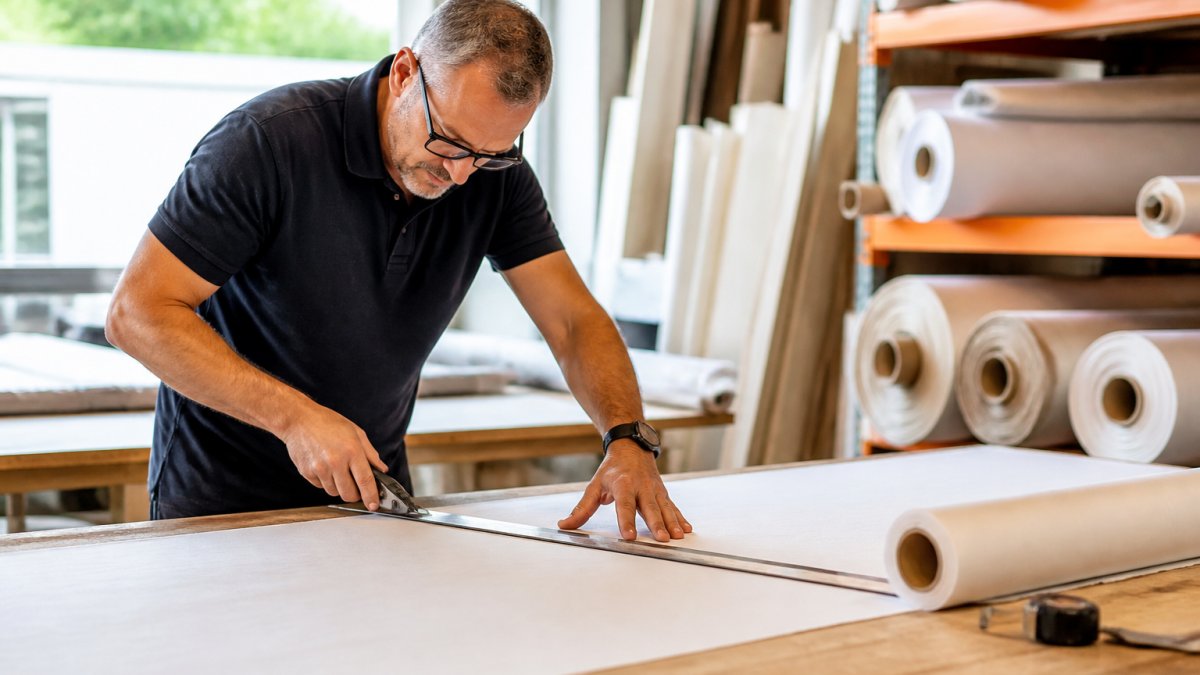
Accurate measurements are the foundation of everything that follows. Most suppliers offer measurement services, in-home or remote.
If you measure yourself, allow 1-3 days for the supplier to verify them, this prevents costly mistakes. Professional fitting usually includes a pre-production site visit, adding 1-2 days but eliminating measurement errors.
Once measurements are confirmed, your order enters the production queue. Manufacturers typically begin work within 24 hours of order confirmation.
Production and Quality Checks
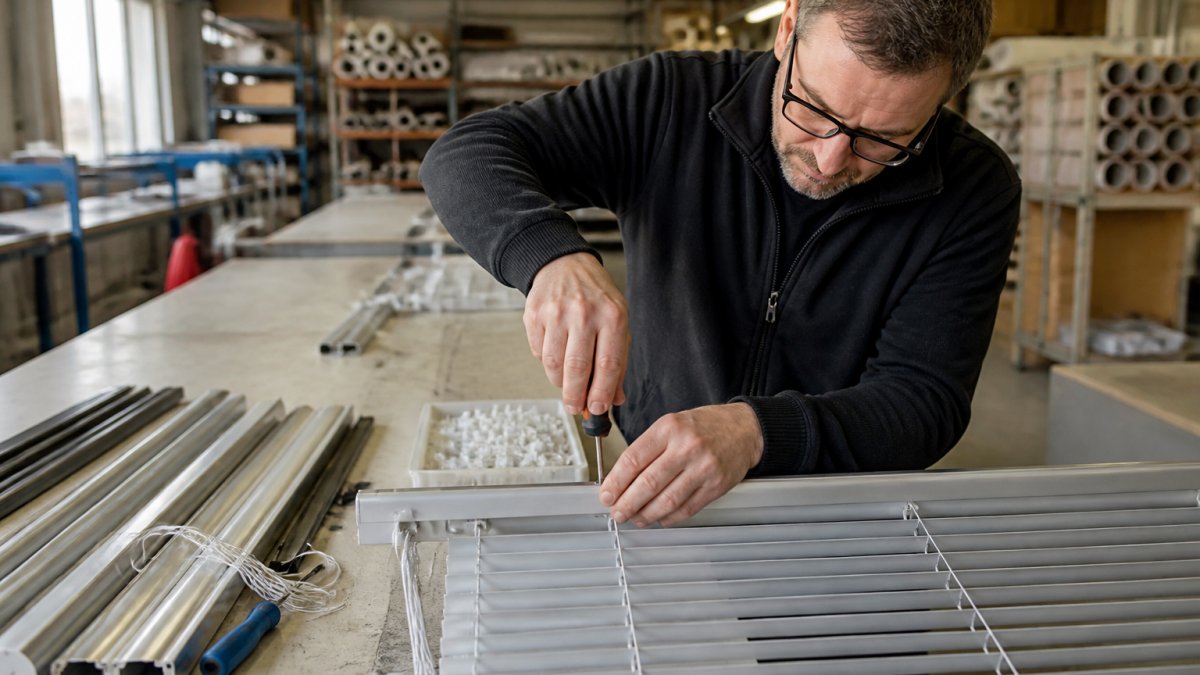
Manufacturing involves cutting materials to your exact specifications, assembling components, and applying finishes. This stage typically takes 7-14 days depending on the blind type.
Quality checks happen throughout production, and finished blinds are inspected before dispatch to ensure they meet size tolerances and finish standards.
Production time isn't fixed, it varies significantly by product complexity.
Made-to-Measure Blinds Delivery Time by Product Type
Lead times vary more between blind types than most buyers expect. The table below sets out typical production windows on a like-for-like basis so you can compare products directly.
| Blind type | Typical production (working days) | Typical delivery after dispatch | Common reasons for variation |
|---|---|---|---|
| Roller (standard fabric) | 5-8 | 2-4 | Fabric width, cassette or bracket choice |
| Roller (blackout or bonded) | 7-10 | 2-4 | Lining bonding, edge finishing |
| Vertical | 7-10 | 2-4 | Slat count, headrail length, chain colour |
| Venetian (aluminium) | 8-12 | 2-4 | Slat width, tilt mechanism, colour matching |
| Venetian (wood or faux-wood) | 10-14 | 3-5 | Timber finishing, stain or paint curing |
| Roman | 10-15 | 3-5 | Fabric pattern matching, interlining, rod pockets |
| Cellular / honeycomb | 10-14 | 3-5 | Cell size, blackout lining, cordless mechanisms |
| Perfect-fit / integrated | 12-18 | 3-5 | Frame profiling, bracket fabrication |
| Plantation shutters | 4-8 weeks | 3-7 | Bespoke frame build, panel finishing, larger packaging |
A few points to read alongside the table:
- Working days, not calendar days. The figures above exclude weekends and public holidays. A 10-working-day quote placed on a Friday before a bank holiday can land nearly three calendar weeks later.
- The clock starts at order confirmation, not order placement. If your measurements still need verifying, or you have not yet approved a fabric sample, production has not begun.
- Delivery is separate from production. A blind that leaves the workshop on day 8 is not a blind that arrives on day 8. Add the delivery column before you compare against a deadline.
Roller and vertical blinds
Roller blinds are the fastest category: fabric is cut to width, bonded or hemmed, and fitted to a pre-assembled tube and bracket set.
Vertical blinds follow a similar pattern: the headrail is cut to length, then each slat is cut, punched, and hung individually. Higher slat counts sit at the top of the 7-10 working day range.
Venetian blinds
Aluminium Venetians involve cutting every slat to width, deburring, threading ladder cords, and assembling the tilt mechanism, more handling per unit than a roller, hence the 8-working-day start. Wood and faux-wood Venetians add sanding, staining or painting, then curing, running 10-14 working days, with bespoke-stained slats at the top.
Roman and cellular blinds
Roman blinds are slower because making-up involves pattern matching across the drop, interlining, and stitching rod pockets at precise intervals. A large-pattern Roman can add several days since the fabric must be cut so the pattern aligns across the folds.
Cellular or honeycomb blinds sit in a similar band, 10-14 working days, with cordless and blackout-lined versions at the upper end.
Shutters and integrated systems
Plantation shutters are a different order of magnitude: each panel is built to the frame, profiled to your reveal, and the louvres finished and assembled. Four to eight weeks is realistic, with larger or shaped openings at the upper end. Perfect-fit and integrated systems sit between standard blinds and shutters, typically 12-18 working days.
Factors Affecting Blind Delivery and Production Speed
Several factors can speed up or delay your custom blinds.
Customisation Complexity and Finish Options
Simple orders move faster: a standard roller in a common colour with standard brackets takes less time than a complex custom configuration.
A custom paint colour or stain requiring mixing adds 2-3 days, and specialist finishes like metallic or textured coatings also extend timelines.
The number of windows affects speed: a single blind manufactures faster than ten different windows, each with different measurements and specifications.
Order Volume and Peak Demand Periods
During peak seasons (spring and summer), higher order volumes can extend production by 3-5 days beyond standard timelines.
Ordering in quieter periods (autumn and winter) typically means faster turnaround.
High demand periods affect timelines across the industry.
Delivery Location and Remote Areas
Delivery speed depends on location. Urban and accessible postcodes typically receive deliveries within 2-3 working days of dispatch.
Remote areas, Scottish Highlands, and islands can take 5-7 working days. Some suppliers charge extra delivery fees for these areas.
In remote locations, factor in extra time and confirm delivery costs before ordering; professional fitting may also need additional scheduling.
Installation and Fitting Timeline
Installation is the final stage. How long it takes depends on the blind type and whether you fit them yourself or hire professionals.
First Window Setup and Per-Blind Installation Time
Professional fitting typically takes 20-30 minutes for the first window, regardless of blind type. The fitter sets up equipment, checks measurements, and installs brackets or rails.
Subsequent windows take 10-15 minutes each; a four-window job usually takes 50-75 minutes total.
If you're fitting blinds yourself, add 50% to these times, as learning the process slows the first installation considerably.
Professional Fitting Services
Booking professional fitting adds 1-2 days to your timeline. Most suppliers offer fitting appointments within 3-5 working days of delivery.
Professional fitting guarantees correct installation and bracket placement, and protects your warranty.
For complex installations (bay windows, angled ceilings, multiple blind types), professional fitting is worth the extra time.
How to Reduce Delays and Speed Up Your Order
Most delays on custom blinds are information problems, not manufacturing ones, a measurement that doesn't match the window, an out-of-stock fabric, or a change requested after cutting has started. Knowing the common causes lets you remove most of them before ordering.
The six most common causes of delay
- Measurement discrepancies. If your width and height do not reconcile with the recess or the fixing surface, the supplier has to stop and query it. This typically adds 2-4 working days while the order sits in a holding queue. The most frequent culprits are measuring the recess at the top only (recesses are rarely square), forgetting to allow for tiles or skirting, and mixing up inside-recess and outside-recess measurements.
- Unusual dimensions. Very wide drops, very narrow widths, and non-rectangular openings fall outside standard cutting programmes. They often need a manual setup, which can add 3-7 working days depending on the workshop.
- Material availability. A fabric, stain, or slat colour that is not held in stock has to be ordered in. This is the single biggest variable outside the manufacturer's control and can add one to three weeks. Ask before you order whether your chosen finish is held on the shelf or ordered in.
- Seasonal demand. Spring and summer are the busiest periods for made-to-measure blinds, and production queues lengthen accordingly. Expect 3-5 working days on top of standard ranges during peak months. Late autumn and winter are typically quieter.
- Order changes after confirmation. Any change to size, fabric, or specification after the order has entered production usually means the item is remade from scratch, not adjusted. Treat the confirmation email as the point of no return.
- Access and delivery constraints. Restricted parking, gated properties, and remote postcodes can add a day or more to the delivery leg, and can delay a fitting appointment if the fitter cannot reach the window.
Practical checks before you order
- Measure at three points for width (top, middle, bottom) and three for height (left, centre, right), and use the smallest figure for a recess fit. Note any obstructions, window handles, vents, tilt-and-turn mechanisms, that would foul the blind.
- Confirm the measurement convention. Ask whether the supplier wants recess or exact blind sizes, and whether they want you to deduct anything. Getting this wrong is the most common cause of a remake.
- Check stock status of your chosen finish at the point of order, not after.
Expedited and urgent orders
Many manufacturers offer a priority or express production service for an additional charge. It also depends on the product: express is realistic for roller and vertical blinds, less so for Romans, cellular, and shutters where the making-up stages cannot be compressed much further.
If you are working to a move-in date, a renovation schedule, or a replacement after a breakage, the more reliable approach is to choose a faster product rather than pay to speed up a slow one.
What to do if your order is already delayed
Contact the supplier in writing and ask for the current stage, measurement verified, in production, in finishing, dispatched, and a revised dispatch date. Most delays are visible at the production-queue stage before they become a missed delivery, so a mid-order check-in is worth the email. If the delay is caused by a measurement query, respond the same day; the order is usually held until you do.
Made-to-Order vs Ready-Made: What's the Difference?
Ready-made blinds are pre-manufactured in standard sizes, available immediately but rarely a perfect fit.
Made-to-measure blinds are manufactured to your exact window dimensions, fitting perfectly and looking professional, but take 2-4 weeks from order to installation.
Ready-made blinds suit temporary solutions or standard-sized windows; made-to-measure is the right choice for a perfect fit and professional finish.
The extra time pays off through better light control, a cleaner appearance, and blinds that function smoothly for years.
Understanding the timeline helps you plan your project confidently. Just Blinds manufactures made-to-measure blinds efficiently across all blind types, with transparent timelines and professional fitting available nationwide. The UK government's consumer rights guidance confirms that suppliers should deliver goods within a reasonable timeframe.
Frequently Asked Questions
How long does it take to make made-to-measure blinds?
Most made-to-measure blinds take 2 to 4 weeks from order placement to delivery, depending on the product type and customisation complexity. Roller blinds and Venetian blinds typically fall at the faster end (7 to 14 days production), while Roman blinds and wooden blinds may require 2 to 3 weeks. Once manufactured, dispatch and delivery add 1 to 5 working days depending on your location. Professional fitting, if required, is arranged separately after delivery.
What can delay the delivery of made-to-measure blinds?
Several factors can extend your timeline: complex fabric finishes (such as blackout or moisture-resistant coatings), high order volumes during peak seasons, delivery to remote areas, and inaccurate window measurements requiring remakes. Providing precise measurements during the consultation stage and avoiding peak demand periods helps reduce delays. Always check the supplier's quoted lead time before placing your order.
How long does it take to fit custom blinds?
Installation time varies by the number of windows and blind type. The first window typically takes 20 to 30 minutes to set up, with each additional blind taking 10 to 15 minutes if they're the same type. Professional fitting services can complete multiple windows in a single visit, making it more efficient than DIY installation. Remote areas may require scheduling around engineer availability.
Can I get made-to-measure blinds sooner?
Some suppliers offer expedited production for urgent projects, though this may incur additional charges. Choosing simpler customisations (standard fabrics without special finishes) and avoiding peak ordering periods can naturally speed up your timeline. Providing accurate measurements upfront eliminates delays from remeasuring. Contact your supplier directly to discuss expedited options for your specific project.
