
Table of Contents
- Made to Order vs Made-to-Measure: The Core Difference
- Side-by-Side Comparison: The Full Buying Journey
- Made to Order Blinds: How They Work in Practice
- Made-to-Measure Blinds Cost: What Drives the Price
- How to Measure for Blinds: The Step-by-Step Process
- Ready-Made vs Made-to-Measure Blinds: Which Should You Choose?
- Questions to Ask Before You Order
- Frequently Asked Questions
Last Updated: October 8, 2026
Made to Order vs Made-to-Measure: The Core Difference
Made to order and made-to-measure are not the same thing, and the gap between them decides how well your blinds fit. Put simply, made-to-measure means a product is manufactured to your exact individual measurements, while made to order means it is produced only after you place your order, often to a chosen specification rather than your precise dimensions. At Just Blinds, we build every blind to the millimetre you send us, which is why the distinction matters before you spend a penny.
The confusion is understandable. Retailers use both phrases loosely, and plenty of shoppers assume they are interchangeable. They are not.
Made-to-Measure: Built From Your Measurements
Made-to-measure means the maker works from your own body or window dimensions. You measure, they cut and assemble to those figures, and the finished item fits that specific space.
For window treatments, this is the difference between a blind that drops neatly into a recess and one that leaves a strip of light down each side. The British Blind and Shutter Association guidance on measuring is clear that accurate measuring is the foundation of a good fit, and it is the step most people rush.
Made to Order: Built to Your Specification, Not Your Body
Made to order means the item does not exist until you order it, but it may still be built to a standard size or a fixed pattern. You choose the fabric, colour, and options; the dimensions follow a preset range.
Think of it as choosing from a menu rather than writing your own recipe. You get the finish you want, but not a bespoke fit.
Side-by-Side Comparison: The Full Buying Journey
The clearest way to see the difference is to walk through the whole process, from first enquiry to final alteration. Most guides stop at the definition, which is exactly where they fall short.
| Stage | Made-to-Measure | Made to Order |
|---|---|---|
| What triggers production | Your order, built to your figures | Your order, built to a preset specification |
| Pattern used | A base pattern adjusted to your measurements | An existing pattern used unchanged |
| Measurements | You supply exact figures, or a fitter takes them | Standard sizes or a fixed size range |
| Fittings | Often included, sometimes charged | Rarely offered |
| Customisation | Fabric, style, dimensions, and detailing | Fabric, colour, and style options only |
| Alterations | Adjustments made before dispatch, or a re-make service | Limited to standard returns terms |
| Production time | Longer, because the pattern is altered first | Varies, often shorter |
| Delivery | Made after ordering, then dispatched | Made after ordering, then dispatched |
| Price | Higher, reflecting the individual work | Lower, reflecting the scale |
| Returns and fit risk | Made-to-measure items are usually exempt from standard distance-selling returns | Same exemption applies, but the fit risk is lower because the size is standard |
The single biggest practical difference sits in the middle of that table: pattern alteration. A made-to-measure item starts from a base pattern that is then adjusted to your measurements. A made-to-order item uses the existing pattern untouched. That one step explains most of the cost, the lead time, and the fit risk.
Made to Order Blinds: How They Work in Practice
Made to order blinds are produced after you buy, but to preset specifications rather than your own measurements. You pick the fabric and the style, the maker builds it, and it arrives ready to hang in a standard opening.
What most guides miss is that "made to order" tells you nothing about fit. It describes when the item is made, not how precisely it is built. That is why the phrase means different things depending on who is using it.
How the term varies by industry and retailer
In furniture, made to order usually means the piece is built after you choose a fabric and finish, but to a standard frame size. In fashion, it can mean a garment cut from a stock size once you order it, with no change to the pattern. In some workshops, the label is stretched further to cover anything not held in stock, even when the dimensions are fixed. A few retailers use it loosely enough that it overlaps with made-to-measure, which is why the only reliable test is to ask whether your measurements change the pattern.
For blinds specifically, made to order normally means:
- The blind is assembled after you order, not pulled from a shelf
- The width and drop come from a preset range, not from your tape measure
- You choose the fabric, colour, and control type, but not the dimensions
When made to order is the right call
Made to order suits a few situations well:
- Rental properties where you want a quick, low-cost refresh and cannot justify a made-to-measure spend
- Standard window sizes that match common opening dimensions
- Temporary window coverings while a renovation is underway
- Spare rooms and box-standard openings where a small gap at the edge will not bother you
Where it falls short
Anything unusual is a poor fit. Bay windows, sloping ceilings, and period properties rarely match a standard size. If your opening is even a centimetre off the standard, you will see gaps at the edges or a blind that will not sit flush. Because the pattern is not altered, there is no mechanism to correct this after production, the size you ordered is the size you get.
Made-to-Measure Blinds Cost: What Drives the Price
Made-to-measure blinds cost more than ready-made options because each one is cut, assembled, and finished to a unique specification. The price reflects labour and materials, not marketing.
Several factors push the cost up or down:
- Fabric type and width. Wider slats and premium fabrics cost more per square metre.
- Blind style. Vertical, Venetian, and blackout options carry different material costs.
- Size. Larger windows use more fabric and longer headrails.
- Control system. A child-safe wand system may cost more than a standard chain and cord.
- Lead time. Non-stock fabrics take longer to source and produce.
Our own made-to-measure vertical blinds start at £4.92 for the Carlo White fabric, which keeps the entry point low while still giving you a true made-to-measure fit.

Ask whether the fabric is a stock or non-stock item before you order. Non-stock fabrics can add around two weeks to your lead time, which matters if you are working to a renovation deadline.
How to Measure for Blinds: The Step-by-Step Process
Measuring for blinds takes about ten minutes per window and is the step that decides whether your made-to-measure order fits. Get it right and the blind drops in cleanly; get it wrong and you are relying on the maker's goodwill.
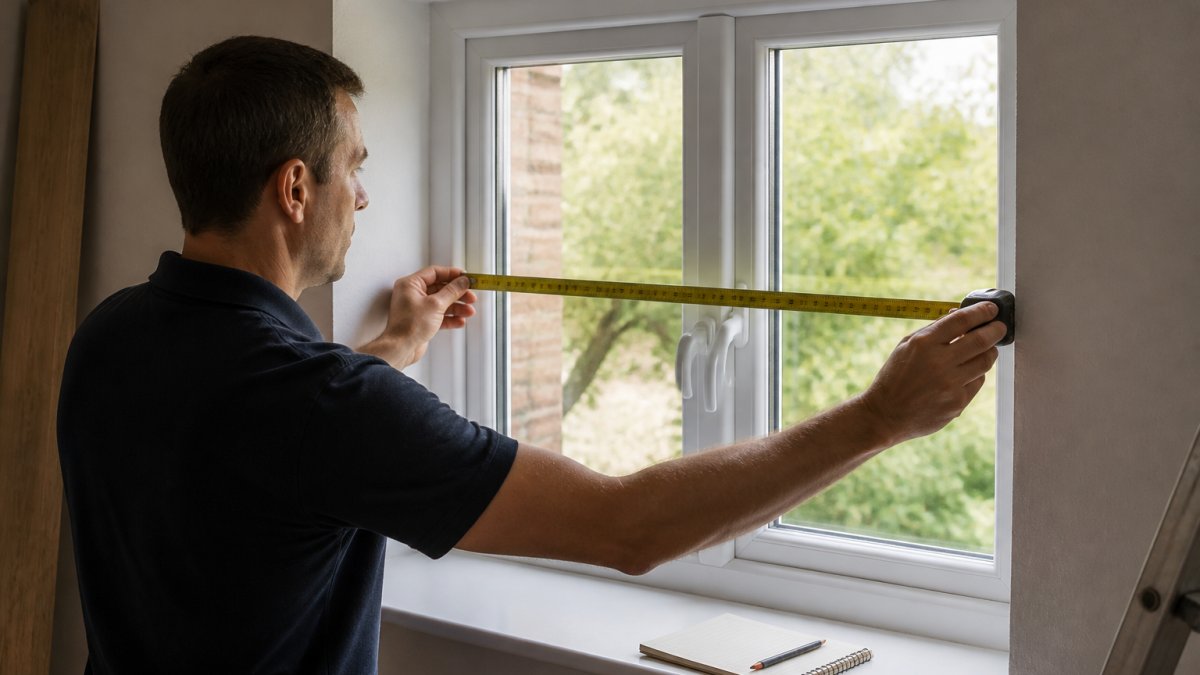
Here is the process we recommend:
- Decide on inside or outside mounting. Inside the recess gives a tidy finish; outside covers the whole opening.
- Measure the width in three places. Top, middle, and bottom. Use the smallest figure for inside mounts.
- Measure the drop in three places. Left, centre, and right. Again, use the smallest for inside mounts.
- Check for obstructions. Window handles, tiles, and vents all affect where the blind can sit.
- Write everything down in millimetres. Do not round to the nearest centimetre.
- Double-check before ordering. Re-measure once, calmly, with the same tape.
The government guidance on safe window covering cords for child safety is worth reading if you are fitting blinds in a nursery or child's bedroom, since cord safety is a legal consideration as well as a practical one.
Ready-Made vs Made-to-Measure Blinds: Which Should You Choose?
Ready-made blinds are the fastest and cheapest option, but they only fit standard window sizes. Made-to-measure blinds are cut to your exact dimensions and are the only reliable choice for anything unusual.
Here is how the three options compare in practice:
| Option | Fit | Best For | Trade-off |
|---|---|---|---|
| Ready-made | Standard sizes only | Quick, low-cost updates | Gaps at edges, limited sizes |
| Made to order | Standard sizes, more choice | Rentals, temporary coverings | Still no bespoke fit |
| Made-to-measure | Your exact dimensions | Bay windows, period homes, nurseries | Higher cost, longer lead time |
For a nursery, a bay window, or any opening that is not a clean rectangle, made-to-measure is the sensible pick. For a box-standard window in a spare room, ready-made will do the job.
One of our made-to-measure options worth a look is the Washed Wood Look Aluminium Venetian Blind, which pairs a 25mm wood-effect finish with the durability and easy care of aluminium.

Questions to Ask Before You Order
The questions below separate a smooth order from a frustrating one. Ask them before you pay, not after.
What happens if I measure wrong? Policies vary.
Is the fabric a stock item? Non-stock fabrics add lead time. Know the timeline before you commit.
Can I get replacement slats later? Good news for anyone with existing rails: our replacement blind slats are compatible with most rails, including Hilarys, Argos, and Dunelm.
Do you offer fitting? If you would rather not measure and install yourself, ask whether professional measuring and fitting is available in your area.
What is the returns window? Made-to-measure items are exempt from standard distance-selling returns in most cases, so understand the terms before you buy.
Getting the terminology right saves you money and disappointment. Made to order gets you choice; made-to-measure gets you fit.
Frequently Asked Questions
Is made-to-measure the same as made to order?
No, they are different. Made-to-measure means the item is produced using your specific body or window measurements, with an existing pattern adjusted to fit. Made to order means you choose from set options such as fabric, colour and size, but the item is not built around individual measurements. With made-to-measure blinds, for example, every slat is cut to your exact window dimensions, while made-to-order blinds come in preset sizes that may need trimming.
Are made-to-measure blinds worth the extra cost?
For most windows, yes. Made-to-measure blinds start from as little as £4.92 at Just Blinds, so the price gap between ready-made and custom is often smaller than people expect. The main benefit is a precise fit that eliminates light gaps and draughts. If your window is an unusual shape or you need blackout performance for a nursery, the difference in fit and function justifies the cost. Ready-made blinds can work for standard windows on a tight budget, but they rarely match the finish of a made-to-measure product.
What measurements do I need for made-to-measure blinds?
You need the exact width and drop of your window. Measure the recess in three places for width (top, middle and bottom) and three places for the drop (left, centre and right), then use the smallest figure for a recess fit. For an exact fit, measure the full width and drop of the window frame or the area you want the blind to cover. Always use a metal tape measure and write measurements in millimetres to avoid conversion errors. Just Blinds manufactures every blind to the sizes you provide.
Can I return made-to-measure blinds if they don't fit?
Made-to-measure blinds are produced to your supplied dimensions, so they cannot be resold if the measurements are wrong. Most suppliers, including Just Blinds, will not accept returns for incorrectly measured orders. Check your measurements twice before ordering, and if you are unsure, ask a professional fitter to measure for you. If the blind arrives damaged or with a manufacturing fault, contact the supplier immediately. Always read the returns policy before you buy, because it varies between retailers.
