
Table of Contents
- Why Made to Measure Blinds Beat Off-the-Shelf Options
- Made to Measure vs Ready-Made Blinds: What Actually Changes
- How to Measure for Blinds Without Getting It Wrong
- Made to Measure Roller Blinds: The Everyday Workhorse
- Blackout Blinds for Bedrooms and Nurseries
- Venetian, Vertical and Roman Blinds Compared
- What Made to Measure Blinds Cost in 2026
- Fitting Your Blinds: DIY or Professional Installation?
- Frequently Asked Questions
Last Updated: October 12, 2026
Why Made to Measure Blinds Beat Off-the-Shelf Options
Ready-made blinds are sized for the "average" window, which doesn't exist in your house.
At Just Blinds, we manufacture every blind, so the fit is right the first time. A ready-made blind 2cm too narrow lets a bright stripe of light through every morning; a made-to-measure blind doesn't.
There's also the durability question. According to the British Blind and Shutter Association, correctly fitted window coverings also play a role in reducing heat loss through glazing, which matters more as energy costs stay high.
Made to Measure vs Ready-Made Blinds: What Actually Changes
Ready-made blinds come in fixed sizes; made-to-measure blinds are built to your measurements. That single change affects fit, finish, and how long the blind lasts.
Here's what shifts when you go custom:
- Fit: Custom blinds sit flush in the recess or neatly over the frame, with no light gaps
- Choice: You pick the fabric, colour, finish, and control system rather than settling for what's in stock
- Hardware: Better headrails and mechanisms mean smoother operation over years, not months
How to Measure for Blinds Without Getting It Wrong
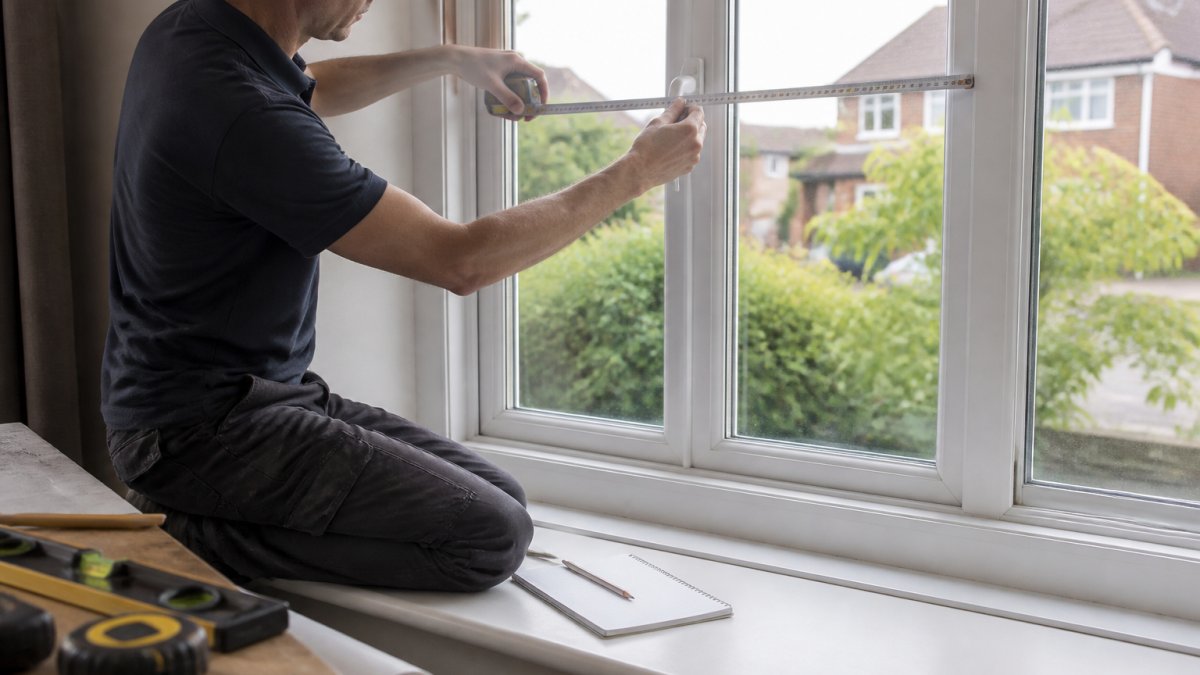
Measuring is where most orders go wrong, and it's the one part you cannot fix after the blind is cut. Work in millimetres, use a metal tape, and measure every window separately, two windows in the same room can differ by 10-15mm.
Step-by-Step: Measuring for a Recess Fit
A recess fit sits the blind inside the window opening, the cleanest look, and best where the recess is at least 60mm deep. Shallower than that and the fabric or slats rub against the glass or handles.
- Measure the width in three places, top, middle and bottom, and write all three down.
- Use the smallest width figure as your order width, so the blind clears any narrowing in the recess.
- Measure the drop in three places, left, centre and right, from the top of the recess to the sill.
- Use the longest drop figure so the blind covers the full opening.
- Deduct a small tolerance, most fitters allow roughly 10mm off the smallest width so the blind drops in without binding. Confirm your supplier applies this.
- Check for obstructions, handles, trickle vents and tilt-and-turn mechanisms reduce the usable recess. Note their projection and position.
Step-by-Step: Measuring for a Face Fit
A face fit mounts the blind on the wall or frame in front of the recess. It suits shallow recesses, tilt-and-turn windows, and rooms where you want maximum light blocking, because the fabric can overlap the frame.
- Decide the overlap. Allow roughly 50mm beyond the recess opening on each side and above it; for bedroom blackout, 70-100mm is common.
- Measure the total width you want covered, including the overlap.
- Measure the drop from the top fixing point to where the blind should finish, usually 20-50mm below the sill.
- Check the fixing surface. You need solid timber, masonry or a suitable frame; plasterboard alone won't hold a blind, so use timber studs or fit a batten.
- Confirm handle clearance. Measure from the wall or frame to the furthest projection of the handle, then add the headrail and bracket depth. If the blind sits proud of the handle, it will catch when the window opens.
Measuring Bay Windows and Awkward Spaces
Bay windows need each section measured individually, because the angles mean no two panels are the same width. For arched or sloping windows, a made-to-measure service is the only option that works, nothing off the shelf follows the contour.
For a bay, work face by face:
- Measure the width of each face at the top of the recess.
- Measure the drop for each face separately.
- Note the angle between faces, 90°, 135° and 45° are common, and the angle determines whether you need a corner bracket or a continuous headrail.
Common Measuring Mistakes to Avoid
- Measuring in centimetres or inches. Order in millimetres; a 1cm error is a visible gap.
- Assuming windows match. Always measure each one.
- Forgetting the skirting or tiles. Tiles and upstands reduce recess depth and can stop a blind sitting flush.
When to Use a Professional Measuring Service
If you have bay windows, arched openings, or more than a handful of windows, a professional measuring visit is often worth the cost. A fitter checks recess depths, handle clearances and fixing surfaces in one visit, and the measurements are usually guaranteed, if the blind doesn't fit, the supplier remakes it. For a single standard window, DIY measuring is straightforward and saves the call-out fee.
Made to Measure Roller Blinds: The Everyday Workhorse
Made to measure roller blinds are the most popular choice: simple, affordable, and suited to almost any room.
Our vertical blind range covers large windows and patio doors particularly well, with fabrics like Cameo Cream that filter light while keeping your privacy intact.

Where roller blinds fall short is on very wide openings, where a single roller can sag. For those, vertical blinds hold their shape better.
Blackout Blinds for Bedrooms and Nurseries
Blackout blinds use a densely woven or coated fabric that stops almost all light. For bedrooms and nurseries, they're the difference between a child waking at dawn and sleeping through.
The fabric matters, but so does the fit: a blackout blind that doesn't reach the recess edges still leaks light around the sides. That's why a face fit for nursery blackout blinds, so the fabric overlaps the frame and blocks the light path completely, is often recommended.
Cameo Cream Vertical Blinds | 89mm | Made to Measure →
Child Safety and Cordless Options
Loop cords are a strangulation risk for young children, and UK safety standards require blinds sold for homes with children to be cordless or fitted with a tensioning device. Choose a cordless or wand-operated system for any room a child uses, our vertical blinds come with a child safe wand system as standard, removing the loop entirely.

Venetian, Vertical and Roman Blinds Compared
Each style solves a different problem. Here's how the main types stack up:
| Blind Type | Best For | Light Control | Maintenance |
|---|---|---|---|
| Roller | Kitchens, bathrooms, living rooms | Good, blackout available | Wipe clean |
| Venetian | Precise light adjustment | Excellent, tilt control | Dust slats regularly |
| Vertical | Patio doors, wide windows | Good, filters light | Wipe clean |
| Roman | Living rooms, bedrooms | Good, softer look | Dry clean or vacuum |
| Wood / faux-wood | Warmth, moisture-prone rooms | Excellent | Wipe clean |
Materials, Finishes and Moisture Resistance
Our fabrics are spongeable, so everyday marks lift off without a full clean.
What Made to Measure Blinds Cost in 2026
Made-to-measure blinds are priced on five variables: blind type, opening size, fabric or material, operating mechanism, and whether you add professional fitting. Knowing which you're paying for makes comparing quotes much easier.
What Drives the Price
- Size. Price scales with area, not just width. A wide patio door blind uses more fabric and a stronger headrail than a small bathroom window.
- Blind type. Vertical and roller blinds are the most economical per square metre; Venetian, Roman and wood blinds use more components or fabric, so they sit higher.
- Fabric or material. Basic plain fabric sits at the bottom of the range; blackout coatings, thermal linings, textured weaves and real wood all add cost.
Example Price Ranges
These are indicative ranges for a standard window of roughly 1200mm × 1600mm, to give you a sense of the spread rather than a quote:
| Blind type | Typical made-to-measure range | Notes |
|---|---|---|
| Vertical | From around £5 per blind in budget ranges | Best value for wide openings and patio doors |
| Roller | Budget ranges from around £15; mid-range fabrics £40-£90 | Blackout and thermal coatings push the upper end |
| Venetian (aluminium) | £30-£80 | Tilt control adds precision at little extra cost |
| Roman | £60-£150 | Fabric-heavy, so price tracks the material closely |
| Wood / faux-wood | £50-£140 | Real wood costs more and needs a drier room |
| Motorised | Add roughly £80-£200 per blind over the manual equivalent | Remote and app control at the top of the range |
Treat these as a budgeting starting point, not a quotation, your exact price depends on your measurements, fabric and control system.
Motorisation: Is It Worth the Extra?
Motorise the windows you cannot comfortably reach and keep the rest manual, that usually gives the best value.
Delivery and Fitting Costs
Delivery is often free above a minimum order value, so a whole-house order usually ships free while a single blind may attract a small fee. Professional fitting is quoted separately and depends on the number of blinds, window types and your location. For a full house, fitting is often the larger line item, so get it quoted before you order.
How to Keep the Cost Down
- Order all your windows together to hit free delivery thresholds.
- Choose vertical blinds for the largest openings; they give the most coverage per pound.
- Fit them yourself if you're comfortable with a drill and spirit level, it removes the fitting charge entirely.
Fitting Your Blinds: DIY or Professional Installation?
Most made to measure blinds come with brackets and fixings for straightforward DIY fitting.
Professional fitting makes sense with bay windows, awkward angles, or a full house to do at once, and removes the risk of a mis-drilled bracket.
A common mistake is fitting brackets without checking the blind clears handles or opening windows. Measure the projection first, and test the blind's operation before committing to final bracket positions.
Frequently Asked Questions
Are made to measure blinds worth the extra cost?
They usually are when your windows are not standard sizes. Made to measure blinds are cut to your exact window measurements, so you avoid the light gaps and awkward overhangs that ready-made sizes leave behind. They also last longer because the headrail and fabric are matched to the width. If you have a bay window, a wide patio door or an older property with irregular frames, custom fit is often the only option that looks right.
How do you measure a window for made to measure blinds?
Measure the width in three places, top, middle and bottom, and use the smallest figure. Measure the drop in three places too, left, centre and right, and use the longest. Always use a metal tape measure and record in millimetres. Decide first whether you want a recess fit, which sits inside the window frame, or a face fit, which overlaps it. Recess fits need the smallest width, face fits need extra allowance on each side.
Can you fit made to measure blinds yourself?
Most made to measure blinds come with brackets, screws and fitting instructions, and a competent DIYer can install them in under an hour per window with a drill, a pencil and a spirit level. The tricky parts are drilling into lintels or steel reinforcements and getting the brackets level. If you are not confident, or your windows are large and heavy, professional fitting is worth the cost and many suppliers offer it as an add-on.
Which blinds are best for a bedroom?
Blackout blinds are the usual choice for bedrooms and nurseries because they block almost all incoming light. A blackout roller blind gives you a clean, flat finish and works well with a curtain for extra darkness. If you want to adjust light during the day without losing privacy, a Venetian or vertical blind offers more control. For rooms with high moisture, such as en-suites, faux-wood or aluminium options hold up better than fabric.
Getting made to measure blinds right comes down to accurate measuring and choosing the right style for each room. At Just Blinds, we manufacture every blind to your exact sizes, offer moisture-resistant faux-wood and blackout options, and include a child-safe wand system on our vertical range. Shop now at Just Blinds and get a fit that looks built-in, not bolted on.
