
Table of Contents
- What Are Made to Measure Roller Blinds and Why They Matter
- How to Measure for Roller Blinds Accurately
- Choosing the Right Fabric for Your Space
- Child Safety Regulations for Blinds in Your Home
- Fitting Roller Blinds: Installation Instructions
- Energy Efficiency and Thermal Benefits
- Maintenance and Long-Term Care
- Made to Measure vs Ready-Made: What's the Real Difference
- Frequently Asked Questions
Last Updated: September 26, 2026
What Are Made to Measure Roller Blinds and Why They Matter
Made to measure roller blinds are custom-fitted window coverings manufactured to your exact specifications rather than chosen from standard off-the-shelf sizes. Unlike ready-made alternatives, these blinds are built to match your window dimensions precisely, eliminating gaps, light leaks, and the visual awkwardness of ill-fitting treatments.
The real advantage isn't just aesthetics. Proper fit directly affects functionality. A blind that doesn't sit flush against your window frame won't deliver the light control or privacy you're paying for. Just Blinds manufactures made to measure roller blinds that arrive ready to fit your space exactly, whether you need blackout fabric for a nursery, moisture-resistant options for a bathroom, or standard light-filtering materials for a living room.
Most homeowners discover the value only after experiencing poor results with ready-made blinds. Once you've dealt with gaps at the sides or a blind that won't roll smoothly because the housing is slightly misaligned, the investment in proper measurement and bespoke manufacturing becomes obvious.
How to Measure for Roller Blinds Accurately
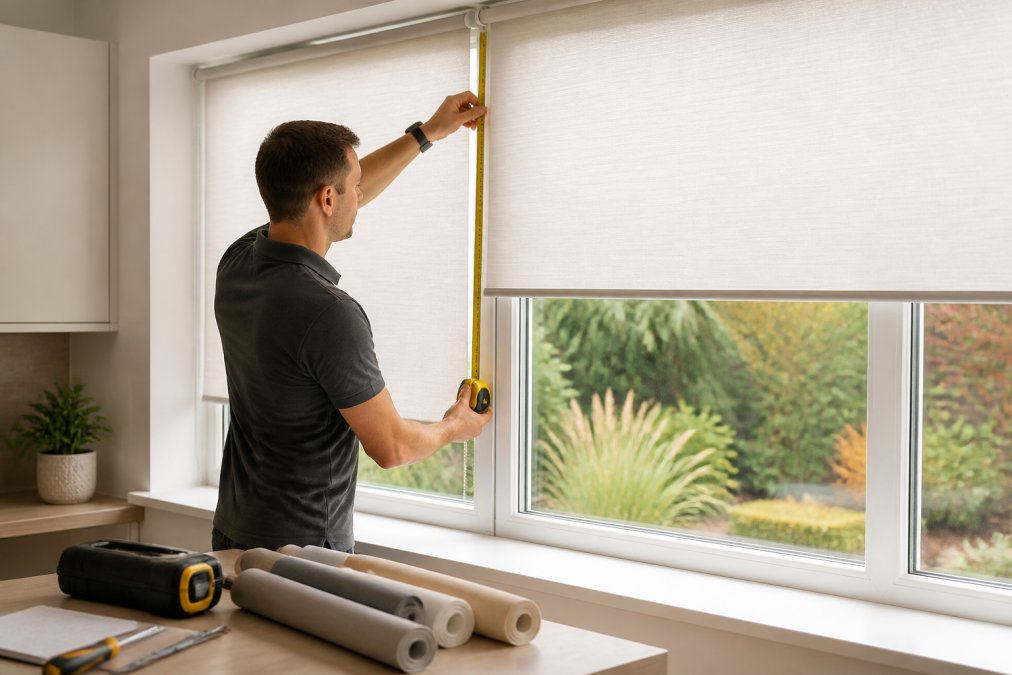
Measuring your windows correctly is the foundation of a successful installation. Get this wrong, and even the best blind will disappoint. Get it right, and the blind will operate smoothly and look professionally finished.
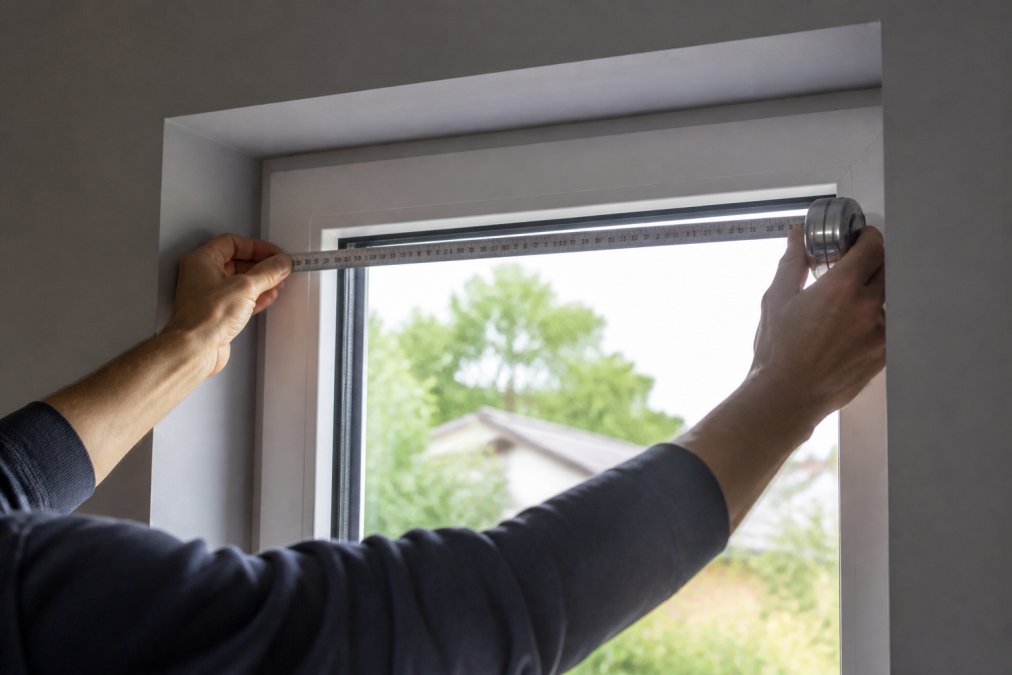
The process takes 10-15 minutes per window if you follow a systematic approach. You'll need a metal tape measure (not cloth), a notepad, and patience. Measure each dimension at least twice to catch errors before ordering.
Inside Recess vs Face Fix Measurements
These two installation methods require different measurements, and confusion here is one of the most common costly mistakes.
Inside recess (also called inside mount) means the blind sits inside the window frame opening. This approach delivers a clean, built-in appearance and is ideal for windows with deep, solid frames. Measure the width at the top, middle, and bottom of the recess, use the smallest measurement, as frames are rarely perfectly square. For depth, measure from the front of the frame to the back. Deduct 5-10mm from your width measurement to ensure the blind fits without binding.
Face fix (outside mount) means the blind sits on the wall or frame exterior, covering the entire window and surrounding wall area. This works better for shallow frames, bay windows, or where you want maximum light blocking. Measure the width and height of the entire area you want covered, extending at least 50-75mm beyond the window on each side for light control.
The difference between these approaches determines whether your blind will function properly or sit awkwardly. Most installations in standard residential spaces use inside recess, but bathrooms and kitchens with moisture concerns often benefit from face fix positioning, which keeps the blind away from condensation.
Common Measurement Mistakes to Avoid
Rushing the measurement process accounts for roughly half of fitting problems. Here's what goes wrong most often:
Using a cloth tape measure instead of metal is deceptively problematic. Cloth stretches, especially if you pull it taut. A metal tape stays rigid and gives you true dimensions. Always use metal.
Measuring only once creates false confidence. Measure three times, record all three numbers, and use the smallest width and largest depth. Window frames shift over time, and recesses aren't perfectly rectangular.
Forgetting to account for obstacles is another frequent error. Check for radiators, shelves, or handles that might interfere with blind operation. If the blind will sit on a face fix mount, verify that wall space is actually clear.
Misunderstanding the difference between the frame opening and the usable space is surprisingly common. Just because your window is 1200mm wide doesn't mean the blind should be 1200mm. The frame itself takes up space, and the blind needs to sit within or beyond that frame depending on your installation method.
Choosing the Right Fabric for Your Space
The fabric you select determines how the blind performs, light control, durability, maintenance, and longevity all depend on this choice. There's no single "best" fabric; the right one matches your room's demands.
Blackout vs Light Filtering Options
Blackout fabric blocks virtually all light, making it essential for bedrooms, nurseries, and media rooms. A quality blackout blind should deliver total darkness even during daylight hours. The Como Bare White Blackout Roller Blind from Just Blinds provides complete light block in a clean white finish, complete with child-safe controls and fitting brackets.

Light-filtering fabrics allow diffused light through while maintaining privacy. These work well for living rooms, offices, and spaces where you want ambiance without harsh glare. They're typically easier to maintain than blackout options and create a softer aesthetic.
The practical difference matters more than the marketing language. Test samples in your actual room at different times of day. What looks dark in a shop might reveal more light than expected in a bright south-facing bedroom.
Blackout fabrics come in various weights and constructions. Heavier blackout materials block more light but can be stiffer to operate. Lighter constructions roll more smoothly but may not deliver absolute darkness. For nurseries where complete darkness is non-negotiable, invest in the heavier option.
Como Bare White Blackout Roller Blind →
Moisture-Resistant Fabrics for Bathrooms and Kitchens
Bathrooms and kitchens present unique challenges. Steam, splashing, and humidity degrade standard fabrics quickly, causing warping, mildew, and discolouration within months.
Moisture-resistant PVC blackout fabrics are specifically engineered for these environments. The PVC Blackout Plain Grey Roller Blind from Just Blinds uses waterproof, wipeable PVC material that resists moisture damage and cleans easily with a damp cloth. These blinds maintain their shape and appearance despite exposure to steam and humidity.
The waterproof property isn't incidental, it's essential. Standard fabric blinds in bathrooms typically fail within 12-18 months. Moisture-resistant options last significantly longer because the material doesn't absorb water. This durability justifies the slightly higher cost compared to standard fabrics.
Colour choice matters in moisture-prone spaces. Lighter PVC colours (beige, grey, white) show water spots and staining less obviously than darker options. If you're choosing a PVC blind for a bathroom, consider maintenance visibility when selecting shade.
Child Safety Regulations for Blinds in Your Home
Child safety standards for window blinds exist to prevent strangulation and entanglement hazards. Understanding these regulations protects your family and ensures your blinds meet legal requirements.
In the UK, blind cords and chains must comply with British Standard BS EN 13120. This standard specifies that cords and chains cannot create loops that could pose a strangulation risk, particularly for children under 8 years old.
Modern roller blinds address this through cordless or spring-loaded operation. Rather than hanging cords, these blinds use internal mechanisms that eliminate dangling hazards entirely. Just Blinds supplies all made to measure roller blinds with child-safe controls, including spring-loaded operation and safety cleats that prevent cords from creating dangerous loops.
If you have children or young visitors, cordless operation is non-negotiable. The slight increase in cost compared to corded blinds is worthwhile protection. Check that any blind you purchase explicitly states compliance with BS EN 13120 and includes safety features like cord cleats or cordless operation.
Fitting Roller Blinds: Installation Instructions
Professional installation ensures your blind operates smoothly and looks finished. However, many homeowners successfully install made to measure roller blinds themselves with careful attention to bracket placement and alignment.
Bracket Installation and Positioning
The brackets hold the blind's weight and determine how smoothly it operates. Incorrect positioning creates binding, uneven rolling, or premature wear on the mechanism.
For inside recess installation, position brackets as far to the left and right as possible, typically 50-75mm from each corner of the opening. This maximises support and minimises the span the blind must bridge.
Troubleshooting Installation Issues
If the blind binds or won't roll smoothly, the brackets are likely misaligned. Loosen the bracket screws slightly and adjust until the blind operates freely. Check that the recess walls are parallel, some older windows have frames that aren't perfectly square, requiring slight bracket repositioning to compensate.
Energy Efficiency and Thermal Benefits
Window treatments significantly affect home heating and cooling efficiency. Thermal properties of your blind fabric directly influence energy costs, particularly in winter when heat loss through windows is substantial.
Maintenance and Long-Term Care
Proper maintenance extends blind lifespan significantly. Most roller blind failures result from neglect rather than manufacturing defects.

Made to Measure vs Ready-Made: What's the Real Difference
The core difference is precision. Ready-made blinds come in standard sizes, typically increments of 50mm or 100mm, and you select the nearest match to your window. Made to measure blinds are manufactured to your exact dimensions.
Frequently Asked Questions
How much do made to measure roller blinds cost?
Made to measure roller blinds start from £26.53 at Just Blinds for quality blackout options. The final price depends on your exact window dimensions, fabric choice, and whether you need moisture-resistant or thermal-lined materials. Larger windows and premium fabrics cost more, but made to measure ensures no wasted fabric or gaps. Free UK delivery applies to orders over £175, which helps offset custom manufacturing costs compared to buying multiple ready-made blinds that don't fit properly.
How do I accurately measure my windows for roller blinds?
Measure the width and drop (height) of your window in millimetres using a steel tape measure. For inside recess measurements, measure at the top, middle, and bottom of the width, then use the smallest measurement to ensure a proper fit. For drop, measure from the top of the recess to the sill. For face fix (outside the recess), measure the full width of the frame plus 50-75mm on each side. Take measurements at least three times to verify accuracy, as incorrect measurements are the leading cause of poor fit and gaps.
What child safety features should made to measure roller blinds have?
Made to measure roller blinds must comply with child safety regulations by featuring cordless or breakaway control mechanisms. All Just Blinds roller blinds include a child-safe control cleat that prevents strangulation hazards. Avoid blinds with long cords or chains that children can reach. Cordless spring-loaded and motorised options are the safest choices for nurseries and children's bedrooms. If you have young children, specify cordless operation when ordering your custom blinds.
Can I return or exchange made to measure roller blinds if I measure incorrectly?
Return and exchange policies vary by supplier. Before ordering, confirm the exact policy with Just Blinds regarding measurement errors. To minimise risk, double-check your measurements before submitting your order.
