
Table of Contents
- Made to Measure vs Ready-Made Blinds: Which Is Actually Cheaper?
- Types of Affordable Made to Measure Window Blinds
- How to Measure Windows for Blinds Accurately
- Fitting Made to Measure Blinds: A Step-by-Step Overview
- Fabric, Material, and Features Worth Paying Attention To
- Long-Term Care, Cleaning, and Troubleshooting
- Conclusion
Last Updated: August 14, 2026
Most homeowners assume made-to-measure blinds cost significantly more than ready-made alternatives. At Just Blinds, the reality is more nuanced. Getting the right blind for your window is about spending correctly, not spending more. This guide covers choosing the right blind type, measuring accurately, fitting without mistakes, and long-term care.
Made to Measure vs Ready-Made Blinds: Which Is Actually Cheaper?
Made-to-measure blinds are manufactured to your exact dimensions, ensuring a precise fit for any window. Ready-made blinds come in fixed standard sizes and require trimming to approximate fit.
Ready-made blinds are cheaper upfront, but rarely cheaper overall. A poor-fitting blind lets light bleed around edges, looks untidy, and needs replacing sooner. A custom-fit blind covers completely and lasts considerably longer. The cost gap has narrowed significantly, many online suppliers now offer affordable made to measure window blinds starting at prices comparable to high-street options. For non-standard window shapes, bay windows, or sloped ceilings, ready-made blinds simply cannot deliver a workable result.
| Factor | Made to Measure | Ready-Made |
|---|---|---|
| Fit quality | Exact fit to your window | Approximate, may need trimming |
| Price entry point | From under £20 | From under £10 |
| Suitability for bay windows | Yes | Rarely |
| Light control | Full coverage possible | Gaps likely at edges |
| Lifespan | Longer (proper fit reduces wear) | Shorter if poorly fitted |
| Best for | Any window, any shape | Standard rectangular windows only |
Multi-blind deals reduce per-unit costs substantially, making bespoke the genuinely budget-friendly option at scale.
Types of Affordable Made to Measure Window Blinds
Choosing the right blind style determines functionality. Each type suits a specific use case.
Vertical Blinds
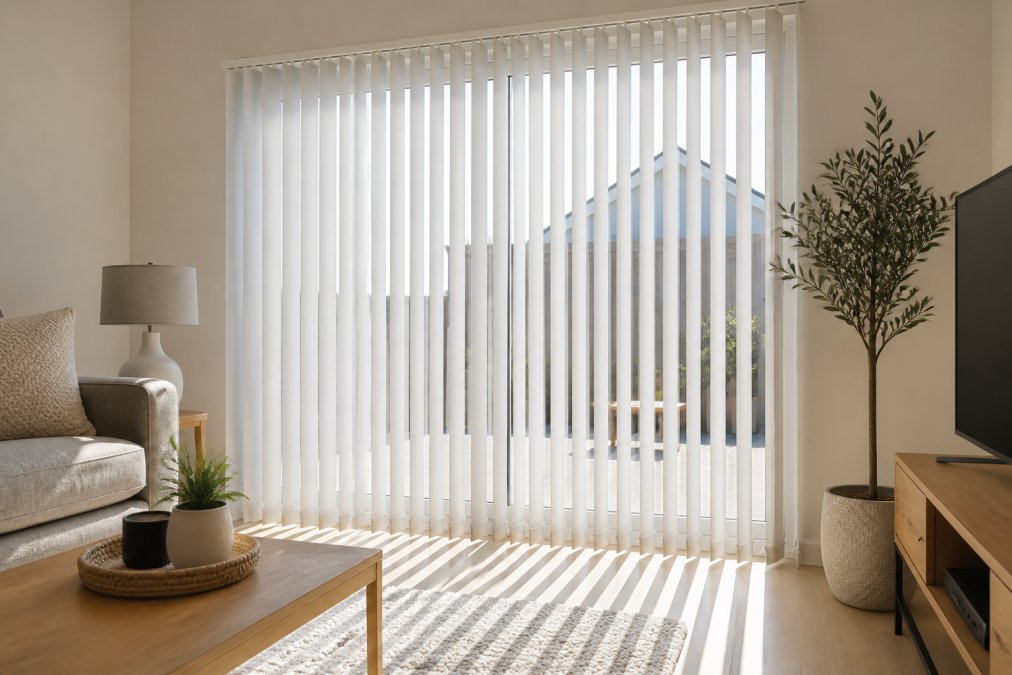
Vertical blinds are the most cost-effective made-to-measure option for large windows and patio doors. Louvres hang from a headrail and rotate to control light, or stack neatly to one side when fully open. They suit floor-to-ceiling glazing better than any other blind type.
Just Blinds manufactures vertical blinds in spongeable flatweave fabrics, including Cameo White and Cameo Cream ranges, with all louvres sewn rather than glued. Individual slat prices start from £4.92, with full made-to-measure sets starting at £19.68. The Multiple Vertical Blind Deal offers the same quality at lower per-unit cost for 2 to 12 blinds simultaneously.

Best for: Patio doors, large windows, offices, and any room where stacking the blind to one side is preferred.
Roller Blinds
Roller blinds operate on a simple tube mechanism: fabric rolls up around a headrail when raised and drops to cover the window when lowered. They're popular because the mechanism is reliable, the profile is slim, and they suit almost every room.
Fabric choice drives most decisions. Blackout fabrics block light entirely, making them ideal for bedrooms and nurseries. Translucent fabrics filter light while maintaining privacy. For kitchens and bathrooms, moisture-resistant fabrics prevent warping and mould growth. Roller blinds also accept motorised operation readily for smart home integration.
Order to exact recess measurements with no deduction for inside-mount installations to prevent light bleed at the sides.
Best for: Bedrooms, nurseries, kitchens, and any window where a clean, minimal profile is the priority.
Venetian Blinds
Venetian blinds use horizontal slats, typically 25mm or 50mm wide, suspended on fabric tapes or cords. Tilting the slats controls incoming light with precision, allowing light from above while blocking direct sightlines from outside, particularly useful for ground-floor rooms.
Aluminium venetian blinds are the most affordable and genuinely moisture-resistant for bathrooms and kitchens. Faux wood venetians offer timber warmth without warping risk in humid rooms. Slat width affects appearance: narrower 25mm slats suit smaller windows and create a contemporary look; wider 50mm slats work better on large windows and give a bolder aesthetic.
Best for: Ground-floor rooms, studies, kitchens, and anywhere precise light direction control matters.
Day and Night Blinds
Day and night blinds use alternating opaque and translucent fabric bands that align or offset as the blind is raised or lowered. When bands align, light passes freely. When offset, opaque sections overlap to create privacy without full blackout.
A single blind handles both bright mornings and private evenings without switching between two different blinds. They suit living rooms and dining rooms particularly well and are generally priced in the mid-range of affordable made to measure window blinds.
Best for: Living rooms, dining rooms, and bedrooms where both light filtering and privacy are daily requirements.
How to Measure Windows for Blinds Accurately
Accurate measurement is the single most important step in ordering affordable made to measure window blinds. A blind made to wrong dimensions cannot be corrected after manufacture.
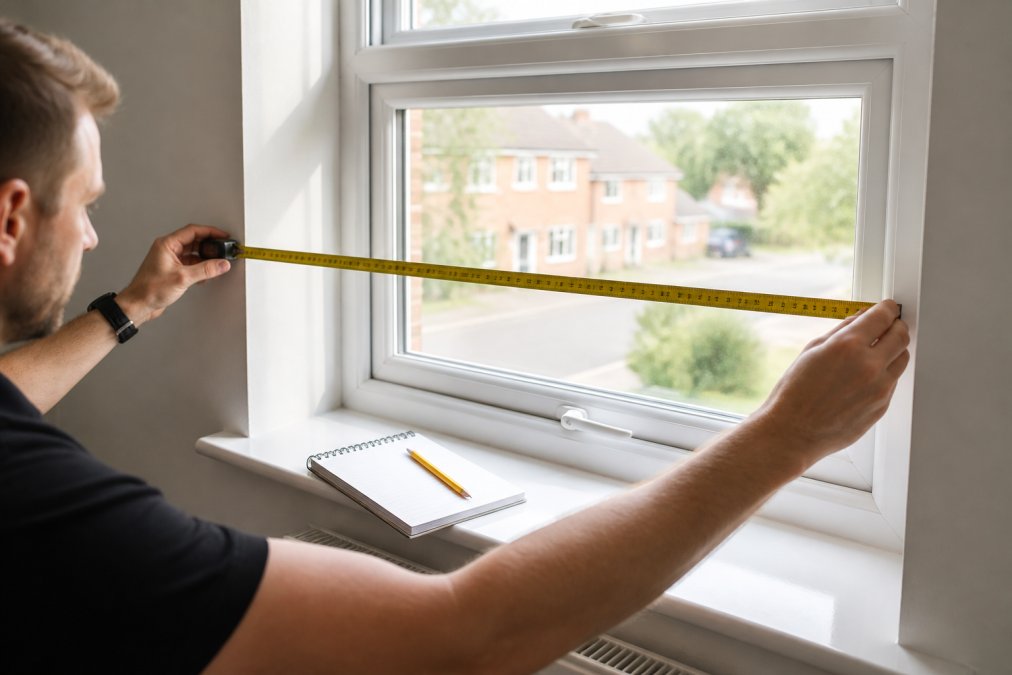
Always use a steel tape measure rather than fabric or plastic. Steel measures don't flex or sag, which introduces errors on wider windows. Measure in centimetres and record width first, then drop. Take three width measurements at top, middle, and bottom of the recess, and use the smallest figure. Windows are rarely perfectly square, and using the largest measurement means the blind won't fit.
According to guidance from the British Blind and Shutter Association, correct measurement technique is the primary factor in achieving a professional finish.
Inside the Window Recess
Fitting inside the recess gives the cleanest look and is the most common choice.
Measure the width at three points and use the smallest measurement. Most suppliers apply a small manufacturing deduction automatically to ensure the blind fits without binding. Check whether your supplier does this before ordering; if not, deduct 10mm from your width measurement yourself.
Measure the drop from the top of the recess to the windowsill. If there's no sill, measure to where you want the blind to end.
Outside the Window Recess
An outside mount positions the blind on the wall or frame surrounding the window. This suits shallow recesses or when you want the blind to appear larger than the window itself.
Add at least 50mm to each side of the window opening for the width, and at least 50mm above the frame for the drop. For blackout applications, increase overlap to 75-100mm per side to prevent light creep around edges.
Fitting Made to Measure Blinds: A Step-by-Step Overview
Fitting made to measure blinds is a task most homeowners can complete without professional help, provided measurements are correct and the right fixings are used. The process typically takes 15-30 minutes per blind.
What you'll need:
- Pencil and spirit level
- Power drill with appropriate bit for your wall type
- Wall plugs suitable for plasterboard or masonry
- Screwdriver
Step 1: Position the mounting brackets Hold the headrail against the wall or inside the recess at the desired position. Mark bracket positions with a pencil. Use a spirit level to confirm the headrail is horizontal before marking.
Step 2: Drill and fix the brackets Drill at marked positions and insert appropriate wall plugs. Screw the mounting brackets firmly into place. For plasterboard walls, use cavity wall anchors rather than standard plugs.
Step 3: Attach the headrail Clip or slide the headrail into the mounted brackets according to manufacturer's instructions. Give the headrail a firm downward tug to confirm it's secure.
Step 4: Attach the bottom rail and check operation For vertical and roller blinds, attach the bottom rail or chain weights. Test the blind through its full range of movement. Check that it operates smoothly and sits level when closed.
Perfect fit brackets are available for some blind types and clip directly onto the window frame without wall fixings, making them ideal for rented properties or UPVC frames. Check compatibility before ordering.
The Royal Institution of Chartered Surveyors guidance on home improvements recommends confirming wall construction type before any fixing work.
Fabric, Material, and Features Worth Paying Attention To
The fabric you choose determines how the blind performs day-to-day. Most buyers focus on colour and pattern, then discover too late that the material doesn't suit the room's conditions.
Blackout and Thermal Efficiency
Blackout blinds use a light-blocking coating or weave that prevents light transmission. True blackout fabric blocks all direct light, but no fabric alone eliminates light entirely if there are gaps around edges. Correct measurement and adequate overlap matter as much as fabric specification.
Thermal efficiency is a separate property. Blinds with thermal lining or cellular construction trap air between fabric and glass, reducing heat loss in winter and limiting solar gain in summer. This is particularly relevant for rooms with large glazed areas. According to Energy Saving Trust guidance on window treatments, well-fitted window coverings contribute meaningfully to reducing home heat loss.
Roller blinds and vertical blinds in thermal fabrics are the most practical choice for energy saving.
Child Safety and Cordless Options
Child safety is a legal requirement for blinds sold in the UK. The UK Product Safety regulations covering window blind cords require that blinds with cords or chains include safety devices to prevent looping hazards, or are designed as cordless or wand-operated alternatives.
Just Blinds offers a child safe wand system on its vertical blind range as an alternative to standard chain and cord control. The wand rotates louvres without creating a looped cord, removing strangulation risk entirely.
Cordless roller blinds operate via a spring-loaded mechanism: push up to raise, pull down to lower, with no cords at all. They're slightly more expensive but eliminate the safety concern completely.
Eco-Friendly and Sustainable Materials
Recycled polyester fabrics, made from post-consumer plastic bottles, are now available across several blind styles and perform comparably to virgin polyester. Fabrics certified to OEKO-TEX Standard 100 have been tested for harmful substances and are produced under controlled environmental conditions.
For natural materials, woven wood blinds use bamboo, reeds, and grasses from managed sources. They're not suitable for high-humidity rooms but work well in living rooms and studies. Faux wood blinds offer timber appearance without moisture sensitivity, and many use recycled PVC content.
Ask for fabric swatches before committing. A swatch lets you check colour in your room's actual light conditions and assess texture before manufacture.
Long-Term Care, Cleaning, and Troubleshooting
Most blind failures result from neglect rather than poor quality. Regular maintenance takes minutes and extends the life of any blind significantly.
Cleaning by blind type:
| Blind Type | Recommended Method | Frequency |
|---|---|---|
| Vertical blinds (fabric) | Wipe with damp cloth or sponge; spongeable fabrics tolerate mild detergent | Monthly or as needed |
| Roller blinds | Wipe with damp cloth; avoid soaking the fabric | Monthly |
| Venetian blinds (aluminium) | Wipe each slat with a damp cloth or use a slat duster | Fortnightly |
| Venetian blinds (faux wood) | Damp cloth; safe for kitchens and bathrooms | Monthly |
| Day and night blinds | Gentle wipe with dry or barely damp cloth; avoid pressure on the fabric bands | Monthly |
For spongeable fabrics, including Cameo and Carlo ranges from Just Blinds, a mild washing-up liquid solution on a damp sponge removes most marks without affecting appearance or coating.
Troubleshooting common fitting issues:
A blind that hangs unevenly almost always traces back to brackets that aren't level. Remove the headrail, recheck bracket positions with a spirit level, and refix. A difference of even 3-4mm across the width is visible.
Vertical blind louvres that won't rotate evenly usually indicate dust build-up in the headrail carrier mechanism. Remove the headrail cover and clean carriers with a dry cloth. Replacement parts are available separately if carriers are cracked or broken.
Roller blinds that won't stay up have a tension issue in the spring mechanism. Most mechanisms include a tension adjustment: remove the blind from brackets, roll it fully by hand in the direction that tightens the spring, then refit and test.
A blind that's difficult to raise or lower smoothly often has debris in mounting brackets or a slightly bowed headrail. Check that brackets are clear and the headrail sits flat. For persistent issues, the headrail may have been overtightened during fitting; loosen bracket screws slightly and retest.
Frequently Asked Questions
How much should made to measure blinds cost?
Prices vary widely depending on blind type, fabric, and size. At Just Blinds, made to measure vertical blinds start from £4.92 for a single blind, with full-window options from £19.68. Ready-made blinds appear cheaper upfront but often need trimming or leave gaps, which means you may end up replacing them sooner. Buying made to measure blinds at a competitive price gives you a custom-fit result without the premium typically associated with bespoke window treatments.
Is it cheaper to buy ready-made or made to measure blinds?
Ready-made blinds carry a lower sticker price, but they only come in fixed sizes. If your window falls between standard dimensions, you either trim the blind (which can void any guarantee) or live with gaps that affect privacy and light control. Made to measure blinds are cut to your exact measurements, so there is no waste and no compromise. For non-standard windows, bay windows, or patio doors, the custom-fit option is usually the more cost-effective choice over time.
How do I measure my windows accurately for custom blinds?
Use a steel tape measure rather than a fabric one. For an inside recess fit, measure the width at the top, middle, and bottom of the recess and record the smallest figure. Measure the drop from the top of the recess to the sill. For an outside fit, add at least 5 cm to each side of the frame width and 5 cm above the frame for the headrail. Always measure in centimetres and double-check before ordering, as made to measure blinds are cut to your exact sizes and cannot be exchanged.
Are there affordable blackout made to measure blinds?
Yes. Blackout roller blinds and certain vertical blind fabrics block virtually all incoming light, making them suitable for nurseries, children's bedrooms, and home cinema rooms. The key is choosing a fabric with a blackout lining rather than relying on fabric thickness alone. Bear in mind that even a perfectly fitted blackout blind can allow a small amount of light around the edges of the recess; a perfect fit blind system, which clips directly to the window frame, eliminates this issue.
What child safety rules apply to window blinds in the UK?
The UK's General Product Safety Regulations require that blinds sold to consumers meet child safety standards. Corded blinds pose a strangulation risk, so current guidance from the British Blind and Shutter Association strongly recommends cordless or wand-operated blinds in rooms used by children under 16. Just Blinds offers a child safe wand control system across its vertical blind range as standard. Always check that any blind you order carries a child safety compliant label before fitting it in a child's room.
Replacing old or poorly fitting blinds doesn't require a large budget or a trade installer. The biggest challenge most homeowners face is measuring accurately and choosing the right material for the room's conditions. Just Blinds manufactures affordable made to measure window blinds across the full range of popular styles, with free UK delivery on orders over £175 and replacement slats compatible with most existing rail systems. Shop Now and get a precise fit for every window in your home.
This article was written using GrandRanker
