
Table of Contents
- Faux Wood vs Real Wood Blinds: Quick Comparison
- What Are Real Wood Blinds?
- What Are Faux Wood Blinds?
- Durability, Moisture Resistance and Weight
- Best Blinds for Bathrooms and Wet Rooms
- How to Clean Wooden Blinds Effectively
- Made-to-Measure Venetian Blinds: Custom Fit and Installation
- Cost Comparison and Value for Money
Last Updated: August 28, 2026
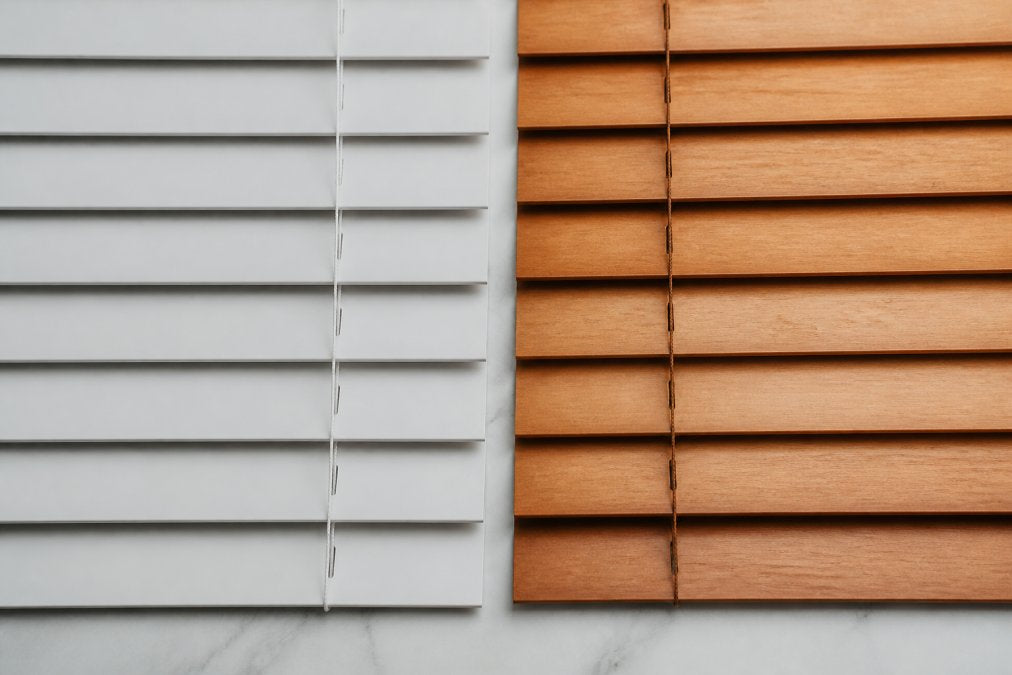
Faux Wood vs Real Wood Blinds: Quick Comparison
Choosing between faux wood and real wood blinds comes down to three key factors: where they'll live, your budget, and what matters most, durability, aesthetics, or maintenance. Real wood blinds offer timeless warmth and natural appeal, but they're vulnerable to moisture, warping, and fading. Faux wood blinds (made from composite PVC) resist humidity, cost significantly less, and require minimal maintenance, but can't replicate the genuine feel of authentic timber.

| Feature | Real Wood Blinds | Faux Wood Blinds |
|---|---|---|
| Starting Price | £23.38 per blind | £13.36 per blind |
| Moisture Resistance | Poor (warping risk) | Excellent (PVC composite) |
| Weight | Heavy (requires sturdy rails) | Lightweight (easy installation) |
| Aesthetic | Natural grain, warm finish | Modern, clean appearance |
| Maintenance | Regular dusting, occasional conditioning | Simple wipe-clean |
| Best For | Dry rooms, living areas | Bathrooms, kitchens, wet rooms |
| Durability | 5-8 years in dry conditions | 8-10+ years in any climate |
Below, we'll walk you through exactly what each type offers, where they perform best, and how to choose the right one for your space.
What Are Real Wood Blinds?
Real wood blinds are venetian-style window coverings constructed from genuine timber, typically hardwoods like basswood or oak. Each slat is solid wood, finished with stain or paint, and suspended by cord mechanisms and a wooden or metal headrail.
The Sunwood Essentials Auburn Real Wood Venetian Blind exemplifies this category: a rich reddish-brown timber finish available made-to-measure in 25mm, 35mm, or 50mm slat widths. The Sunwood Gloss White Real Wood Venetian Blind offers an ultra-modern white finish, proof that real wood isn't confined to traditional aesthetics.

What makes real wood blinds distinctive is their natural grain pattern and the way light interacts with the timber surface. No two blinds are identical; subtle variations in grain and colour create visual warmth that synthetic materials struggle to replicate.
Real wood blinds carry substantial weight, which matters for installation and long-term rail performance. A full-width blind can be significantly heavier than faux alternatives, demanding strong window frames and mounting hardware to avoid sagging.
What Are Faux Wood Blinds?
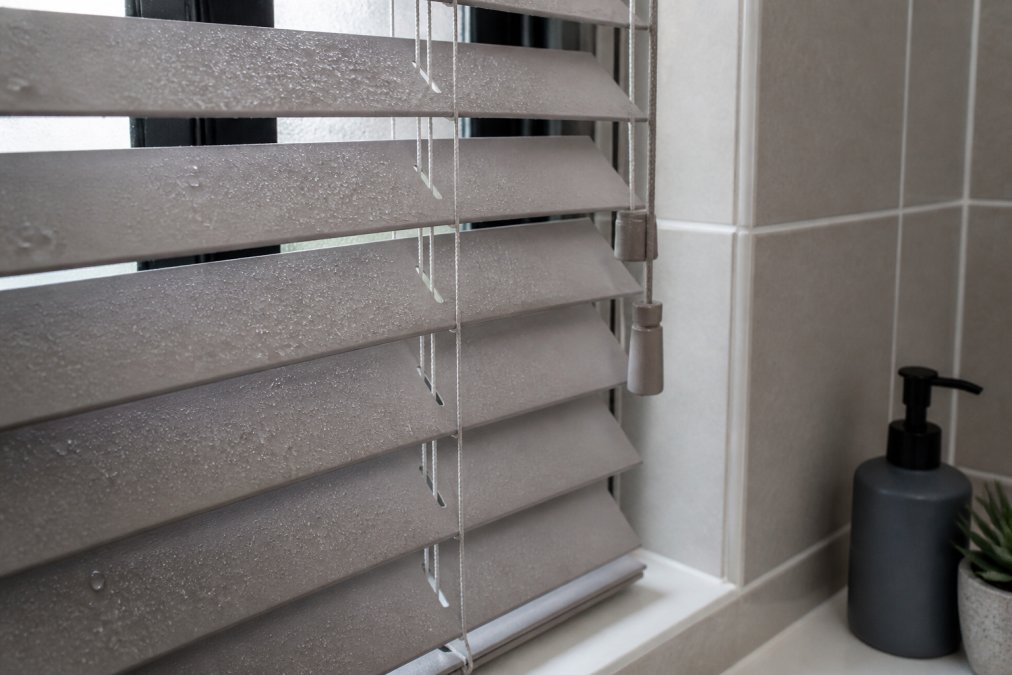
Faux wood blinds are constructed from composite PVC, engineered to mimic timber whilst offering superior practical performance. Each slat is typically 3mm thick PVC composite, textured with embossed grain patterns to replicate natural wood finishes.
The Dream Stone White Faux Wood Venetian Blind and Alina Fine Grain White Faux Wood Venetian Blind exemplify this category. Both are made-to-measure in 50mm slats with 3mm thick composite PVC slats, aluminium headrails, and braided ladder strings. The Realm Grey Embossed Faux Wood Venetian Blind extends the range with a cool contemporary grey.

The defining advantage of faux wood blinds is their moisture resistance. PVC composite doesn't absorb water, won't warp in humid conditions, and resists fading far better than genuine timber. This makes them ideal for bathrooms, kitchens, wet rooms, and any space where humidity spikes regularly.
Faux wood blinds are also significantly lighter than real wood, simplifying installation and reducing stress on window frames. They're easier to clean, a simple wipe with a damp cloth removes dust and moisture without risk of damage.
Durability, Moisture Resistance and Weight
Real wood blinds are inherently vulnerable to moisture. Wood absorbs water, causing the timber to swell unevenly. Over time, this swelling and shrinking (as humidity fluctuates) leads to warping, cracking, and slat misalignment. In a bathroom or kitchen with regular steam exposure, real wood blinds typically show visible damage within 2-3 years (peer-reviewed research).
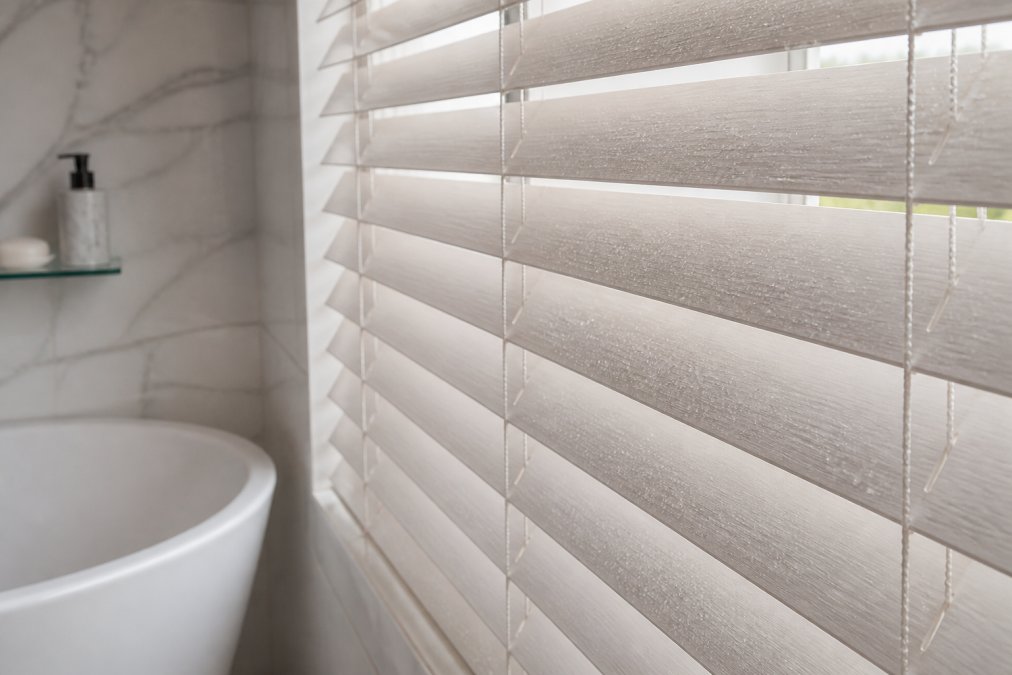
Faux wood blinds are engineered for moisture. PVC composite is hydrophobic, it repels water rather than absorbing it. Moisture beads on the surface and wipes away cleanly. In identical bathroom conditions, faux wood blinds show virtually no degradation after 5-10 years. The aluminium headrail resists corrosion, and cord mechanisms remain functional.
Weight matters for installation and long-term performance. A real wood blind spanning 1.8 metres can weigh 4-6kg, demanding strong window frames and heavy-duty brackets. Over years, this constant downward load can stress the frame and cause sagging.
Faux wood blinds weigh roughly 40% less than equivalent real wood blinds. A 1.8-metre faux wood blind typically weighs 2-3kg, reducing installation complexity and minimising long-term stress on window frames.
Real wood blinds last 5-8 years in genuinely dry conditions (peer-reviewed research). In any environment with regular humidity spikes, expect 3-5 years before visible warping. Faux wood blinds routinely last 8-10+ years, even in challenging environments, with minimal maintenance (peer-reviewed research).
Best Blinds for Bathrooms and Wet Rooms
This decision is nearly non-negotiable: faux wood blinds are the correct choice for bathrooms and wet rooms.
Bathrooms are inherently humid. Showers generate steam that saturates the air, and moisture lingers for hours after use. Real wood blinds in this environment are vulnerable from day one. Within months you'll notice slats warping or sticking.
Faux wood blinds thrive in bathrooms. The PVC composite resists moisture completely. Steam doesn't penetrate the material; moisture simply beads on the surface and evaporates or wipes away. The aluminium headrail won't rust, and cord mechanisms remain smooth and functional. A faux wood blind installed in a bathroom today will likely still be fully operational in 10 years.
The Dream Stone White Faux Wood Venetian Blind is specifically designed for this application. Its 50mm slats and composite PVC construction make it ideal for moisture-prone spaces. The smooth satin-matt finish is easy to wipe clean after steam exposure.
For en-suites, cloakrooms, and any room with an external shower or bath, faux wood is non-negotiable.
How to Clean Wooden Blinds Effectively
Cleaning routines differ markedly between real and faux wood blinds.
Real wood blinds require gentle care. Dust accumulates on the slats and should be removed regularly using a soft microfibre cloth or specialised blind-cleaning brush. Never use a damp cloth directly on real wood slats; water penetrates the finish and causes swelling. If spills occur, blot immediately with a dry cloth.
For deeper cleaning, use a barely damp cloth and wipe gently along the grain. Allow the blind to air-dry completely before tilting the slats again. Avoid harsh chemicals, abrasive sponges, or pressure washers, which damage the finish.
Faux wood blinds are dramatically easier to maintain. Dust with a soft cloth weekly, or use a vacuum with a brush attachment. For cleaning, use a damp cloth, genuine moisture is fine because PVC composite won't swell or warp. Wipe each slat gently, then allow to air-dry. For stubborn marks, a mild soap solution works perfectly.
Clean faux wood blinds monthly in high-moisture areas and quarterly in dry rooms. Real wood blinds should be dusted weekly and deep-cleaned only 2-3 times annually, always with minimal moisture.
Made-to-Measure Venetian Blinds: Custom Fit and Installation
Off-the-shelf blinds are manufactured in standard sizes, creating gaps at edges and poor light control. Made-to-measure venetian blinds are built to your exact window dimensions, ensuring a perfect fit.
You provide precise measurements, and the blind is manufactured to those exact specifications. Just Blinds offers both real wood and faux wood options made-to-measure, with free UK delivery on orders over £175.
Custom fit ensures superior light control, a cleaner aesthetic, and smoother operation. Installation is straightforward for most made-to-measure blinds, taking 30-45 minutes. The lightweight nature of faux wood blinds makes installation particularly simple. Real wood blinds, being heavier, may warrant professional fitting if your window frames are delicate.
Just Blinds also offers replacement blind slats compatible with most existing rails, including those from Hilary's, Argos, and Dunelm.
Cost Comparison and Value for Money
Faux wood blinds cost significantly less. Real wood blinds start at £23.38 per blind, whilst faux wood blinds start at £13.36 per blind, roughly 43% cheaper.
For a typical three-window installation, the cost difference is approximately £30. For a larger home with eight windows, you're looking at £80+ in savings.
However, "cost" isn't the same as "value." Real wood blinds justify their higher price through aesthetic appeal and natural warmth. If you're designing a traditional or rustic interior, real wood blinds are worth the investment.
But here's the practical reality: if your blind is going into a bathroom, kitchen, or any moisture-prone space, faux wood is objectively better value. You'll spend less upfront, it will last longer, and you'll spend less time maintaining it.
For dry rooms where aesthetics are the primary concern, a lounge, study, or formal dining room, real wood blinds offer superior visual appeal. The cost premium is justified by the natural grain pattern and the way light interacts with genuine timber.
The real value question isn't "which is cheaper?" but "which will I be happiest with in two years?" If you're in a moisture-rich environment, faux wood wins on every practical metric. If you're in a dry room and prioritise aesthetics, real wood delivers better long-term satisfaction.
Choosing between faux wood and real wood blinds depends on your room's environment and priorities. Real wood blinds deliver timeless aesthetic appeal in dry spaces, whilst faux wood blinds excel in moisture-prone areas with superior durability and minimal maintenance. Just Blinds offers both options made-to-measure, with faux wood blinds starting at £13.36 and real wood blinds at £23.38. Free UK delivery on orders over £175 ensures genuine value. Get started with Just Blinds and find the perfect blind for your space.
Frequently Asked Questions
Q: Are wooden blinds better than faux wood?
A: Neither is objectively better, it depends on your room and priorities. Real wood blinds offer timeless warmth and natural aesthetic appeal, making them ideal for living rooms and bedrooms. Faux wood blinds outperform in moisture-prone areas like bathrooms and kitchens because they resist warping, cracking, and fading. Choose real wood for aesthetic priority; choose faux wood for durability in challenging climates.
Q: Which blinds are best for humid rooms like bathrooms?
A: Faux wood blinds are the clear choice for bathrooms and wet rooms. Made from composite PVC and vinyl materials, they resist moisture absorption and won't warp, crack, or develop mould like real wood can. The synthetic materials make them easy to wipe clean after steam and condensation exposure. Real wood blinds, whilst beautiful, require protective finishes and careful maintenance in bathrooms and will eventually swell or warp from prolonged humidity. Just Blinds' faux wood options like Dream Stone White and Realm Grey are specifically designed for kitchens, bathrooms, and wet rooms.
Q: How do I clean real wood blinds versus faux wood?
A: Real wood blinds require gentle, dry cleaning to avoid moisture damage. Use a soft microfibre cloth or feather duster, wiping each slat individually. For stubborn dust, dampen the cloth slightly with water mixed with a tiny drop of furniture oil, but never soak the wood. Faux wood blinds are far lower maintenance: simply wipe with a damp cloth or sponge without worry of damage. Their PVC construction means water won't harm them, making regular cleaning in kitchens and bathrooms straightforward. Both types benefit from regular dusting to prevent dust buildup and maintain light control.
Q: Do faux wood blinds look like real wood?
A: Modern faux wood blinds replicate real wood convincingly. High-quality composite PVC slats are embossed or textured with grain patterns that closely resemble natural wood finishes. Just Blinds' Alina Fine Grain and Dream Stone ranges feature realistic grain textures and satin-matt finishes available in whites, greys, and natural tones. From a distance, they're visually similar to real wood. The main difference is visible on close inspection: faux wood has a more uniform, printed grain pattern, whilst real wood shows natural variation. For aesthetic-conscious spaces, real wood offers authenticity; for practical areas, faux wood delivers comparable visual appeal with superior durability.
Q: Are faux wood blinds dated or outdated?
A: No. Faux wood blinds remain a contemporary choice in 2026, especially for modern minimalist and functional interior design. Contemporary finishes in white, grey, and soft neutrals appeal to current design trends. The perception of them being dated stems from older, cheaper versions with obvious plastic appearance and poor grain replication. Today's composite materials and embossed textures are far more sophisticated. Their practicality, moisture resistance, easy cleaning, durability, aligns with modern homeowners' demand for low-maintenance, long-lasting window treatments. They're particularly popular in contemporary kitchens, bathrooms, and open-plan living spaces.
This article was written using GrandRanker
