
Table of Contents
- Why Accurate Measuring Matters for Blackout Blinds
- Tools You'll Need to Measure Your Windows
- Recess vs Exact Measurement for Blinds: Which Method to Use
- Step-by-Step: How to Measure Window Width and Height
- Measuring Window Depth for Blinds: Accounting for Frame and Projection
- How to Measure for Blackout Curtains vs Blackout Blinds
- Preventing Light Leakage: Overlap and Clearance Calculations
- Common Measuring Mistakes to Avoid
Last Updated: August 29, 2026
Why Accurate Measuring Matters for Blackout Blinds
Getting your window measurements right is the difference between blackout blinds that work and ones that leave gaps allowing light leakage. Light creeping around edges defeats the entire purpose, especially in bedrooms and nurseries where total darkness matters (the NIH).

Incorrect measurements result in gaps that render your investment useless. The good news: accurate measuring is straightforward once you know what to measure and why.
The stakes are higher with blackout blinds than standard blinds. A standard roller blind with a small gap is annoying; a blackout blind with a gap is useless. Measuring windows for blackout blinds requires precision at every step, from initial width and height measurements to accounting for frame depth and calculating overlap for light prevention.
Tools You'll Need to Measure Your Windows
You don't need expensive equipment, but you do need the right tools. A poor measuring tool introduces error that no amount of care can fix.
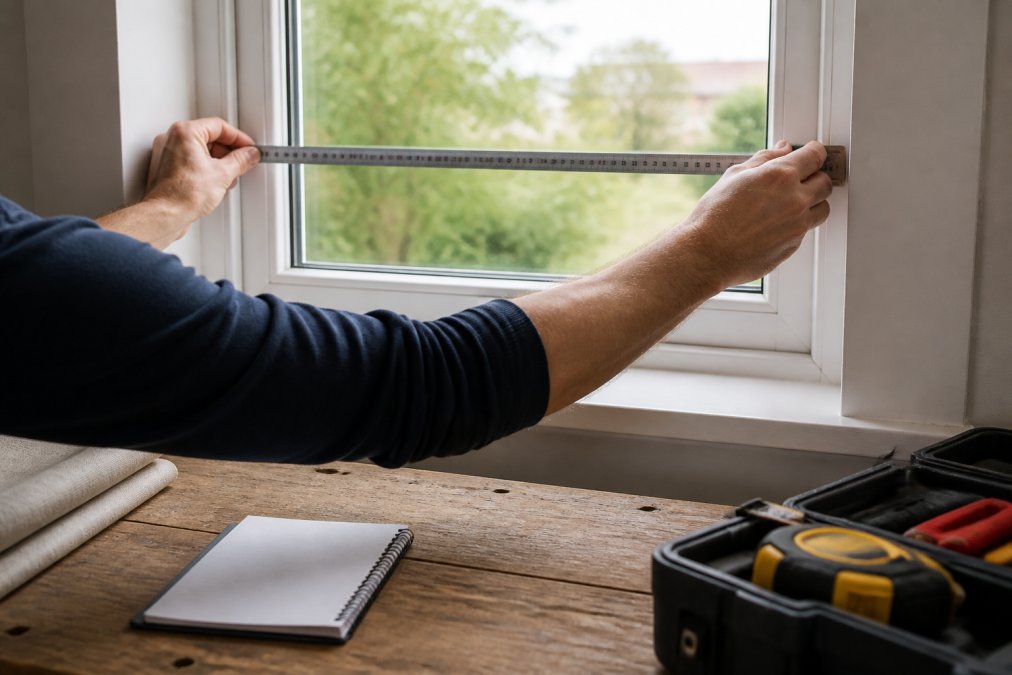
Metal tape measure. This is non-negotiable. A metal tape measure stays rigid when extended, giving you accurate measurements across long distances. Cloth tape measures stretch and sag, introducing error. A 5-metre metal tape measure covers most residential windows. Brands like Stanley or Fisco are reliable and affordable.
Spirit level. Windows aren't always perfectly level or square, especially in older properties. A small spirit level tells you whether your window frame is truly vertical, affecting your height measurements and how the blind will hang.
Notepad and pen. Write measurements down immediately. Don't rely on memory; you'll mix up width and height or confuse measurements from different windows.
Ruler or straight edge. For measuring frame depth, a straight edge helps you identify exactly where the deepest point of the recess is. A 30cm ruler works perfectly.
Torch or phone light. When measuring inside a recess, shadows obscure the exact edges. A torch illuminates corners and reveals true dimensions.
The metal tape measure is your most critical tool. Invest in a quality one; it'll last years and be used for dozens of future projects.
Recess vs Exact Measurement for Blinds: Which Method to Use
Understanding the difference between inside mount and outside mount measurement methods is essential. They're not interchangeable, and choosing the wrong method means your blinds won't fit.
Inside Mount Installation
An inside mount fits the blind inside the window recess, using the recess walls as mounting points. This method works when your window recess is deep enough and the frame is in good condition.
When measuring for inside mount, measure the visible glass area at three points: top, middle, and bottom of the recess. Use the smallest measurement as your blind width to ensure the blind covers the glass area at every height without gaps.
For height, measure from the top of the recess (where the headrail will sit) down to the sill at three points: left, centre, and right. Use the smallest measurement. Inside mount gives a neat, integrated appearance and is ideal for blackout blinds when you want the blind to match the window frame depth and prevent light leakage through the recess itself.
Outside Mount Installation
An outside mount fixes the blind to the wall or architrave above and beside the window, extending beyond the window frame on all sides. This method works for any window and offers more flexibility for controlling light leakage.
When measuring for outside mount, measure the wall space where brackets will attach, extending beyond the window frame by at least 5cm on each side. For height, measure from above the window (typically 5-10cm above the frame) down to below the sill (typically 5-10cm below).
Outside mount is the preferred method for blackout blinds because it allows you to create overlap that seals light gaps.
Step-by-Step: How to Measure Window Width and Height
Small errors compound; a 5mm error in width and 5mm error in height becomes a 10mm gap somewhere on your blind.
Measuring Width Accurately
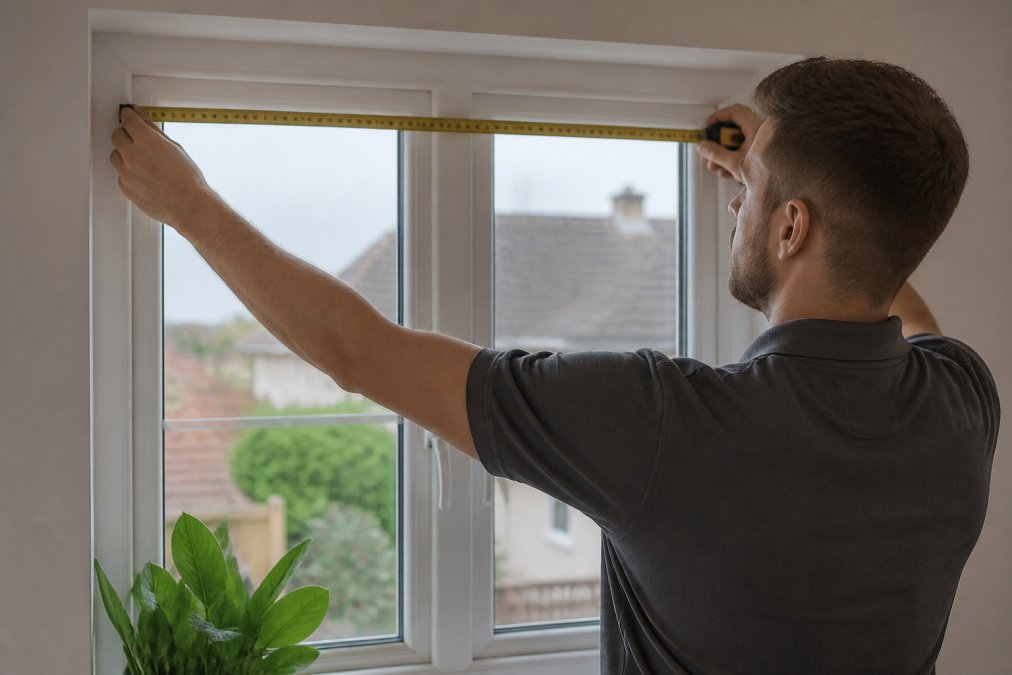
For inside mount, position the tape measure horizontally across the inside of the window recess at the top, middle, and bottom. Record all three measurements and use the smallest number.
For outside mount, measure from the left wall to the right wall where your mounting brackets will attach, adding your desired overlap (minimum 5cm per side) to this measurement.
Write the measurement in millimetres. Blinds are manufactured to the millimetre, so precision is critical (bsigroup.com). Check your measurement twice before moving on.
Measuring Drop (Height) Correctly
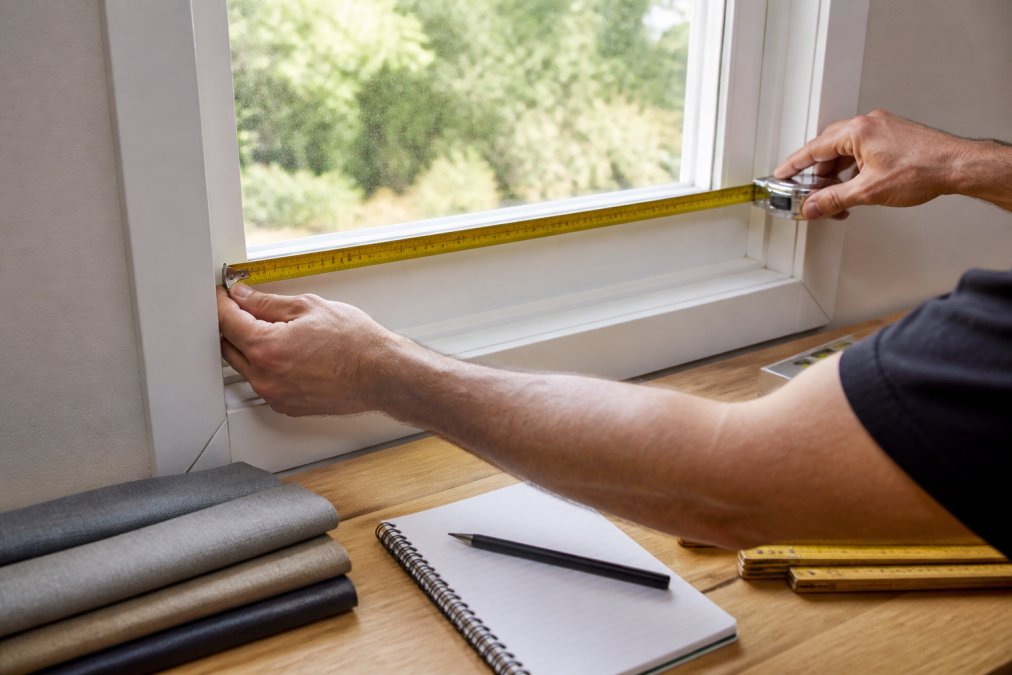
Drop is the vertical measurement from top to bottom. For inside mount, measure from the top of the recess to the sill. For outside mount, measure from above the window frame to below the sill.
Position the tape vertically along the left side, centre, and right side of the window. Record all three measurements and use the smallest number for inside mount. For outside mount blackout blinds, extend the drop below the sill by at least 5-10cm to prevent light from entering below the blind.
Measure in millimetres. Accurate drop measurement is especially critical for blackout blinds because insufficient drop leaves a light gap at the bottom.
Measuring Window Depth for Blinds: Accounting for Frame and Projection
Window depth is the distance from the outer edge of the window frame to the inner back wall of the recess. This measurement determines whether inside mount is feasible and how much projection your mounting brackets need.
For inside mount, the blind headrail must fit inside the recess without hitting the back wall or window. Most inside-mount blackout blinds need 5-7cm of depth to fit comfortably. If your recess is shallower, inside mount won't work; you'll need outside mount instead.
Use your ruler or straight edge to measure depth accurately at three points: top, middle, and bottom.
How to Measure for Blackout Curtains vs Blackout Blinds
Blackout curtains and blackout blinds are measured differently because they operate differently and attach to different surfaces.
Blackout blinds use a headrail that mounts either inside the recess or on the wall above the window. Measuring focuses on the glass area width and the vertical drop from headrail to sill.
Blackout curtains hang from a curtain rod that attaches above the window. Measuring focuses on the width of the wall space where the rod will sit (typically 15-30cm beyond the window frame on each side) and the total length from rod to floor or sill.
Blackout curtains offer superior light control because the fabric is heavier and extends further beyond the window edges. Blackout blinds are more compact and professional-looking, fitting neatly inside the window recess or creating a sleek appearance when mounted above the window.
The key difference in measuring: curtains are measured for wall coverage; blinds are measured for glass area coverage.
Preventing Light Leakage: Overlap and Clearance Calculations
Light leakage is the enemy of blackout performance. Even a 5mm gap around the blind's edges allows visible light to enter.
Overlap is the distance your blind extends beyond the window frame on all sides. For blackout performance, minimum overlap is 5cm per side; better overlap is 7-10cm per side.
Clearance is the gap between the blind and the window frame or wall. For inside mount, clearance is determined by the recess depth. For outside mount, mount brackets securely so the blind hangs straight and close to the wall.
The blind's projection, how far the headrail extends from the wall, also affects light leakage. Standard projection is 10-15cm. For maximum blackout performance, use the maximum projection available (the CDC).
Calculate overlap like this: if your window is 1000mm wide and you want 75mm overlap per side, your blind width should be 1150mm (1000 + 75 + 75).
| Overlap Size | Light Leakage Risk | Best For |
|---|---|---|
| Less than 5cm | High | Not recommended |
| 5-7cm | Moderate | Standard bedrooms |
| 7-10cm | Low | Nurseries, shift workers |
| 10cm+ | Minimal | Maximum blackout performance |
Common Measuring Mistakes to Avoid
Measuring only once. Measure every dimension at least twice. If numbers match, you're confident. If they differ, measure a third time.
Using a cloth tape measure. Cloth stretches and sags over long distances. A metal tape measure stays rigid and accurate.
Forgetting to measure at multiple points. Windows aren't perfectly square. Measure width at top, middle, and bottom; height at left, centre, and right. Use the smallest measurement for inside mount.
Confusing inside and outside mount. Clarify which method you're using before measuring.
Not accounting for window frame depth. Measure depth before committing to inside mount.
Underestimating overlap for light control. Light leakage is the most common complaint about blackout blinds. Insufficient overlap is the cause. Aim for minimum 5cm overlap per side, better 7-10cm.
Measuring in centimetres instead of millimetres. Blinds are manufactured to millimetre precision. Record 1250mm, not "125cm."
Not accounting for blind projection. Verify your blind's projection specification and ensure it's adequate for your light-control needs.
Ignoring window frame irregularities. Use a spirit level to check if the frame is level or square. If the frame is out of plumb, this affects how the blind hangs and where light leaks occur.
Getting your measurements right means your blackout blinds will perform as intended, blocking light completely and providing the darkness you need. Just Blinds offers made-to-measure blackout blinds in options like the Bella Snow White Blackout Vertical Blinds and Bella Plain Cream Blackout Vertical Blinds, manufactured to your exact measurements with precision-fit headrails and full blackout fabric. Follow this measuring guide, take your time, and you'll have blinds that fit perfectly and deliver the complete darkness blackout performance promises. With Just Blinds, free UK delivery on orders over £175 means your investment arrives ready to install with confidence.


Frequently Asked Questions
What's the difference between inside mount and outside mount when measuring windows for blackout blinds?
Inside mount (or recess mount) fits the blind inside the window recess, so you measure the exact width and height of the opening. Outside mount sits on the wall around the window frame, requiring you to measure wider and taller to ensure full coverage and prevent light leakage. Outside mount is ideal for blackout blinds because it covers the entire window and surrounding wall, blocking light completely at the edges.
How much overlap do I need for blackout blinds to prevent light leakage?
For outside mount blackout blinds, aim for 50-75mm overlap on each side of the window and 50mm above and below. This ensures the blind fabric covers the window frame completely and blocks light from creeping in around the edges. For inside mount installations in a deep recess, minimal overlap is needed as the recess itself provides natural light blocking, but check for any light gaps around the headrail and sill.
Can I get blackout curtains made to measure, and how do I measure for them?
Yes, made-to-measure blackout curtains are available and offer a tailored solution. Measure the width of your curtain pole or track and add 100-150mm for fullness and overlap at each end. For drop, measure from the pole to your desired length (sill, below sill, or floor). Unlike blinds, curtains need extra fabric width to create proper folds when closed, so always add extra width beyond your window dimensions.
What should I do if I've measured my windows incorrectly and my blackout blinds don't fit?
Contact Just Blinds before installation to discuss your options. If your blinds are significantly wrong, Just Blinds can advise on exchange or adjustment possibilities. Always double-check your measurements before ordering and use a metal tape measure for millimetre accuracy to avoid costly mistakes.
This article was written using GrandRanker
