

Table of Contents
- Why Homeowners Look Beyond Blinds 2 Go
- How to Measure Windows for Blinds: Getting It Right First Time
- Made-to-Measure Blinds Online: Quality and Customisation
- No-Drill Blinds Reviews: Tension-Mounted Solutions That Work
- Types of Window Coverings Beyond Blinds 2 Go
- Rental-Friendly and No-Drill Installation Methods
- Sustainability and Long-Term Durability
- Conclusion: Choosing the Right Alternative
Last Updated: August 30, 2026
Why Homeowners Look Beyond Blinds 2 Go
When searching for blinds 2 go alternatives for homeowners, you're often looking for better fit, lower cost, more customisation, or installation support that mainstream retailers don't deliver. Bay windows with awkward angles, rental properties where drilling isn't allowed, or rooms requiring complete blackout, these scenarios demand different solutions.
Just Blinds has helped homeowners navigate this problem. The blind retail landscape has expanded dramatically, offering made-to-measure specialists, tension-mounted systems, premium plantation shutters, and vertical blind alternatives that solve different problems.

This guide walks you through the best blinds 2 go alternatives, how to measure correctly so you don't waste money on replacements, and which option fits your home's specific needs.
How to Measure Windows for Blinds: Getting It Right First Time
Measuring your windows accurately is the foundation of every blind purchase. Get this wrong, and you're either returning the blinds or living with gaps that destroy the aesthetic and light control. Measuring takes fifteen minutes and is identical whether you're ordering from Just Blinds or any made-to-measure supplier.
You need three measurements for every window: width, drop (vertical measurement), and the type of fix you're using. Professional fitters measure three times at different points on the same window, because windows are rarely perfectly square.
Measuring Inside the Recess
Measuring inside the recess means taking measurements from within the window frame itself. Start at the top left corner and measure horizontally to the top right corner. Now measure the middle and bottom of the recess horizontally. These three measurements often differ slightly, especially in older properties.
For the drop, measure vertically from the top of the recess to the sill at three points: left, centre, and right. When you place your order, use the smallest width measurement and the smallest drop measurement to ensure the blind fits without gaps.
Measure the recess depth, blinds need clearance behind them, particularly for roller blinds or vertical blinds with deep headrails. If your recess is shallow (under 80mm), consider a face fix instead.
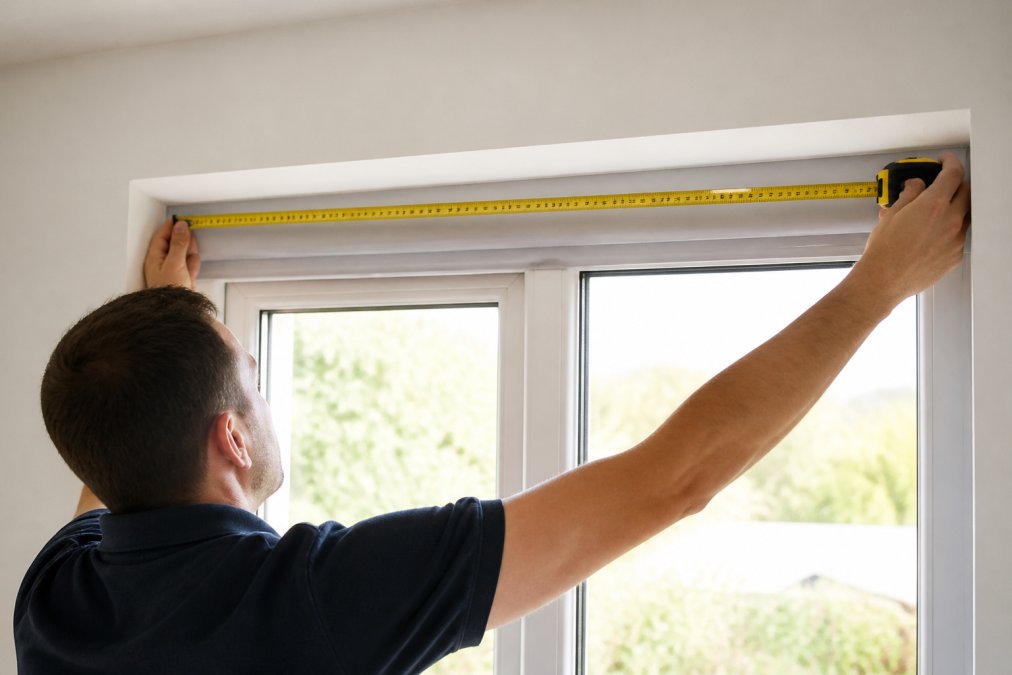
Face Fix Measurements
A face fix means mounting the blind on the wall or frame outside the recess. This works well for shallow recesses, bay windows, or situations where the recess contains radiators or obstacles. Measure the width of the area you want to cover (typically the full window frame plus 50-100mm on each side for light blocking) and the drop from your chosen fixing point to the sill or floor.
Face fix measurements are more forgiving than recess measurements because you control the exact position. The trade-off is that face-fixed blinds are slightly more visible than a recess-mounted blind.
Write everything down. Take a photo of your written measurements and the window itself from different angles. When ordering online, you'll reference these notes multiple times.
Made-to-Measure Blinds Online: Quality and Customisation
Made-to-measure blinds are manufactured to your exact specifications rather than cut down from standard sizes. This is the single biggest quality upgrade most homeowners make when moving away from off-the-shelf retailers.
Just Blinds manufactures made-to-measure blinds across vertical, roller, and venetian styles. You provide your measurements, select your fabric or material, choose your control system (wand, chain, or cordless), and the blinds are manufactured and shipped.
The cost difference between made-to-measure and standard sizes is smaller than most expect. A made-to-measure vertical blind starts from £4.92 for basic fabrics like Cameo Cream or Cameo White, scaling to premium options like Chatsworth Black at £22.12. These are competitive with standard retailers, and you're paying for precision fit.
Customisation options include fabric choice (plain, patterned, blackout, moisture-resistant), control systems (child-safe wand systems are standard), and headrail finish (aluminium powder-coated for durability). Quality made-to-measure blinds have sewn louvres rather than glued, lasting longer and resisting warping.
No-Drill Blinds Reviews: Tension-Mounted Solutions That Work
Renters, homeowners in listed buildings, or anyone avoiding drilling into frames now have tension-mounted options that work reliably. No-drill blinds use spring-loaded mechanisms to hold themselves in place within the recess, requiring zero installation beyond positioning and adjusting tension.
Tension-mounted blinds work best in standard rectangular recesses. They're less suitable for bay windows or very wide windows (over 1.5 metres) where tension can't hold the blind securely across the full width. The mechanism relies on pressure against the recess sides, so fit matters more than with traditional mounting.
For renters, the advantage is clear: you own the blind and take it when you move. For homeowners planning long-term, traditional mounting is often better because it's more secure and doesn't require removal when moving.
Tension-mounted systems work with vertical blinds, roller blinds, and some roller shade alternatives. When shopping for no-drill blinds, confirm that your specific product offers tension mounting.
Types of Window Coverings Beyond Blinds 2 Go
The blind market has fragmented into specialised categories, each solving different problems. Vertical blinds handle large windows and patio doors better than horizontal slats. Roller blinds offer simplicity and clean lines. Plantation shutters deliver premium aesthetics.
Vertical Blinds for Large Windows and Patio Doors
Vertical blinds use vertical slats that stack to one side, ideal for wide windows and patio doors where horizontal blinds become impractical. A 2-metre-wide patio door with traditional venetian blinds creates a control nightmare; vertical blinds solve this with a single mechanism.
Just Blinds manufactures vertical blinds in multiple fabrics and patterns. The Cameo White and Cameo Cream options provide clean aesthetics. The Fiesta range adds subtle patterns. The Chatsworth Black offers luxury styling with a striking leaf pattern. All use powder-coated aluminium headrails and come with chain-and-cord or child-safe wand control.
Vertical blinds excel at light control and privacy adjustment. You can rotate slats from fully open to completely closed, or stack them completely to one side for maximum window access. They're easier to clean than venetian blinds.
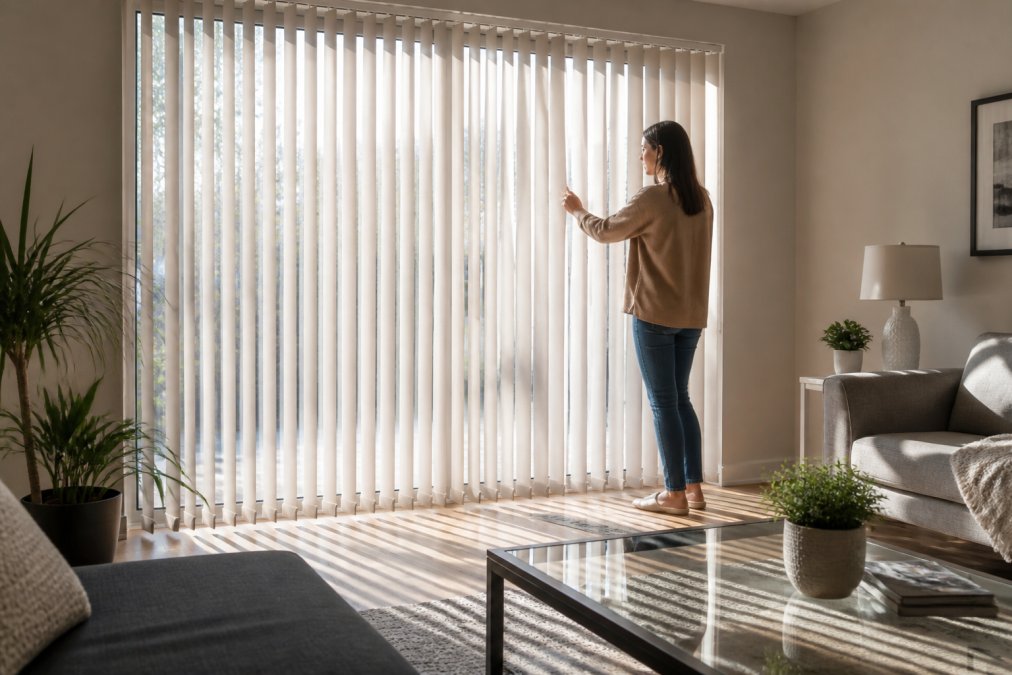
The trade-off: vertical blinds can look industrial in formal rooms but work beautifully in contemporary spaces, kitchens, and offices.
Roller Blinds and Blackout Fabric Options
Roller blinds are the simplest window covering: fabric wound around a tube, raised and lowered with a cord or chain. They offer clean lines, minimal visual clutter, and excellent light control depending on fabric choice. Standard roller blinds reduce glare without blocking all light. Blackout fabric blocks nearly all light, essential for nurseries, bedrooms, and shift workers.
Quality roller blinds use thick, UV-resistant fabric, smooth-running mechanisms, and reinforced rolls that stay straight for years. Budget options degrade quickly.
Blackout fabric blocks approximately 99% of light. Premium blackout options add thermal efficiency, reducing heat loss through windows by up to 25%. For nurseries, this combination of darkness and warmth retention is valuable.
Control systems range from traditional pull chains to cordless spring-loaded systems (better for homes with young children or pets) to motorised options. Cordless systems are increasingly popular because they eliminate dangling cords and reduce entanglement risk.
Plantation Shutters as a Premium Alternative
Plantation shutters use wooden or faux-wood louvres mounted on hinges, allowing light and privacy control by adjusting louvre angle. They're a permanent fixture that adds property value and transforms room aesthetics.
Real wood shutters are expensive and require maintenance. Faux-wood shutters (polyurethane or vinyl) offer the aesthetic at a fraction of the cost and resist moisture, making them suitable for kitchens and bathrooms. Faux-wood shutters are also easier to clean.
The key advantage: longevity. Quality shutters last 15-20 years with minimal maintenance. Blinds typically need replacing every 5-8 years. For long-term homeowners, upfront shutter costs are offset by lower replacement frequency.
Shutters provide superior light control precision. You can open louvres fully, close them completely, or adjust the angle for precise filtering. This granular control isn't available with roller or venetian blinds.
The disadvantages: shutters are expensive (typically £500-£2,000+ per window installed), require professional fitting, and can make rooms feel smaller. They're best suited to larger windows.
Rental-Friendly and No-Drill Installation Methods
Renters have historically been limited to tension rods and cheap adhesive-backed blinds that damage walls. Modern no-drill solutions have changed this. You can now install quality blinds without landlord permission, without damaging the property, and without leaving evidence when you move.
Tension-mounted systems are the primary no-drill solution, using spring pressure against recess sides to hold the blind in place. Installation is positioning the blind and adjusting tension. Removal takes 30 seconds and leaves no marks.
Adhesive-backed brackets are another option, using industrial-strength adhesive to stick to frames or walls. They hold well for 12-24 months but can damage paint when removed. For temporary installations, they're acceptable; for long-term rentals, tension mounting is superior.
The advantage: you own the blinds and take them when you move. This makes renting-friendly blinds economical even for short-term stays.
The limitation: not all blind styles work with tension mounting. Roller blinds and some vertical blinds offer tension options. Roman blinds and plantation shutters require permanent installation. Confirm your chosen style supports tension mounting before ordering.
Sustainability and Long-Term Durability
Quality blinds are designed for longevity, reducing replacement frequency and environmental impact. Durable materials matter. Faux-wood blinds resist warping, moisture, and UV damage far better than cheap fabric blinds. Powder-coated aluminium headrails resist corrosion. Sewn louvres hold their shape and resist cleaning damage.
Replacement parts extend blind life significantly. Quality blinds often have replaceable cords, slats, and mechanisms. Just Blinds manufactures replacement blind slats compatible with most standard rails, including Hilarys, Argos, and Dunelm.
Eco-friendly fabric options are increasingly available. Natural fibres like linen and cotton are biodegradable and require fewer chemicals in production. Recycled polyester blends offer sustainability without sacrificing performance.
The long-term cost calculation favours quality. A £50 cheap blind replaced every five years costs £500 over 50 years. A £150 quality blind replaced every 15 years also costs £500 over 50 years, but with fewer replacements, less waste, and better performance throughout its life.
Conclusion: Choosing the Right Alternative
Finding the right blinds 2 go alternatives for homeowners depends on three variables: your window type, installation constraints, and budget. Bay windows and patio doors favour vertical blinds. Rental properties favour tension-mounted systems. Nurseries and bedrooms favour blackout roller blinds. Premium aesthetics favour plantation shutters.
Just Blinds simplifies this decision by offering made-to-measure options across vertical blinds, roller blinds, and specialised fabrics, starting from £4.92 and scaling to premium options like Chatsworth Black at £22.12. Free delivery on orders over £175, combined with replacement slat compatibility across major retailers' rails, means you're not locked into one supplier for future maintenance.
The most important step is measuring correctly. Take your time, measure three times at different points, and confirm your measurements before ordering. Once you've got that right, choosing between vertical blinds for large windows, roller blinds for simplicity, or tension-mounted systems for rentals becomes straightforward.
British Standards for window coverings and safety
[Consumer guidance on measuring windows for blinds(/blogs/news/how-to-measure-windows-for-blackout-blinds) and shutters | citizensadvice.org.uk]
Energy efficiency ratings for thermal window coverings
Ready to upgrade your windows with blinds that actually fit? Shop Just Blinds' made-to-measure vertical blinds starting from £4.92, with free UK delivery on orders over £175. Our powder-coated aluminium headrails, sewn louvres, and child-safe wand systems deliver the quality and precision that made-to-measure blinds should provide.
| Blind Type | Best For | Installation | Light Control | Cost Range |
|---|---|---|---|---|
| Vertical Blinds | Large windows, patio doors | Face fix or recess | Excellent | £4.92-£22.12 |
| Roller Blinds | Simplicity, clean lines | Recess or face fix | Variable (light-filtering to blackout) | £30-£80 |
| Tension-Mounted | Rentals, no-drill requirements | Tension mechanism | Depends on fabric | £25-£70 |
| Plantation Shutters | Premium aesthetics, longevity | Professional fitting | Excellent | £500-£2,000+ |
Frequently Asked Questions
What makes made-to-measure blinds online better than standard sizing?
Made-to-measure blinds online are cut to your exact window dimensions, eliminating gaps that allow light to creep in around edges. Standard sizes often leave visible light leaks, particularly problematic for blackout requirements in nurseries or bedrooms. Customisation also ensures your blinds fit sash windows, bay windows, and irregular frames precisely. Most online retailers provide free measuring guides and virtual consultations to confirm accuracy before manufacturing.
Do no-drill blinds reviews suggest they're reliable for rental properties?
No-drill blinds reviews consistently show they work well for rentals because they use tension-mounted or adhesive systems requiring no permanent fixtures. These leave no damage when removed, satisfying landlord requirements. Tension-mounted options suit most window frames without drilling into walls or frames. However, reviews note they work best on standard rectangular windows; bay windows and sash windows may need professional assessment. Always check your tenancy agreement before installation, as some landlords restrict any window covering modifications.
How do I know if my measurements for blinds are correct before ordering?
Most retailers provide measurement verification before manufacturing. Take three measurements (top, middle, bottom for width; left, centre, right for drop) and submit them through their online portal. Many offer free remeasurement services if you're unsure. Photograph your window and measurements together. If ordering made-to-measure blinds online, allow time for the supplier to confirm dimensions match your window type, recess fit versus face fix, before cutting. This step prevents costly returns or exchanges.
What's the difference between blackout and opaque blinds for light control?
Blackout fabric blocks nearly all light, making it ideal for nurseries, bedrooms, and shift workers needing total darkness. Opaque fabrics filter light but allow some daylight through, offering privacy without complete darkness. Day and night blinds combine both in dual-roller systems, giving you flexibility. For best results with either option, ensure your made-to-measure blinds fit snugly in the window recess to prevent light leakage around edges. Blackout performance depends on proper installation and fabric quality, not just the blind type.
This article was written using GrandRanker
