
Table of Contents
- Inside Mount vs Outside Mount: Choosing the Right Installation
- How to Stop Light Coming Through Sides of Blinds
- Using Light Gap Blockers for Blinds
- Adjusting Brackets and Hardware to Close Gaps
- Replacing Vertical Blind Slats for a Better Fit
- Measuring Your Windows Correctly to Prevent Gaps
- Common Mistakes to Avoid When Fixing Blind Gaps
- Frequently Asked Questions
Why Gaps Form in Blinds
Gaps in blinds result from installation method, window geometry, hardware movement, or measurement errors. Inside mounts create gaps because the headrail sits recessed within the frame. Outside mounts can gap if brackets aren't positioned correctly or the headrail isn't level. Bay windows, sloped ceilings, and irregular frames don't accommodate standard mounting. Over time, brackets loosen, headrails shift, and vertical blind slats drift out of alignment. Measurement errors during ordering also account for many gaps. The good news: most gaps are fixable without replacing the entire blind through bracket adjustments, light gap blockers, or replacing individual slats.
Inside Mount vs Outside Mount: Choosing the Right Installation
Inside mount means the blind's headrail sits inside the window frame between the left and right casing. This looks clean but inherently creates side gaps because the headrail can only be as wide as the interior frame allows, letting light leak in from the sides.
Outside mount means the headrail is mounted on the wall or trim above and to the sides of the window frame. The blind can extend further, potentially covering the entire window opening and part of the wall, reducing side gaps significantly. However, outside mounts are more visible and can look bulkier.
The choice depends on your window type and aesthetic preference. If your window frame is deep or recessed, inside mount is cleaner. If your windows are shallow or you need maximum light control, outside mount performs better. Many homeowners don't realize they can switch mounting methods on existing blinds if gaps persist.
Just Blinds offers both inside and outside mounting options on made-to-measure blinds.
How to Stop Light Coming Through Sides of Blinds
Light creeping in from the sides is fixable with several straightforward approaches matched to gap severity.
For minor gaps (less than 5mm), self-adhesive foam tape works well (peer-reviewed research). This weatherstripping-style tape adheres to the side of the headrail where it meets the window frame. Clean the headrail surface thoroughly before applying, as dust prevents adhesion. Press the tape firmly along the entire length of the gap.
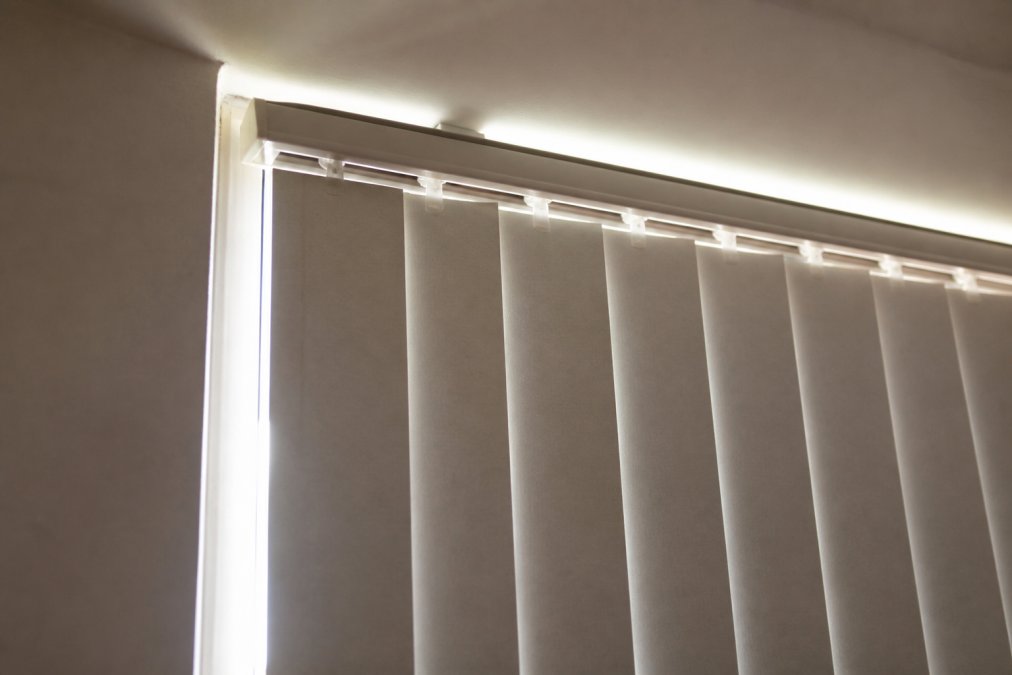
For gaps between 5-10mm, magnetic strips are more effective (peer-reviewed research). These thin, flexible strips attach to the blind frame and create a seal against metal window frames or specially positioned metal plates on the window casing. Position them so they create a light-tight seal when the blind is closed.
Larger gaps (over 10mm) require side channels or light gap blockers. These U-shaped tracks mount vertically on either side of the window frame, with the blind's edge sliding into the channel to create a sealed path that blocks light completely. Side channels are standard on professional blackout installations and nearly eliminate side light leakage.
For rental properties or temporary solutions, adhesive velcro strips offer flexibility and are removable without damage.
Using Light Gap Blockers for Blinds
Light gap blockers are purpose-built devices designed to eliminate side gaps entirely and are the most effective solution for serious light control problems.
Light gap blockers come in two main types: side channels and tension rods. Side channels are vertical tracks running the full height of your window frame, typically made from aluminium or plastic. The blind's edge fits into the channel groove, creating a sealed pathway as you raise or lower the blind. Side channels are permanent installations mounted with screws or brackets and look professional.
Tension rods work differently. These adjustable rods sit horizontally at the top of the window, with elastic straps connecting the blind's edge to the rod. When you pull the blind down, the straps keep the fabric taut against the window frame, eliminating flapping and side gaps. Tension rods are less visible than side channels and work well for roller shades and some fabric blinds.
Installation is straightforward for both types. Measure your window height carefully; side channels must be cut or ordered to the exact length of your window. For tension rods, measure the width of your window opening. Most light gap blockers are sold as kits with mounting hardware included.
Basic side channels start around £15-20 per window, while tension rods typically range from £10-25. For comparison, a complete replacement blind costs significantly more, making light gap blockers a cost-effective upgrade.
Just Blinds supplies replacement slats and hangers that work with most rail systems.

Adjusting Brackets and Hardware to Close Gaps
Many gaps exist simply because brackets have shifted or loosened over time. A 10-minute adjustment might solve the problem entirely.
Stand directly in front of the window and look for obvious misalignment. Use a spirit level to check if the headrail is tilted. If not level, loosen the bracket bolts slightly (usually grub screws on the underside of the bracket), adjust the headrail until it's level, then retighten.
Next, check bracket position. The brackets should position the headrail as close to the window frame as possible without touching. If brackets are set too far forward, they push the blind away from the window, creating gaps. Loosen the bracket bolts, slide the bracket closer to the frame, and retighten. Even 5mm of adjustment can eliminate side gaps.
For vertical blinds, check the bottom rail tension. If too loose, the slats drift outward, creating gaps. Tighten the tension mechanism, usually a screw or lever at the bottom of the headrail, until the slats are vertical and parallel.
If your blind has adjustment screws on the headrail itself, these control fabric tension and alignment. Turning these screws clockwise typically tightens the fabric, reducing gaps. Make small adjustments and test between them.
For face-fix brackets mounted on the window frame itself, ensure all bolts are tight. Vibration from doors, traffic, or wind can loosen brackets over months.

Just Blinds supplies Pack of 3 face fix brackets for vertical blinds.
Replacing Vertical Blind Slats for a Better Fit
When individual vertical blind slats are damaged, bent, or misaligned, replacing them is often simpler and cheaper than replacing the entire blind. Vertical slats are modular and can be swapped individually.
Identify which slats need replacing. Bent or warped slats create gaps and prevent the blind from closing properly. Measure the slat width; most vertical blinds use either 89mm (3.5 inch) or 127mm (5 inch) slats.
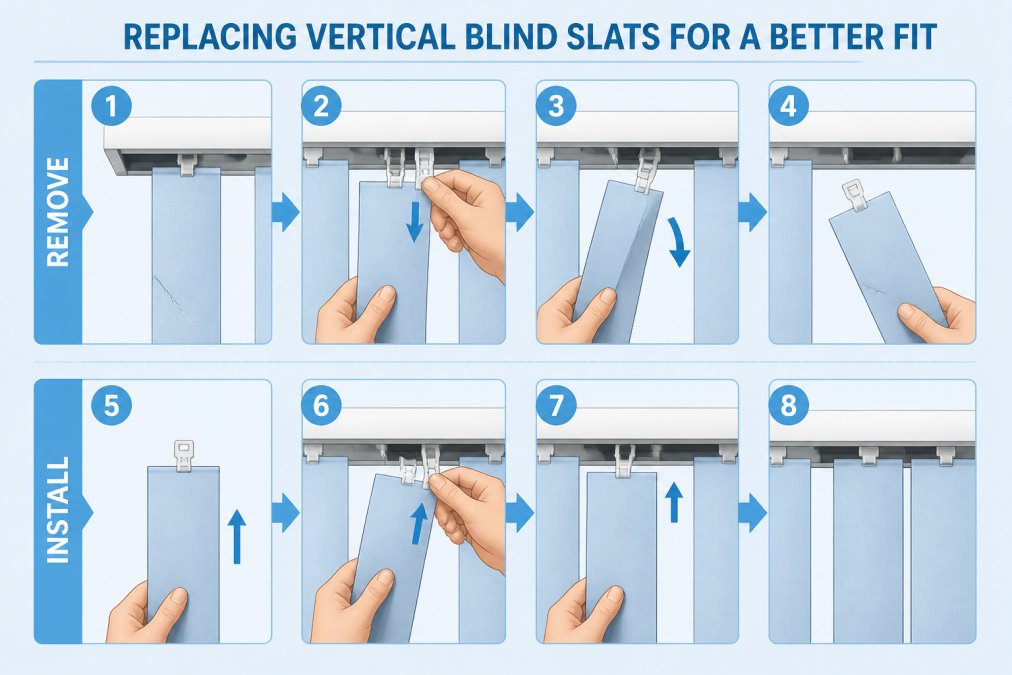
Removing a slat is straightforward. Locate the hanger at the top of the slat, the small clip that attaches to the headrail. Gently pull the hanger out of the rail track. The slat will drop free. If stuck, wiggle it gently side to side while pulling upward.
Installing a new slat is the reverse process. Insert the hanger into the rail track and slide it into position. You'll hear a soft click as it seats. The slat should hang vertically and parallel to adjacent slats.
Replacement slats are significantly cheaper than a new blind. Just Blinds offers Vertical blind hangers - suitable for 3.5 inch (89mm) blind slats (Pack of 10) compatible with most standard rails, including systems from Hilary's, Argos, and Dunelm. A pack of replacement hangers costs around £2.50.
Measuring Your Windows Correctly to Prevent Gaps
Measurement errors are the root cause of many gap problems and are entirely preventable with careful attention during ordering.
Use a metal tape measure, as fabric tape measures stretch and give inaccurate readings. Measure in millimetres for precision.
For inside mounts, measure the width of the window opening at three points: top, middle, and bottom. Use the smallest measurement to ensure the blind fits without gaps. Measure the height from the top of the frame to the sill at the left, centre, and right. Again, use the smallest measurement.
For outside mounts, measure from wall to wall, accounting for any trim or casing. Measure height from above the frame to below the sill, depending on your desired coverage.
Check for obstructions. Radiators, window handles, locks, and furniture near the window can interfere with blind operation. Measure clearance and note any obstacles when you order.
Depth measurement is critical for inside mounts. Measure the distance from the front of the window frame to the back. Vertical blinds need at least 20mm of depth; roller blinds need less.
If you're unsure about measurements, Just Blinds offers free measuring advice, and for customers in the North West, professional measuring services are available.
Common Mistakes to Avoid When Fixing Blind Gaps
Forcing hardware: Don't force hangers into the rail track or brackets onto the blind. If something doesn't fit smoothly, stop and reassess. Forcing often damages the track or hanger.
Ignoring levelling: An unlevel headrail creates uneven gaps along the blind's length. Use a spirit level to check.
Over-tightening bolts: Tighten firmly, but not with maximum force. If a bolt doesn't tighten, the threads may be stripped; replace the bolt rather than forcing it.
Measuring in inches: The UK uses millimetres for blind specifications. Converting from inches introduces rounding errors.
Ordering wrong slat sizes: Vertical blind slats come in standard widths. Verify your slat width before ordering replacements.
Applying adhesive tape to dirty surfaces: Clean thoroughly with a dry cloth before applying tape.
Ignoring window depth: Inside-mount blinds need adequate depth to mount. Check depth before ordering.
Replacing only visible slats: If you notice bent slats on one side, check the entire blind. Multiple bent slats indicate a systemic problem.
Using temporary fixes permanently: Adhesive tape and velcro deteriorate over time. If gaps persist, invest in proper side channels or light gap blockers.
Not checking bracket tightness regularly: Check and retighten bolts every 6-12 months, especially on blinds in high-traffic areas (the CDC).
Gaps in blinds frustrate homeowners because they undermine the primary purpose of window treatments: controlling light and privacy. Most gaps are fixable with basic tools and straightforward adjustments. Whether you're tightening brackets, installing side channels, or replacing individual slats, the solutions are accessible and affordable.
If your blind is beyond simple fixes, if the headrail is damaged, the mechanism is broken, or gaps persist despite your efforts, replacement may be the better option. Just Blinds manufactures made-to-measure blinds designed to fit your windows precisely, eliminating gap problems from the start. Our vertical blind hangers, replacement slats, and side channel hardware are compatible with most standard rail systems, including Hilary's, Argos, and Dunelm. With professional measuring available and free UK delivery on orders over £175, upgrading to a properly fitted blind is more affordable than you might expect. Shop now and experience the difference a perfectly fitted blind makes.
Frequently Asked Questions
Q: What causes gaps in blinds?
A: Gaps form when blinds are installed incorrectly, measured inaccurately, or mounted inside the window frame without sufficient depth. Outside mounts prevent side light leakage better because the blind sits in front of the window frame. Inside mounts can leave gaps at the sides and top unless the window recess is deep enough to accommodate the headrail and brackets. Vertical blind slats may also separate or warp over time, creating gaps between individual slats.
Q: How do light gap blockers for blinds work?
A: Light gap blockers are adhesive strips, magnetic seals, or side channels that attach to the blind frame or window casing to seal gaps where light escapes. Self-adhesive blockers stick directly to the headrail or side rails, while side channels mount alongside the blind to create a tight seal against the window frame. Magnetic strips work on metal frames and are rental-friendly because they leave no permanent damage. Choose blockers based on your blind type and whether you need a removable or permanent solution.
Q: Can I add side channels to existing blinds?
A: Yes, side channels can be added to most existing blinds if the window frame allows space for installation. Side channels mount vertically along the sides of the window and guide the blind fabric or slats to fit snugly against the frame, eliminating side light leakage. Installation requires drilling or adhesive mounting, depending on your window material. For rental properties or temporary solutions, self-adhesive light gap blockers are easier to install and remove without damaging the walls or frame.
Q: How do I measure windows correctly to avoid gaps?
A: Measure the width of your window recess (inside mount) at three points: top, middle, and bottom. Use the smallest measurement to account for uneven frames. For depth, measure from the front of the window frame to the back wall to ensure the headrail fits without protruding. Measure the height from the top of the frame to the sill at three points. Take measurements in millimetres for accuracy, and if unsure, order made-to-measure blinds with professional fitting to guarantee a gap-free installation. Always double-check measurements before ordering.
This article was written using GrandRanker
