
Table of Contents
- Why Replace Blind Slats Instead of the Whole Blind
- How to Measure Vertical Blind Slats for Your Hilarys Rails
- Vertical Blind Slat Replacement Hangers: What You Need to Know
- Step-by-Step Installation: Removing and Fitting New Slats
- How to Fix Vertical Blind Slats That Keep Falling Off
- Choosing the Right Fabric and Width for Your Replacement Slats
- Common Mistakes to Avoid When Replacing Blind Slats
- Conclusion
Last Updated: August 19, 2026
Why Replace Blind Slats Instead of the Whole Blind
Replacing individual slats is a smart, cost-effective choice when vertical blinds look worn. Rather than replacing the entire system, swapping damaged or faded slats breathes new life into your window treatment at a fraction of the cost.
A complete blind replacement can run into hundreds of pounds, especially for made-to-measure options. Individual replacement slats from Just Blinds cost from as little as £0.85 per slat, making it genuinely affordable to refresh your blinds without replacing the headrail, hangers, and control mechanism.

Your existing headrail, wand control system, and hanging apparatus already work perfectly. Replacement slats let you keep that familiar setup while updating only the visible fabric. There's also no downtime, you can refresh your blinds in an afternoon rather than waiting weeks for a made-to-measure order.
Replacing slats rather than the entire blind is also the sustainable choice. Vertical blind systems are durable; the mechanical components often outlast the fabric. This approach reduces waste and keeps perfectly good hardware out of landfill while saving money.
How to Measure Vertical Blind Slats for Your Hilarys Rails
Getting your measurements right is the foundation of successful slat replacement. Hilarys rails are common in UK homes but require careful measurement to ensure new slats fit perfectly.
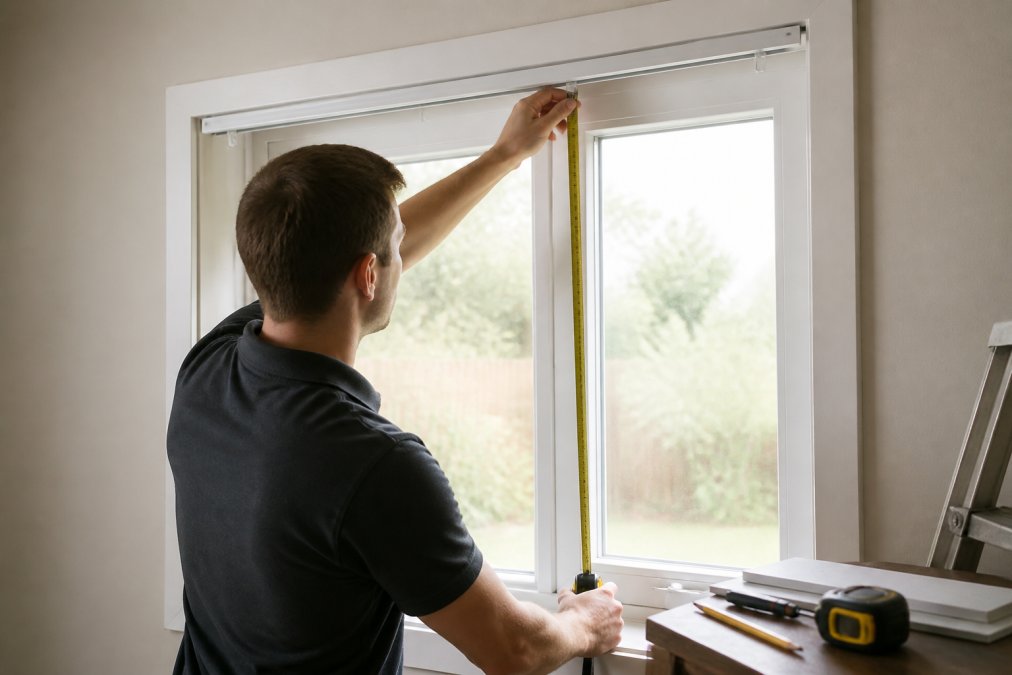
Measuring width and drop accurately
Start with the width, the horizontal distance across your headrail where slats will hang. Use a steel tape measure and measure from the inside edge of the left bracket to the inside edge of the right bracket. Record this in millimetres; precision directly affects how your slats will fit and hang.
Next, measure the drop, the vertical distance from the bottom of the headrail to where you want slats to end. Measure at three points: left, centre, and right. Windows aren't always perfectly square, so if measurements differ, use the shortest one to ensure slats don't drag or catch. Write both measurements down clearly before ordering.
Checking your headrail profile
Hilarys rails come in standard profiles, and confirming which one you have ensures compatibility. Look at your headrail from the side; the profile determines which carrier hooks your slats will use. If unsure, take a photo and compare it against product images online, or contact Just Blinds directly. This five-minute check prevents ordering incompatible slats.
Vertical Blind Slat Replacement Hangers: What You Need to Know
Hangers, also called carrier hooks or top hangers, are the small plastic or metal clips that grip your slats and attach them to the headrail. Most vertical blind systems use standardised hanger designs that work across multiple brands, including Hilarys rails.
A common mistake is assuming you need to replace hangers when replacing slats. In most cases, your existing hangers will be fine, they're durable and rarely fail. However, if slats drop even after fitting new ones, or if plastic hanger clips are visibly cracked or bent, the hangers need attention. Just Blinds stocks replacement headrails with new hanger systems if needed, but for a straightforward slat swap, your existing hangers should work perfectly.

When fitting new slats, inspect each hanger. Make sure the clip mechanism is clean and moves freely. A quick wipe with a dry cloth often removes dust or debris preventing a smooth fit. If a hanger is damaged, replace just that one rather than the entire set.
Step-by-Step Installation: Removing and Fitting New Slats
Removing and fitting vertical blind slats is straightforward and requires no special tools.
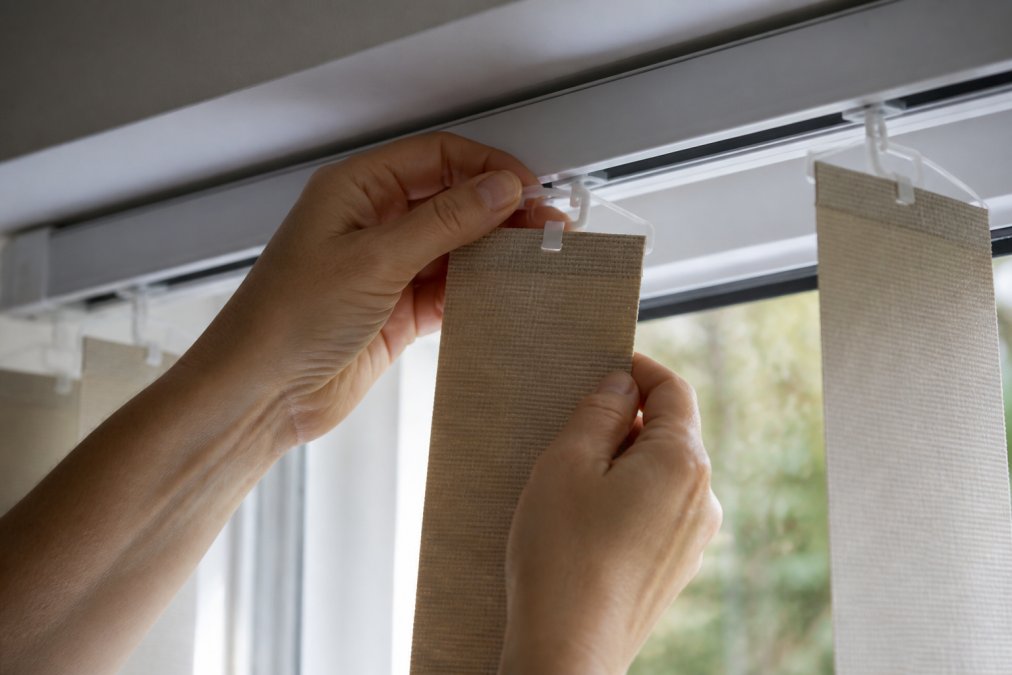
Step 1: Remove the old slats
Pull your wand or control mechanism to gather all slats to one side. Begin at one end, usually the left. Gently lift the first slat at the top, angling it slightly towards you. The hanger will release from the track. Slide the slat downward and out of the bottom weight or stabilising chain. Repeat for each slat, working across the blind. This should take five to ten minutes.
Step 2: Inspect the hangers and headrail
With slats out, you have a clear view of your headrail and hangers. Run your eye along the track; it should be clean and free of damage. If you notice dust or debris, use a dry cloth or soft brush to wipe it out. Check each hanger, they should move freely and the clip mechanism should open and close smoothly. If a hanger is cracked, severely bent, or doesn't move freely, mark its position for replacement.
Also check your bottom weights and stabilising chain. These keep slats hanging straight and prevent swinging. If the chain is kinked or a weight is loose, address it now.
Step 3: Attach new slats to the hangers
Unpack your new replacement slats. Take your first slat and position it under the first hanger. The top should slot into the hanger's clip mechanism. Push upward gently until you hear or feel a click, the hanger has engaged. If your blind has a bottom weight or stabilising chain, thread the slat through it now.
Repeat for each slat, working from left to right. Each slat should be positioned evenly spaced across the headrail with no twists or kinks.
Step 4: Hang slats and balance the blind
Guide the first slat into the track at the headrail. It should slide smoothly. If not, check that the hanger is properly engaged and the track is clear. Continue sliding each slat into the track, spacing them evenly. They should hang vertically without twisting or bunching.
Test your wand or control mechanism. Slats should open and close smoothly and gather evenly on either side. If one slat hangs lower or higher than others, remove and reposition it. Finally, check the bottom weight or stabilising chain, all slats should hang straight with the chain running smoothly through each one. measuring window openings.
How to Fix Vertical Blind Slats That Keep Falling Off
If slats drop repeatedly even after fitting new ones, the problem is rarely the slats themselves, it's almost always the hangers or positioning.
The most common culprit is a hanger that hasn't engaged properly. When you fit a slat, the top should click firmly into the hanger's clip. If the click is soft or absent, the slat will slip out under its own weight. The fix is simple: remove the slat, wipe both the hanger and the top of the slat with a dry cloth, and refit it, pushing upward firmly until you feel a definite click.
A second issue is a bent or damaged hanger. If the slat is properly engaged but still drops, look closely at that hanger. Is the clip mechanism bent or cracked? If so, that hanger needs replacing. Just Blinds supplies individual replacement hangers.
A third possibility is that your slat is twisted at the top, preventing the hanger from gripping properly. Unfit the slat and lay it flat to check that the top is straight. If it's twisted slightly, gently flex it back into shape. If severely warped, the slat needs replacing.
Finally, check your stabilising chain or bottom weight. If the weight is too heavy or the chain is kinked, it can pull a slat at an angle, causing it to slip from the hanger. Adjust the chain so it runs straight through each slat.
Choosing the Right Fabric and Width for Your Replacement Slats
The fabric type and width you choose affect how your blind looks, how much light it blocks, and how easy it is to maintain.
89mm versus 127mm slat widths
The two standard widths are 89mm and 127mm. The 89mm slat is narrower, creating more visible lines when open and giving a more detailed, striped appearance. It works well in smaller windows and is the economical choice. Just Blinds offers 89mm replacement slats in white, cream, and grey from £0.85 each.

The 127mm slat is wider, creating broader bands of fabric with fewer visible lines. It gives a cleaner, more modern appearance and blocks light more effectively when closed, making it better for light control. However, it costs slightly more. The choice often comes down to your existing blind's width. If replacing slats in a blind you already own, your current slat width is probably the right choice.
Fabric types: blackout, dim-out and standard
Standard fabric offers good light control without complete darkness, maintains colour well, and is easy to clean. Most are spongeable, meaning you can wipe them with a damp cloth. This is the most versatile option for general use.
Dim-out fabric blocks more light than standard but isn't completely opaque. It's ideal for living rooms where you want to reduce glare and heat without total darkness. Dim-out fabrics are often UV-resistant, protecting furniture and flooring from fading.
Blackout fabric is the heaviest and most light-blocking option, designed to create near-total darkness. It's essential for bedrooms, nurseries, and media rooms. Just Blinds specialises in blackout options that deliver real darkness without light creeping around edges.
| Fabric Type | Light Control | Durability | Maintenance | Best For |
|---|---|---|---|---|
| Standard | Moderate | Good | Easy to clean | Living rooms, kitchens, general use |
| Dim-out | High | Good | Easy to clean | Offices, living areas, glare reduction |
| Blackout | Very High | Excellent | Easy to clean | Bedrooms, nurseries, media rooms |
Common Mistakes to Avoid When Replacing Blind Slats
Measuring carelessly is the biggest mistake. Measure three times at different points and use the smallest measurement. Windows are rarely perfectly square, and a slat that's too long will drag or catch.
Ordering the wrong width is surprisingly common. Before ordering, measure the width of one existing slat. If you don't have one to measure, contact Just Blinds with your headrail information.
Forcing a slat into a hanger is another frequent error. If a slat doesn't slide smoothly, don't push harder. Remove it and check that the hanger is clean, the slat isn't twisted, and the hanger clip is fully open.
Ignoring a damaged hanger leads to repeated frustration. If a slat keeps dropping and you've ruled out the slat itself, replace the hanger. It's inexpensive and takes two minutes.
Neglecting to clean the headrail and hangers before fitting new slats is a missed opportunity. A quick wipe removes dust and debris that can prevent hangers from gripping properly or cause slats to bind in the track.
Finally, don't assume all replacement slats are made-to-measure. Just Blinds supplies slats cut to your exact measurements, eliminating guesswork and waste. Specify your width and drop when ordering.
Conclusion
Replacing vertical blind slats is one of the most cost-effective home maintenance tasks you can do. It takes an afternoon, costs just a few pounds, and transforms a tired blind into something that looks and functions like new.
The key is getting your measurements right, understanding your headrail profile, and taking care during installation. Follow the steps in this guide and avoid common mistakes, and you'll have a blind that works perfectly for years to come.
Just Blinds supplies replacement blind slats compatible with Hilarys rails and most other standard systems, cut to your exact specifications and available in multiple colours and fabric types. Whether you need simple white slats or blackout fabric for a nursery, made-to-measure options ensure a perfect fit without waste. Shop Just Blinds replacement slats now and refresh your blinds today.
Frequently Asked Questions
Can I buy replacement blind slats for my existing Hilarys vertical blind rails?
Yes. Replacement slats work with Hilarys rails and most other standard vertical blind systems. You need to match the slat width (89mm or 127mm) and measure your exact drop length. Just Blinds supplies made-to-measure replacement vertical blind slats starting from £0.85 per slat, compatible with Hilarys headrails and carrier hooks. Check your headrail profile before ordering to ensure compatibility.
How do I know if replacement slats are cheaper than buying a whole new blind?
Replacement slats cost significantly less. A single slat from Just Blinds costs from £0.85, whereas a complete blind system costs considerably more. If only a few slats are damaged or faded, replacing them saves money. However, if your headrail is broken, the stabilising chain is missing, or most slats are worn, replacing the entire blind may be more practical and cost-effective long-term.
Do I need to replace the hangers when I replace my vertical blind slats?
Not always. If your hangers are in good condition and slide smoothly along the headrail, you can reuse them with new slats. However, if hangers are cracked, bent, or don't grip the slat properly, replacement hangers are inexpensive and easy to swap. Just Blinds offers replacement vertical blind headrails and spares if your hangers need upgrading.
What should I measure before ordering replacement blind slats?
Measure three things: the slat width (89mm or 127mm, check your existing blind), the exact drop length from the headrail to the bottom weight, and your headrail profile type. Measure the drop in millimetres at multiple points across the window, as sills are often uneven. Accurate measurements ensure your new slats fit without gaps and function smoothly with your existing rails.
Replacing worn or damaged blind slats keeps your window treatments functional and attractive without the cost and waste of a full replacement. Just Blinds makes it simple with affordable, made-to-measure slats that fit Hilarys rails perfectly. Get started with replacement slats from £0.85 each and see how much difference new fabric makes to your home's comfort and appearance.
This article was written using GrandRanker
