
Last Updated: November 5, 2026
Quick Summary
You identify high-quality window blind hardware by checking three things: metal thickness, how tightly the parts fit together, and whether the mechanisms run smoothly under load. Good hardware feels solid in the hand, has burr-free edges, and brackets that lock with a positive click or firm grub screw.
- A headrail that twists easily between your hands will sag, so squeeze it gently to test wall thickness.
- Run the lift control through its full travel; a chain that snags or jumps the sprocket signals loose tolerances.
- For bathrooms, kitchens and coastal rooms, choose anodised aluminium or stainless steel and avoid thinly plated fittings.
- Replace the part rather than the whole blind when the headrail is bent, brackets have cracked, or the control chain has stretched.
- Ask the supplier whether replacement parts are stocked, since a mechanism with available spares is a safer long-term buy.
Table of Contents
- What Separates High-Quality Window Blind Hardware From Cheap Components?
- Know Your Blind Components: Headrails, Slats, Cords and Control Systems
- Blind Brackets and Fixings: The Weakest Link in Most Installations
- Blind Operating Mechanisms: Testing Chains, Wands and Tilt Controls
- Hardware Material and Finish Comparisons That Predict Service Life
- When to Replace Blind Spare Parts Instead of the Whole Blind
- Your Window Blind Buying Checklist Before You Order Made-to-Measure
- Ordering Replacement Hardware and Made-to-Measure Blinds From Just Blinds
- Frequently Asked Questions
What Separates High-Quality Window Blind Hardware From Cheap Components?
Most blind failures start in the hardware, not the fabric.
Cheap hardware announces itself early. Flimsy brackets bend during fitting. Thin headrails flex when you pull the cord. Plastic tilt gears can strip over time. Good hardware feels solid in the hand and stays that way.
Below, we'll show you exactly how to inspect each component before you buy, and what to check on blinds you already own.
Know Your Blind Components: Headrails, Slats, Cords and Control Systems
Every blind is built from the same basic family of parts. Once you can name them, quality checking becomes straightforward.
- Headrail: the metal channel at the top that houses the mechanism
- Slats or vanes: the horizontal or vertical panels that control light
- Cords and chains: the control lines for lifting and tilting
- Wand: a rigid control stick, common on vertical blinds
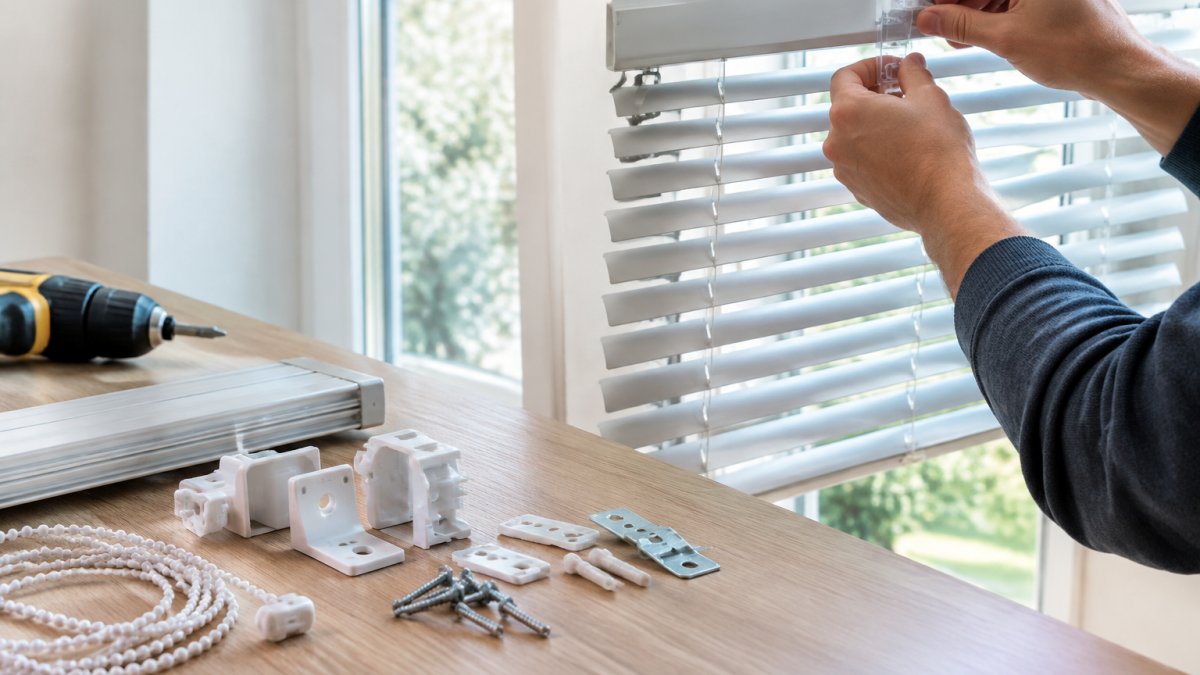
A headrail is the load-bearing spine of any blind. If it twists easily between your hands, the whole system will sag. You can browse headrails blind spares to compare how different rails are built before you commit.
How to Read a Headrail and Its Operating Mechanism
Start at the ends. A quality headrail has clean, burr-free cut edges and end caps that sit flush. Run your thumb along the channel: any sharp lip means poor finishing.
Next, test the mechanism. Pull the cord or turn the wand and listen. If you're replacing a mechanism, our guide on how to replace vertical blind headrail mechanisms walks through the process step by step.
Blind Brackets and Fixings: The Weakest Link in Most Installations
Brackets carry the entire weight of the blind, yet they're the part most buyers ignore. A good bracket is thick steel with a clean powder coat and a positive click or firm grub screw lock.
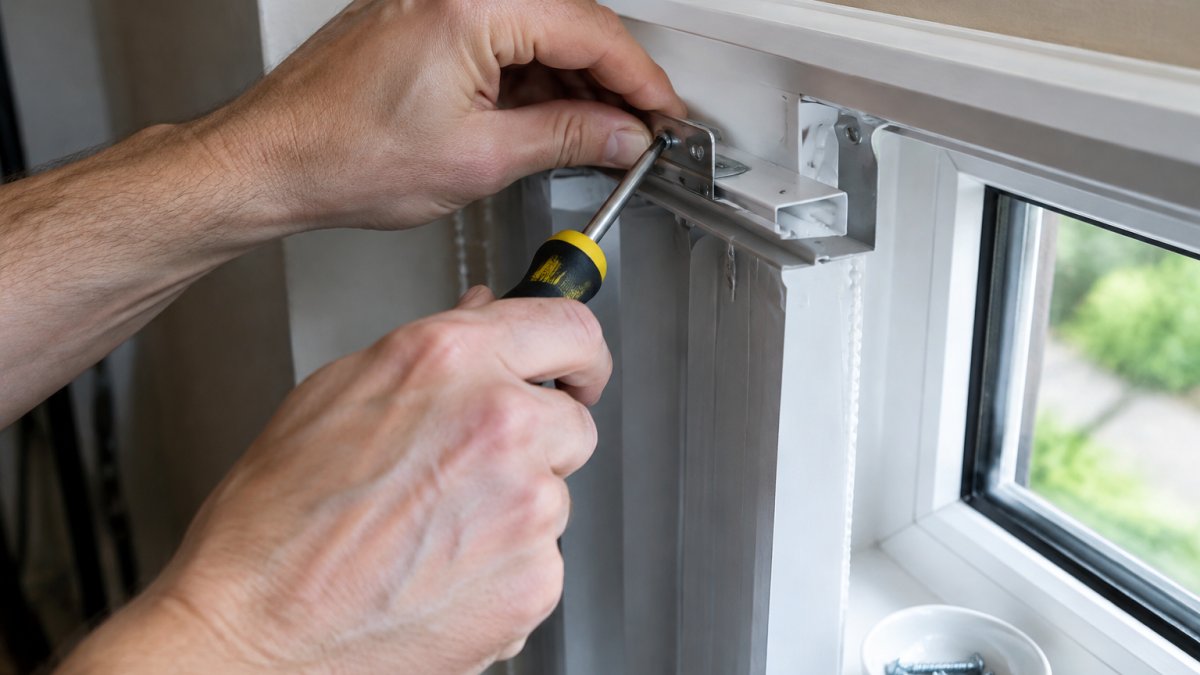
Check these points before fitting:
- Metal thickness: it should resist flexing between finger and thumb
- Fixing holes: reinforced, not punched thin
- Locking method: grub screw or spring clip that engages firmly
- Finish: even coating with no bare patches that will rust
We stock face fix brackets for vertical blinds and top fix brackets for vertical blinds so you can match the fixing to your window type.


Blind Operating Mechanisms: Testing Chains, Wands and Tilt Controls
Operating mechanisms are where cheap blinds fail first, and they are the hardest part to judge from a photograph. The aim here is to turn vague claims about smooth operation into checks you can repeat on any blind, in a shop or on delivery day.
A repeatable test sequence for chains, wands and tilt controls
Work through these in order. Each one isolates a different failure mode, so a fault shows up before you fit the blind.
- Run the lift control through its full travel. Pull the chain or cord steadily from fully lowered to fully raised and back. It should run without snagging, jumping the sprocket, or requiring a tug to start. A chain that skips a tooth under light load will skip more once the blind is loaded with fabric.
- Check the tilt through its full range. Rotate the slats from fully closed one way to fully closed the other. Slats should rotate evenly across the whole width, with no lag at the far end and no slat that stops short. Uneven tilt usually means a twisted headrail or worn tilt gears.
- Flex the wand or control stick. A quality wand is rigid along its length and returns to straight when released. A whippy wand transmits torque poorly and will crack at the handle end.
- Listen for rattle and grind. Move the blind gently side to side. Loose internal parts rattle; dry or poorly machined gears grind. Smooth, quiet operation points to well-matched tolerances.
- Test the hold position. For cordless and spring-assisted mechanisms, raise the blind partway and let go. It should hold without drifting down. Slats that creep down on their own indicate a failing tension system.
- Check the stop limits on motorised hardware. Run the blind to both limits and confirm it stops precisely and repeats the same position. A motor that overshoots or hunts at the limit is poorly calibrated or has a weak encoder.
What good and bad operation actually feel like
Good hardware moves with even resistance and no dead spots. Bad hardware has a stiff patch, a catch, or a point where the chain jumps. If you have to jiggle the control to get it moving, the tolerances are loose.
Watch out: a mechanism that runs smoothly when the blind is empty can still bind once the fabric or slats are fitted, so test again after installation and before you dispose of any packaging.
Cordless and motorised hardware: reliability checks
For cordless, check that the tension system holds at several positions, not just at the top and bottom. For motorised, confirm the motor runs quietly, stops at the set limits, and pairs reliably with its remote or app.
When the mechanism is the part to replace
If the headrail and slats are sound but the control has failed, replacing the mechanism is usually the cheaper route. Replacement wand-control headrails are available from Just Blinds. Measure the headrail width and confirm the control type before ordering, because a mechanism that does not match the rail profile will not seat. Our guide on how to replace vertical blind headrail mechanisms walks through the swap step by step.
Pack of 3 face fix brackets for vertical blinds →
Hardware Material and Finish Comparisons That Predict Service Life
Material choice tells you most of what you need to know about durability, but the useful question is not which metal is best in the abstract. It is which material and finish suit the room, the load and the expected service life. This section turns that into checks you can apply before buying.
How the common materials compare
| Material or finish | What it suits | Watch for |
|---|---|---|
| Powder-coated steel | Brackets, headrails, bottom rails | Chipping at cut edges and fixing holes, which starts corrosion |
| Anodised aluminium | Headrails, slat carriers, lightweight rails | Thin walls that flex; anodising that is uneven or patchy |
| Stainless steel | Coastal or damp rooms, exposed fittings | Magnetic pull can indicate a lower grade with less corrosion resistance |
| Plastic polymer | Tilt gears, hangers, small clips | Brittleness, colour fade, and creep under sustained load |
| Brass or zinc alloy | Small fittings, grub screws, end caps | Poor plating that pits and corrodes in humid rooms |
Measurable checks that predict service life
Vague claims about quality are hard to compare. These checks give you something concrete to test:
- Wall thickness. Squeeze the headrail gently between finger and thumb. If it deforms, it is too thin for the span. A rail that flexes when you pull the cord will sag over time.
- Flex under load. Support the rail at both ends and press down at the centre. Some give is normal; a rail that bows noticeably will not keep slats level.
- Coating integrity. Look at cut edges, fixing holes and the inside of the channel. Bare metal at any of these points is where rust starts, however good the outer finish looks.
- Fit and tolerance. Parts that click together without play will outlast parts that wobble from day one. Check that end caps sit flush and that brackets lock with a positive click or firm grub screw.
Warning signs of low-quality hardware
Some faults are visible before anything fails. Treat these as red flags:
- Loose fittings or brackets that move when you tighten them
- Rough or catching operation anywhere in the control's travel
- Sharp edges or burrs on cut metal
- Inconsistent finish, including patchy anodising or thin powder coat
Manufacturing precision and fit
Where a supplier can tell you the rail profile, the slat size it accepts, and which spares fit it, you have a better chance of a long service life and a straightforward repair later.
When to Replace Blind Spare Parts Instead of the Whole Blind
Replacing the whole blind is often unnecessary. If the fabric or slats are sound, new hardware usually restores full function at a fraction of the cost.
Replace the part, not the blind, when:
- The headrail is bent or the mechanism has failed
- Brackets have cracked or pulled from the wall
- Hangers or carriers have snapped
- The control chain has stretched or broken
Replace the whole blind when slats are warped, faded, or the fabric has torn beyond repair. Also consider a full replacement if the headrail profile is obsolete and spares no longer fit.
Compatibility is the key check. Measure the headrail width and slat size before ordering.
Your Window Blind Buying Checklist Before You Order Made-to-Measure
Use this checklist before you place any made-to-measure order. It covers the quality points that matter most.
- Measure the window width at three points, top, middle and bottom
- Measure the drop on the left, centre and right
- Note any obstructions: handles, tiles, window vents
- Confirm the bracket type suits your window (face fix or top fix)
- Check headrail thickness and flex before ordering
For a sense of how made-to-measure pricing compares across suppliers, our price comparison guide sets out the numbers side by side before you commit.
Ordering Replacement Hardware and Made-to-Measure Blinds From Just Blinds
Matching the right part to your existing blind is simpler when you can see the full range in one place. Just Blinds supplies made-to-measure blinds and replacement blind slats compatible with most rails.
Our spare parts range includes face fix brackets at £5.99 for a pack of three, top fix brackets at £6.50 for a pack of ten, and hangers at £2.50 for a pack of ten.
Check your measurements, confirm your bracket type, and order with confidence.
Frequently Asked Questions
What should I look for in high-quality window blind hardware?
Check four things: a headrail with no flex when you press it, brackets that are thick metal rather than thin pressed steel, slats or vanes that hang straight with no bowing, and a control chain or wand that moves without catching. Confirm the fixings suit your wall type, whether that is plasterboard, masonry or a UPVC frame.
How can I tell whether a blind mechanism is durable?
Operate it repeatedly. A durable tilt mechanism turns with even resistance and returns the slats to the same angle each time. A durable lift mechanism holds the blind at the height you set without creeping down. Listen for grinding or clicking, which usually means plastic gears wearing against each other.
Can blind hardware be replaced without replacing the whole blind?
Yes, in most cases. Brackets, hangers and headrails are commonly available as separate blind spare parts. Just Blinds, for example, sells a pack of 3 face fix brackets for vertical blinds at £5.99, a pack of 10 top fix brackets at £6.50, packs of 10 vertical blind hangers for 89mm slats at £2.50, and a replacement vertical blind headrail with wand control at £21.84. Check the slat size and headrail profile match before ordering, because fit varies between systems.
What are the common signs of poor-quality blind hardware?
Watch for headrails that twist when you hold them at one end, and for a control chain or wand that catches or needs force to move. If a supplier cannot tell you the material or thickness of the headrail, treat that as a warning sign before you spend money.
Ready to fix the hardware instead of replacing the whole blind? Shop the Just Blinds spare parts range and get the exact fit your windows need, backed by free delivery on orders over £175.

