

Quick Summary
Your custom order rights for made-to-measure goods differ from standard online purchases. The 14-day cooling-off period generally does not apply to goods made to your specification, but faulty, damaged or mis-sized items remain covered by the Consumer Rights Act 2015. Check the order terms and keep records of your measurements and approvals.
- The 14-day cancellation right usually does not cover made-to-measure goods.
- Faulty custom goods still qualify for repair, replacement or refund under the Consumer Rights Act 2015.
- A non-refundable deposit term may be unfair if no work has started when you cancel.
- Compare every proof line by line before approving, since approval weakens later claims.
- Put any complaint in writing and give the seller a reasonable deadline, such as 14 days.
Table of Contents
- Why Custom Orders Follow Different Rules
- When You Can Cancel a Custom-Made Order
- What to Do If Your Made-to-Measure Blinds Are Faulty
- Measurement Errors, Proofing and Specification Disputes
- Refunds, Exchanges and Remedies Compared
- Writing an Effective Complaint Letter
- Checking Your Order Before You Confirm It
- Frequently Asked Questions
How to Claim Your Rights on an Online Custom Order
Last Updated: November 6, 2026
Why Custom Orders Follow Different Rules
Understanding your custom order rights for online purchases starts with one simple fact. Made-to-measure goods are not the same as off-the-shelf products. At Just Blinds, we make every blind to your window size, so the rules that apply to a custom order differ from those for a standard item bought online.
Consumer law in the UK gives shoppers strong protection when buying online. The Consumer Rights Act 2015 guidance on goods sets out the basic standards that goods must meet. However, custom goods also raise questions about cancellation that standard goods do not.
This guide explains the main points of your custom order rights. It covers when you can cancel, what to do if a blind is faulty, and how to write a complaint letter that gets results.
When You Can Cancel a Custom-Made Order
Can you cancel a made-to-measure order? The starting point is the Consumer Contracts (Information, Cancellation and Additional Charges) Regulations 2013, which give most online shoppers a 14-day cooling-off period running from the day the goods are delivered. That right exists so you can change your mind after buying at a distance.
Custom-made goods sit outside that right. The Regulations exclude goods made to the consumer's specification or clearly personalised from the cancellation period. The reasoning is straightforward: a supplier cannot resell a blind cut to your window, so the law does not force them to take it back simply because you changed your mind. The exclusion applies to the made-to-measure element, not to the whole order, so if you bought a standard blind alongside a custom one, the standard item may still be cancellable.
This exception catches many shoppers by surprise. Always check the order terms before you confirm your order, and look specifically for a clause that identifies the goods as made to measure or personalised.
Change of mind versus a faulty order
These two situations are treated very differently:
- Change of mind: You simply no longer want the blinds. Because they were made to your measurements, this usually does not qualify for a refund under the cancellation rules.
- Faulty order: The blinds arrive damaged, wrongly made, or not as described. Your rights under the Consumer Rights Act 2015 continue to apply, whatever the custom-made exception says.
The exclusion removes the no-reason cancellation right. It does not remove the statutory quality standards. Goods must still be of satisfactory quality, fit for purpose and as described, and a custom order that fails those standards gives you a remedy in the same way as any other goods. Because the exclusion concerns only cancellation without a reason, a defect in a personalised item can still support a remedy, just as the rules on returning custom gifts make clear.
Deposits, staged payments and cancellation charges
Some custom orders require a deposit or staged payments, and this is where many disputes begin. The legal position depends on what the contract says and on whether the supplier has started work.
- Before production starts: If you cancel before any cutting, making or personalisation has begun, you may be able to recover the deposit. Check the terms for a cancellation window and any administration fee.
- After production starts: Once the supplier has begun making the goods, cancelling may trigger a charge for the work already done. The supplier should be able to show that the charge reflects actual costs incurred, not a penalty.
- Staged payments: Where you pay in instalments, the same principle applies to each stage. A payment described as non-refundable is not automatically enforceable if it does not reflect a genuine loss.
Watch out: a term that says a deposit is non-refundable in all circumstances may be unfair under the Consumer Rights Act 2015, particularly if no work has started when you cancel. Ask for written confirmation of any charges before you pay, and keep that confirmation with your order records.
If you cancel after production has started, put your cancellation in writing, state the date and time, and ask the supplier to confirm what work had been completed. That record matters if the amount of the charge is later disputed.
What to Do If Your Made-to-Measure Blinds Are Faulty
Faulty goods are the most common reason for a valid claim. Start by checking the blinds against your order confirmation.
Follow these steps:
- Take clear photos of the blinds and any damage
- Keep the packaging and the order confirmation
- Measure the blind and compare it to the size you ordered
- Contact the seller in writing and describe the problem
Under UK law, goods must be of satisfactory quality, fit for purpose and as described (Consumer Rights Act 2015). If they are not, you can ask for a repair, a replacement, or a refund.
Measurement Errors, Proofing and Specification Disputes
Measurement errors are a common source of disputes, and the outcome usually turns on who made the mistake and what was approved before production. A custom order is built around a specification: sizes, fabric, colour, control type, lining and any personalisation. When the delivered item differs from that specification, the question is whether the difference is your error, the supplier's error, or a change you approved.
Cameo Cream Vertical Blinds | 89mm | Made to Measure →
Who made the error?
- You supplied the wrong measurement: If you gave a width of 1200mm when the recess is 1150mm, the supplier has made what you asked for. Your claim is weaker, although you may still have a remedy if the supplier failed to flag an obviously unusual figure.
- The supplier misread or mis-entered your details: If your order confirmation shows 1150mm but the blind arrives at 1200mm, the supplier has not made the goods you ordered. That is a failure to match the description, and you can ask for a remake or a refund.
- The supplier measured: If a fitting or measuring service was part of the contract, the supplier carries the risk of an incorrect measurement.
Keep copies of every measurement you sent. Save any emails, online forms or order confirmations that show the specification you approved, and note the date and time of each.
Proofing and approval
Many made-to-measure suppliers offer a proofing or approval step before production. A proof may be a dimension drawing, a fabric swatch confirmation, or a summary screen at checkout. Approval matters because it shifts responsibility for the details shown. If you approved a proof that clearly showed the wrong size, the claim becomes harder. If the supplier made the error despite correct details from you, or the proof did not match what was made, your position is stronger.
Watch out: approving a proof without checking every dimension is the most common way buyers weaken their own claim. Compare the proof against your own measurements line by line before you confirm.
A practical sequence for a specification dispute
- Document the difference. Photograph the delivered item next to a tape measure and compare it with the order confirmation and any approved proof.
- Contact the seller in writing. Set out the specification you ordered, the specification delivered, and the remedy you want, such as a remake to the correct size or a refund.
- Set a deadline. Give a reasonable period for a reply, such as 14 days, and say what you will do if the matter is not resolved.
- Escalate if needed. If the seller does not respond or refuses, ask for their formal complaints procedure. If that fails, you may wish to seek guidance from the Citizens Advice consumer service on next steps.
Under the Consumer Rights Act 2015, goods must match the description, and a custom item that does not match the agreed specification may be treated as faulty. The custom-made exclusion removes the change-of-mind cancellation right; it does not remove your right to goods that match what you ordered.
Refunds, Exchanges and Remedies Compared
When something goes wrong, you may have several options. The right one depends on the problem.
| Situation | Usual remedy | Who decides |
|---|---|---|
| Faulty blind | Repair, replacement or refund | You, within the law |
| Wrong size supplied by seller | Remake or refund | Seller must put it right |
| Change of mind | Usually no refund | Check the order terms |
| Delivery delayed | Refund if delay is serious | Depends on the agreed date |
You can often choose a replacement, but a refund may be the better option if the problem is serious. Ask the seller to explain the options in writing.
Writing an Effective Complaint Letter
A clear complaint letter often gets faster results than a phone call. Keep it short and factual.
Include these details:
- Your name, address and order number
- The date you ordered and the date you received the blinds
- A clear description of the problem
- The outcome you want, such as a replacement or refund
- A deadline for a reply, such as 14 days
Dear [Seller name], I ordered made-to-measure blinds (order number [number]) on [date]. They arrived on [date] and the [describe fault] makes them unusable. I would like a full replacement or a refund within 14 days of this letter. Yours sincerely, [Your name]
Send the letter by email or post and keep a copy.
Checking Your Order Before You Confirm It
Most disputes can be avoided at the start. Take time to check your order carefully.
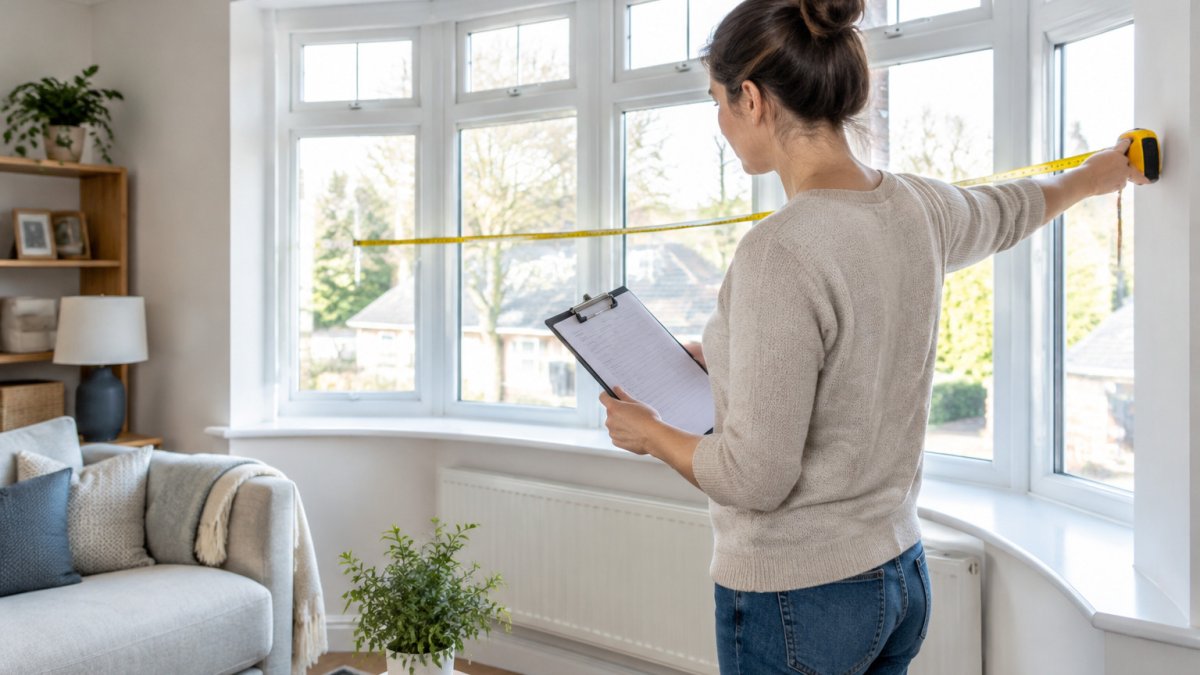
- Measure each window twice, in millimetres, and follow a step-by-step guide to measuring for a perfect fit before you confirm the size.
- Check the exact size on the order summary
- Read the cancellation and custom-order terms
- Confirm the fabric, colour and control type
- Save a copy of the order confirmation
If you want to see our range, browse the Cameo Cream Vertical Blinds | 89mm | Made to Measure for a clear example of a made-to-measure product, or read our guide on what to do if you measure your windows wrong before placing your order.
Frequently Asked Questions
Can I return custom-made blinds bought online?
Usually not for a simple change of mind. Under the Consumer Contracts Regulations 2013, the 14-day cancellation right generally does not apply to goods made to the consumer's specification or clearly personalised. That exclusion does not remove your rights if the blinds are faulty, damaged or not as described. In those cases, you can still reject the goods and seek a refund or repair under the Consumer Rights Act 2015. Check the order terms and keep your order confirmation as evidence.
What can I do if made-to-measure blinds arrive damaged or faulty?
Stop, photograph the packaging and the blinds before installing them, and contact the seller promptly with your order number. Under the Consumer Rights Act 2015, goods must be of satisfactory quality, fit for purpose and as described. If they are not, you can ask for a repair or replacement first, and if that fails you may be entitled to a refund, a price reduction or to reject the goods. Keep every message in writing.
What evidence should I keep when disputing a custom order?
Keep your order confirmation, the specification you submitted, measurement details, payment receipts, delivery paperwork and dated photographs of the goods. Save all emails and chat transcripts. If you measured the window yourself, note how and when. A clear record of what you ordered compared with what arrived makes a complaint far easier to resolve and helps if the matter goes to a dispute resolution service.
How do I complain about a faulty online order?
Write to the seller, set out what you ordered, what you received and what you want done, and give a reasonable deadline such as 14 days. Attach your evidence and say that you are relying on your statutory rights under the Consumer Rights Act 2015. If the seller does not respond, you can escalate through a consumer complaints route, such as the seller's dispute process, a payment provider or an alternative dispute resolution scheme.

