
Table of Contents
- Signs Your Blind Measurements Are Wrong
- What Happens If You Measure Windows Wrong: Your Options
- How to Measure Bay Windows for Blinds Without Getting It Wrong
- Measuring for Recess vs Exact Fit Blinds
- Window Blind Measurement Tolerance: What the Factory Allows
- Your Consumer Rights on Wrongly Sized Blinds
- How to Measure Windows Correctly Next Time
- Frequently Asked Questions
Last Updated: September 16, 2026
Signs Your Blind Measurements Are Wrong
If you have already ordered made-to-measure blinds and something feels off, it is worth confirming whether you actually did measure windows wrong before you call anyone. This guide from Just Blinds covers the warning signs, your options, and how to avoid the same mistake next time. A blind slightly too narrow leaves a light gap down one edge; one too wide will not sit flat in the recess or will foul the window handle.
Visual Checks Before You Fit Anything
Before you drill a single bracket, lay the blind on the floor and check three things: the headrail length against your recorded width, the drop against your recorded height, and whether the fabric hangs square. A diagonal check across the headrail reveals if the unit is twisted. If the blind matches your paperwork but not the window, the error is in the measurement, not the manufacturing.
What Happens If You Measure Windows Wrong: Your Options
Measuring windows wrong does not automatically mean you have wasted your money. You have three routes: return the blind if the supplier allows it, have it modified, or re-order and absorb the cost. Which applies depends on whether the error was yours or the supplier's, and how far off the size is.
First, Work Out How Wrong You Are
Before you contact anyone, measure the gap. The size of the error dictates which fix is realistic:
- Under 5mm out: Almost always salvageable on site. Brackets have slotted holes allowing a few millimetres of lateral adjustment, and a small light gap can be closed with a trim return or self-adhesive brush seal.
- 5-20mm out: Usually fixable with trim or casing rather than a return. A wider face-fix batten or deeper pelmet can absorb the discrepancy.
- 20-50mm out: Borderline. On a recess fit, a face-fix conversion using a timber batten is often cheaper than a re-order. On an exact fit, you may be able to shift the mounting position if the reveal allows.
- Over 50mm out: Modification rarely looks acceptable. Re-order or replace the affected components.
Remediation Techniques for Slightly Wrong Sizes
These are the fixes most guides skip. None require a new blind if the error is small.
Returning vs Modifying: The Cost-Benefit
The cheapest fix is rarely the most obvious one. A re-order means paying full price for a second blind, plus possible delivery. A modification, such as trimming an oversized slat or re-drilling brackets, costs little but only works within a narrow margin. A return depends on the supplier's policy and whether the blind is still in its packaging.
| Option | When It Works | Typical Cost | Main Risk |
|---|---|---|---|
| Return and refund | Unopened, within policy window | Restocking fee may apply | Policy deadlines |
| Trim or modify | Oversized by a small margin | Low, DIY or local fitter | Voiding any warranty |
| Re-order correct size | Any significant error | Full price of new blind | Repeat mistake |
| Replace slats or headrail only | Component-level error | £0.85-£21.84 per part | Colour batch mismatch |
| Professional re-measure | Complex windows, bay windows | Survey fee | None if done before ordering |
How to Measure Bay Windows for Blinds Without Getting It Wrong
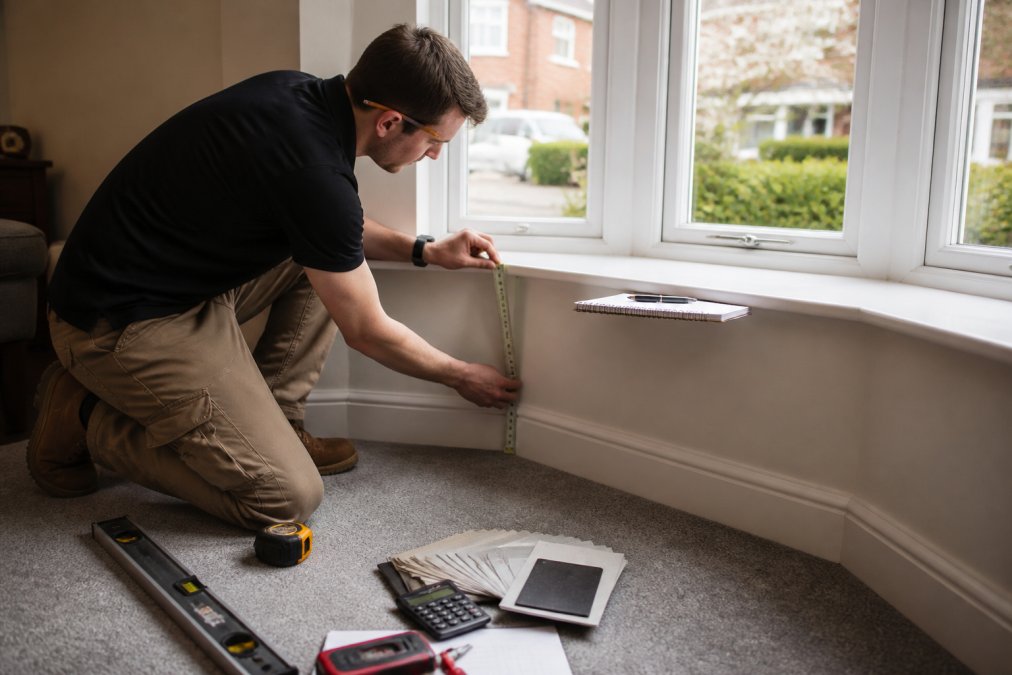
Bay windows are where most measurement errors happen, because there is no single width or drop to record. Each panel is measured separately, and the angles mean a tape measure held flat against one face will not give you the true recess depth.
Measuring for Recess vs Exact Fit Blinds
Recess and exact fit are two different measurements, and mixing them up is one of the most common causes of a blind that will not fit. A recess fit sits inside the opening, so you measure the opening itself. An exact fit mounts to the face of the frame or wall, so you measure the frame plus any overlap you want at the edges.
Window Blind Measurement Tolerance: What the Factory Allows
Every made-to-measure blind carries a manufacturing tolerance, which explains why a blind can be "correct" on paper yet still not fit perfectly. Tolerance is the small variation a factory allows between the size you order and the size that comes off the production line, because cutting, sewing and assembling fabric and metal cannot be perfect to the millimetre.
White Replacement Vertical Blind Slats →
Your Consumer Rights on Wrongly Sized Blinds
Your rights on a wrongly sized blind depend on who made the error. If the blind does not match the measurements you supplied, or arrives faulty or not as described, the Consumer Rights Act 2015 protects you: goods must be of satisfactory quality, fit for purpose and as described, and you are entitled to a remedy from the supplier.
What the Act Actually Gives You
The Consumer Rights Act 2015 sets out a tiered remedy system: the remedy you can demand depends on how long you have had the goods.
- Short-term right to reject (30 days). For the first 30 days after delivery, if the goods do not conform to the contract, you can reject them and get a full refund. This is the strongest remedy and does not require the supplier's permission.
- Right to repair or replacement (after 30 days). Once the 30 days have passed, you can require the supplier to repair or replace the goods. The supplier must do this within a reasonable time and without significant inconvenience to you.
- Right to a price reduction or final right to reject. If repair or replacement is impossible or disproportionate, you can claim a price reduction, or reject the goods for a refund (which may be reduced to reflect use).
Where the Line Falls on Measurement Errors
The dividing line is simple: if the blind does not match the sizes you gave, it is the supplier's problem. If it matches the sizes you gave but the sizes were wrong, it is yours.
Practical Steps If You Need to Escalate
Most disputes never reach a formal stage, but if the supplier refuses to engage, this is the sequence that works:
- Put it in writing. Email the supplier with your order number, the size you ordered, the size delivered, and photographs of the blind against a tape measure. Keep it factual.
- State the remedy you want. Ask for a refund, replacement or repair under the Consumer Rights Act 2015, and give a reasonable deadline (14 days is standard).
- Escalate to the retailer, not the manufacturer. Your contract is with the business that sold you the blind, even if they did not make it.
- Use a trade association or alternative dispute resolution (ADR) scheme. Many blind and window furnishing retailers belong to a dispute resolution scheme. Check the supplier's terms for details.
- Consider the small claims route. For sums within the small claims limit, the county court process is designed to be used without a solicitor. Citizens Advice can guide you through the paperwork.
How to Measure Windows Correctly Next Time
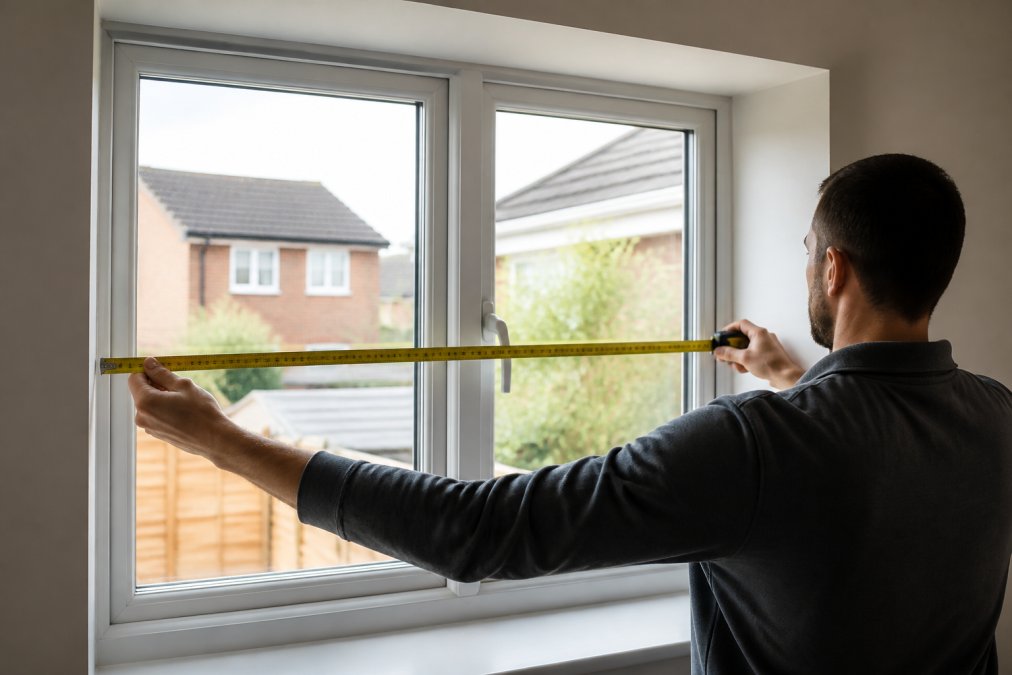
Measuring correctly comes down to three habits: measure at three points, measure twice, and write everything down. Use a metal tape measure rather than a fabric one, which stretches and gives inconsistent readings. Measure width at the top, middle and bottom of the opening, and height at the left, centre and right.
Frequently Asked Questions
Can made-to-measure blinds be adjusted if the size is wrong?
Sometimes, but it depends how far out you are and which blind type you bought. Vertical blinds are the most forgiving because you can trim the headrail and swap individual slats cheaply. Roller and Roman blinds are harder to alter because the fabric is cut to size. If your blinds are slightly too wide, a fitter may be able to re-drill the brackets or pack them out. If they are too narrow, no adjustment will close the gap, so you will need to re-order.
What are my rights if I order custom blinds in the wrong size?
If you supplied the measurements and the blinds were made correctly to those figures, the mistake is yours and the retailer is not obliged to refund you. Under the Consumer Rights Act 2015, goods must be of satisfactory quality and fit for purpose, but made-to-measure items fall outside the standard 14-day cancellation right for online orders. Check the retailer's own returns policy before ordering, because some offer a goodwill re-make at a reduced rate.
How much tolerance should I allow when measuring for blinds?
For a recess fit, take 1cm to 1.5cm off the narrowest width and the shortest height so the blind slides in without scraping. For an exact fit, measure the full recess and let the blind sit outside it, covering the reveal completely. Always measure width and height in three places, top, middle and bottom, and use the smallest figure. A difference of more than 5mm across those three points usually means the window is out of square.
Should I measure windows from the inside or outside for blinds?
For a recess fit, measure inside the recess, from the left jamb to the right for width and from the top of the recess down to the sill for height. For an exact fit, measure outside the recess, covering the trim and overlapping the wall by around 5cm on each side. Never mix the two methods on the same window. If you are unsure which style suits your space, a professional survey removes the guesswork entirely.
