
Last Updated: October 30, 2026
Quick Summary
You can shorten vertical blinds without cutting by rehanging the vanes higher on their carrier clips, which works best when the excess is under 30mm. First check whether the headrail has spare fixing holes or slotted brackets, since moving the rail up can avoid cutting entirely. If the excess is larger or the carriers have only one seating point, trimming or replacement slats are the realistic options.
- Measure the current drop from the headrail to the floor, then aim for 10-15mm clearance above the floor or 5mm above a windowsill.
- The two standard vane widths are 89mm and 127mm, and carrier designs differ between them.
- No-cut adjustment stops working once the excess is more than about 30mm.
- On chain-linked systems, re-thread the stabilising chain at the correct length before adjusting anything else.
- If a carrier will not release with gentle pressure, stop, because forcing it can crack the carrier or bend the headrail.
Table of Contents
- Why Vertical Blinds End Up Too Long
- How to Adjust Vertical Blinds Before You Cut Anything
- How to Remove Vertical Blind Slats to Change the Drop
- Can You Trim Vertical Blinds? When Cutting Is the Only Option
- Tools and Materials for a No-Cut Adjustment
- Rental-Friendly Fixes and Dealing with the Bottom Rail
- Troubleshooting: Blinds That Still Drag or Won't Hang Straight
- Ordering Replacement Slats and Weights from Just Blinds
- Frequently Asked Questions
Why Vertical Blinds End Up Too Long
Vertical blinds rarely arrive too long by accident. Usually, the drop was measured before a new floor went down, before a radiator shelf went in, or before someone fitted a thicker carpet. Sometimes the slats were bought pre-cut for a different window and then moved.
The good news is that you can shorten vertical blinds without cutting in many cases, and it takes less time than most people expect. It rarely is.
The trick is knowing which type of blind you have and which part is actually too long. Get that right and the fix is usually a screwdriver and ten minutes.
How to Adjust Vertical Blinds Before You Cut Anything
Before touching a tool, check whether the blind can simply be rehung higher. Some vertical blind headrails have more than one fixing position, and some brackets allow the rail to sit at a different height.
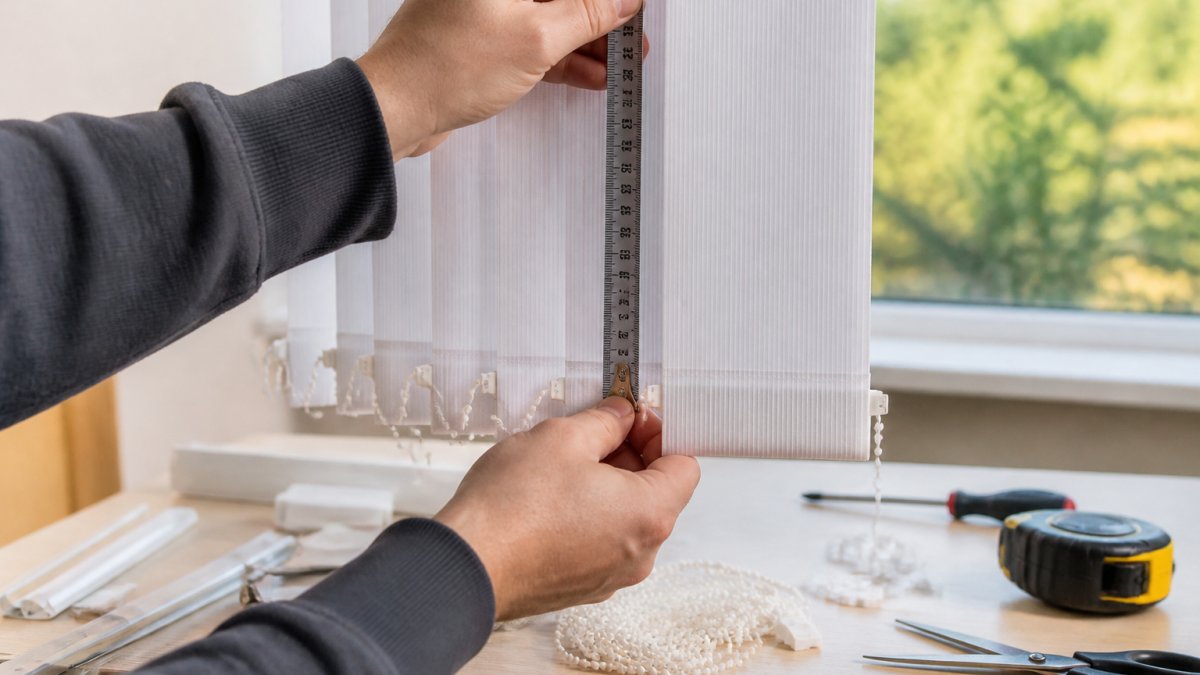
Measure the current drop from the headrail to the floor. Then check the clearance you actually want, usually 10-15mm above the floor or 5mm above a windowsill. That gap is your target.
If the headrail can move up, you avoid cutting entirely. If it can't, the next option is to remove the slats and rehang them at a shorter drop using the vane carrier clips.
Three things to check first:
- Does the headrail have spare fixing holes or slotted brackets?
- Are the vanes hooked onto carriers that can be re-clipped at a different point?
- Is the bottom rail a separate weight bar, or individual weights in each vane?
Which Blind Types Allow a No-Cut Adjustment
Not every vertical blind can be shortened without cutting, and knowing which one you have saves you from forcing a carrier that was never designed to move.
Chain-and-weight systems. The most common domestic type. Each vane hangs from a carrier on the headrail and carries a weight in a pocket or a bottom rail at the foot.
Chainless or wand-control systems. These use a different carrier and often a clip-in weight rather than a chain.
Fabric versus PVC vanes. Fabric vanes have a sealed hem at the bottom that holds the weight pocket.
Wide versus narrow vanes. The two standard widths are 89mm and 127mm. Carrier designs differ between them, so check the vane width before assuming a clip will move. A carrier that looks adjustable on a 127mm system may be fixed on an 89mm one.
When No-Cut Adjustment Is Not Feasible
Be honest with yourself about the limit of this method. No-cut adjustment works when the excess is small and the hardware allows it. It does not work when:
- The headrail is fixed to a single position with no slotted bracket or spare holes.
- The carriers have only one seating point and cannot be re-clipped.
- The excess is more than about 30mm, at which point the vane hangs awkwardly below the carrier.
- The vanes are a non-standard width with no matching replacement available.
In those cases, the realistic options are to replace the vanes with ones cut to the correct drop, to reposition the brackets if the wall allows, or to accept that trimming is the only route. Knowing this before you start stops you from damaging a carrier that was never meant to move.
How to Remove Vertical Blind Slats to Change the Drop
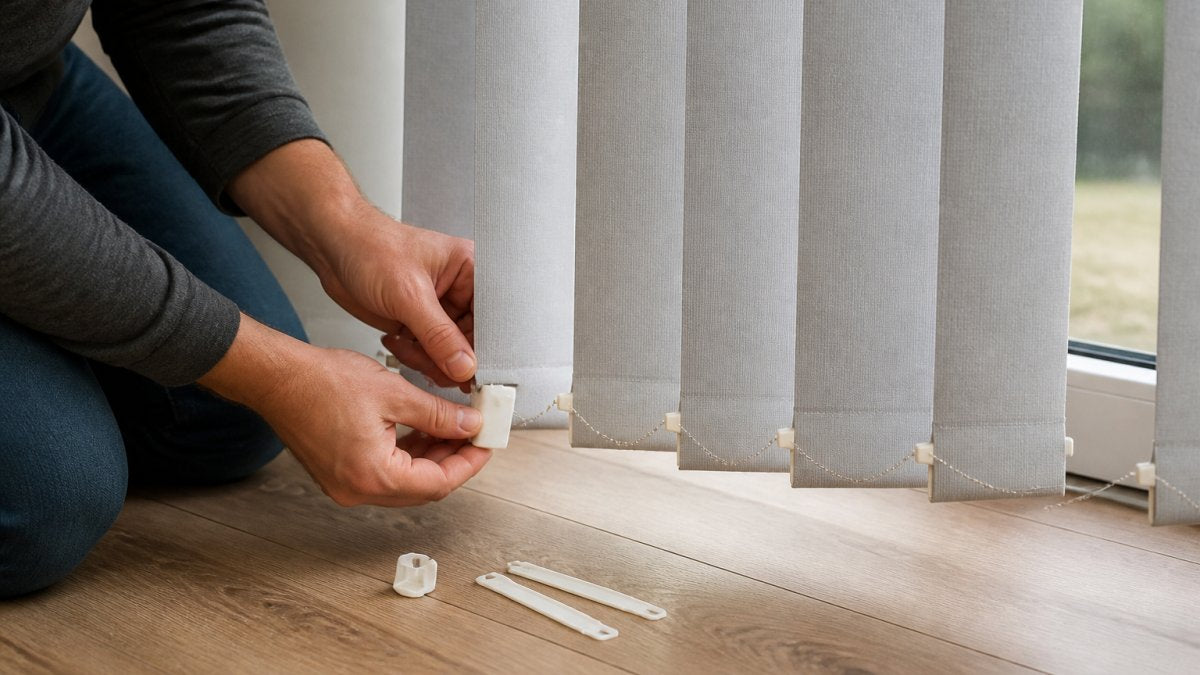
Removing a vane takes seconds. Each slat hangs from a carrier on the headrail, usually held by a small clip or a hook. Tilt the vane slightly, lift it, and it should release.
Work one vane at a time, starting from the end nearest the control chain. Lay each slat flat as you remove it so the weights don't tangle.
If your vanes have individual weights pushed into a pocket at the bottom, slide the weight out before you rehang anything. That weight is what keeps the slat hanging straight, so keep it safe.
Rehanging Slats at a Different Height
Once the vanes are off, you can rehang them so the bottom sits higher. On many systems, the carrier clip can be moved along the vane, which is an effective way to shorten vertical blinds without any trimming.
This works best when the excess is small, usually under 30mm. Beyond that, the vane may hang below the carrier in an odd way, and you're better off replacing the slat at the correct length.
If you do remove weights and need fresh ones, our 89mm vertical blind bottom weights and 127mm bottom weights both come with free chain.


Can You Trim Vertical Blinds? When Cutting Is the Only Option
Yes, you can trim vertical blinds, but it should be the last resort. Cutting removes the sealed bottom hem on fabric vanes, which can cause fraying over time. On PVC or vinyl vanes, a cut edge is more forgiving but still looks unfinished if you rush it.
Cut only when the excess is too large to fix by rehanging, or when the headrail can't move and the vanes are genuinely the wrong length.
Trimming Vanes with Scissors or a Saw
For one or two fabric vanes, sharp scissors work fine. Mark the new length with a pencil and a square, clamp a straight edge in place, and cut in one steady pass.
For a full set, a fine-tooth hacksaw gives a cleaner line on PVC. Score the vane first, then cut slowly. Remove the weight before cutting so it doesn't snag the blade.
Vertical blind bottom weights 89mm (3.5 inch) - with free chain! pack of 5 →
Watch out: cutting fabric vanes without resealing the hem leads to fraying within weeks, so only trim what you must.
Tools and Materials for a No-Cut Adjustment
A no-cut adjustment needs very little. Most households already have everything on this list.
| Tool | What It's For | Needed? |
|---|---|---|
| Tape measure | Checking drop and floor clearance | Yes |
| Pencil | Marking the target height | Yes |
| Screwdriver | Adjusting brackets or carriers | Usually |
| Spare weights | Replacing worn or lost bottom weights | Sometimes |
| Stabilising chain | Securing the bottom rail | Optional |
A step ladder helps if the headrail sits high. A cloth to lay vanes on stops them scratching.
Rental-Friendly Fixes and Dealing with the Bottom Rail
If you rent, avoid anything permanent. Cutting vanes is hard to reverse, and a landlord may charge for replacements at the end of a tenancy.
The safest rental fix is to rehang the vanes higher on their carriers, or to swap the existing slats for shorter ones you keep when you move out. Neither alters the fixture.
The bottom rail is often the real culprit. On chain-linked systems, a stabilising chain holds the weights in line. If the chain is too long for the new drop, it loops and drags.
A stabilising chain for 89mm weights can help you re-thread the rail at the right length.
Troubleshooting: Blinds That Still Drag or Won't Hang Straight
If the blind still catches the floor after adjustment, work through the causes in order rather than guessing. Most post-adjustment problems fall into one of five patterns, and each has a different fix.
Diagnose in This Order
**1.
2. Check each weight. A vane without a weight will swing and catch. Slide the weight out and refit it squarely in the pocket.
3. Check carrier level. One carrier sitting lower than the rest throws the whole run off. Sight along the bottom of the vanes from one end.
4. Check for bent or creased vanes. A creased slat never hangs straight, no matter how you adjust it.
5. Check the headrail fixings. If the rail itself is not level, every vane will hang off true. A spirit level across the headrail will show this in seconds.
Uneven Hems and Vanes That Twist
Uneven hems usually mean the vanes were trimmed at slightly different lengths, or that some were rehung at a different carrier point. Lay the vanes side by side on a flat surface and compare the bottom edges. If they differ by more than a couple of millimetres, rehang the short ones rather than trimming the long ones to match.
Vanes that twist rather than hang flat are usually a carrier problem, not a vane problem. The carrier hook may be worn or the vane may not be seated fully. Release and re-seat it before assuming the vane is faulty.
Safety and Warranty Considerations
Work from a step ladder, not a chair, and have someone foot it if the headrail is high. Keep the stabilising chain out of reach of children and pets; a looped chain on the floor is both a trip risk and a chewing hazard. Chainless pet-friendly weights remove the chain altogether.

Check the manufacturer's guidance before you adjust carriers or brackets. Some warranties exclude damage caused by user adjustment of the headrail or carrier clips. If the blind is still under warranty, contact the supplier before you move anything, and keep the original packaging and fittings in case you need to return it.
When to Stop and Replace
If you have worked through the list and the blind still drags, the vanes are probably the wrong length for the window rather than badly adjusted. At that point, replacement slats cut to the correct drop are the cleaner answer than further adjustment. Measure the width of an existing vane, not the window, and match it to the slat you order.
Ordering Replacement Slats and Weights from Just Blinds
Sometimes the cleanest answer is a fresh set of slats cut to the right drop. We make and supply replacement slats that fit most common rails, and
Ordering the right size matters more than anything else here. Measure the width of an existing vane, not the window, and match it to the slat you order.
If you're unsure which rail you have, send us a photo before ordering.
Frequently Asked Questions
Can you shorten vertical blinds without cutting the slats?
Yes, in many cases. Check your mechanism first, then decide.
What should you do if vertical blinds drag on the floor?
First check whether the headrail can be raised a few millimetres, since this fixes most dragging without touching the vanes. If not, remove the bottom weights and chain, slide each slat up on its hook and reattach. Where the drop is fixed, order replacement slats cut to your exact measurement rather than trimming old ones.
Can vertical blind slats be reattached at a different height?
On most hook-and-hanger systems, yes. Pop the slat off its carrier, move it up one notch and clip it back on. This changes the drop by a few centimetres without cutting. It only works if the vane has spare fixing points, so check before removing anything, and keep the weights and chain balanced afterwards.
Is it cheaper to adjust old vertical blinds or buy new slats?
Adjusting is free if the mechanism allows it. If you need new parts, replacement bottom weights start at £5.75 for a pack of five and stabilising chain is £5.50 for five metres.
Shortening vertical blinds without cutting comes down to understanding your blind's mechanism, not reaching for a saw. If your current blinds are beyond saving, Just Blinds makes made-to-measure vertical, Venetian and blackout blinds with free delivery on orders over £175, plus replacement slats and weights that fit most existing rails. Get started with Just Blinds and fit the right blind the first time.

