
Last Updated: November 3, 2026
Quick Summary
Inside mount blinds fit within the window recess for a clean, flush look that clears the room, but they need adequate recess depth and can leave small side gaps that let light in. They are less forgiving of measurement errors and can clash with window handles or tilt-in windows.
- Inside mount blinds sit flush with the wall, while outside mount blinds overlap the opening.
- Measure recess width and drop at three points and use the smallest figures.
- Roller blinds need the least recess depth, while Venetian blinds need the most.
- A perfect-fit pleated blind can suit shallow recesses and has a minimum width of 20cm.
- For near-total darkness, an outside mount beats an inside mount every time.
Table of Contents
- Inside Mount vs Outside Mount: Key Differences
- Pros and Cons of Inside Mount Blinds
- Pros and Cons of Outside Mount Blinds
- How to Measure for Inside Recess Blinds
- Window Recess Depth for Blinds: What You Need
- Blinds for Shallow Window Recesses
- Light Gaps with Inside Mount Blinds
- Choosing Made-to-Measure Blinds for Your Recess
- Frequently Asked Questions
Inside Mount vs Outside Mount: Key Differences
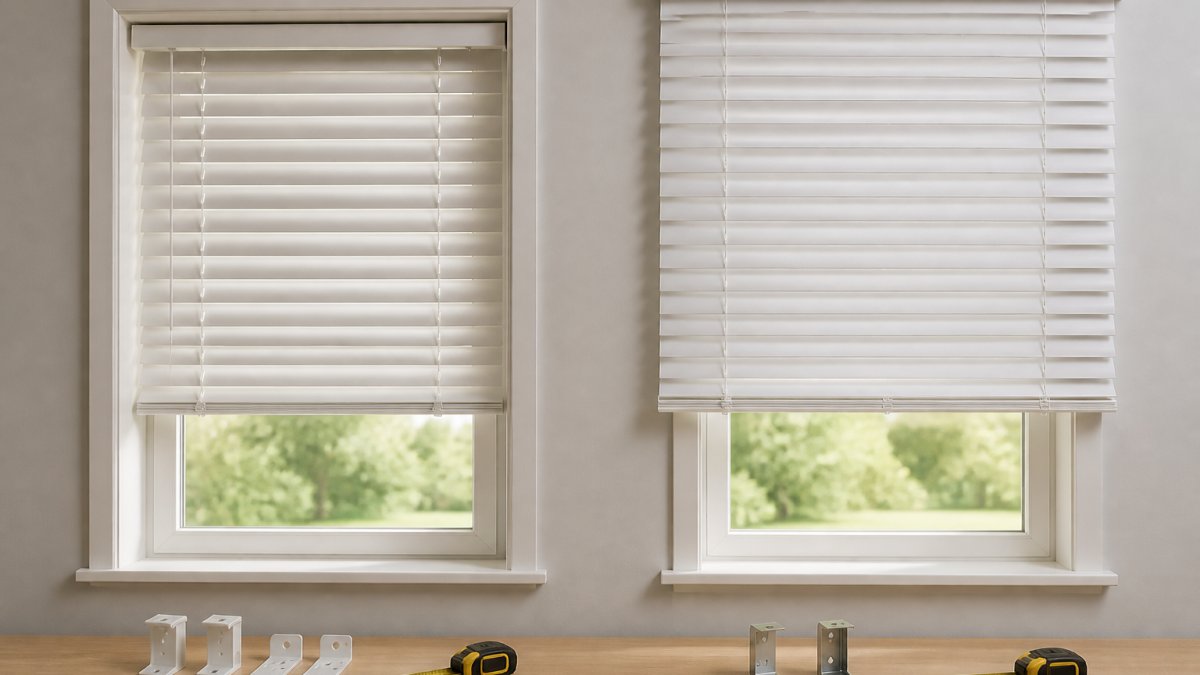
The choice between inside and outside mount blinds comes down to where the blind sits relative to your window recess. Inside mount blinds fit within the recess, sitting flush with the wall. Outside mount blinds attach to the wall or window frame and overlap the opening.
Made-to-measure blinds are cut to the recess or frame size you provide, so the fit is decided before the blind is built.
How Inside Mount Blinds Fit
An inside mount blind sits inside the window recess, fixed to the top of the recess or to the window frame itself. The headrail tucks back so the blind hangs flush with the wall, giving a simplified, built-in look.
This is the mount most people picture when they think of a clean, minimalist window treatment. It suits Venetian, roller, pleated and perfect-fit styles, and it keeps curtains and furniture clear of the window.
How Outside Mount Blinds Fit
An outside mount blind fixes to the wall above the window or to the face of the window frame, overlapping the opening on all sides. Because it sits proud of the recess, it covers more of the window and hides any uneven plaster or trim.
Outside mounting is the usual choice when the recess is too shallow for a blind to sit inside, or when window handles and hardware get in the way.
| Feature | Inside Mount | Outside Mount |
|---|---|---|
| Position | Within the recess | On wall or frame |
| Look | Flush, simplified | Projects into room |
| Light control | Small side gaps possible | Better overlap |
| Depth needed | Yes, for the headrail | Minimal |
| Best for | Deep recesses, tidy finish | Shallow recesses, obstructions |
Pros and Cons of Inside Mount Blinds
Inside mount blinds give the neatest finish and keep the window area clear, but they demand an accurate recess measurement and enough mounting depth. Get those right and they are hard to beat for a clean, modern look. Get them wrong and you will notice gaps and rubbing.
Pros of Inside Mount Blinds
- Clean, flush appearance. The blind sits within the recess, so it reads as part of the window rather than an add-on.
- Clears the room. No projection into the space, so curtains, furniture and walkways stay unobstructed.
- Works with perfect-fit styles. Our Alina Fine Grain White Faux Wood Venetian Blinds are made to measure and are easy to wipe clean, ideal for kitchens and bathrooms.
Cons of Inside Mount Blinds
- Small side gaps are possible. Inside mounting can leave slim gaps at the sides, so some light creeps in. If total darkness matters, this is the main drawback.
- Needs adequate depth. The recess must be deep enough to house the headrail and slats without fouling the window.
- Obstructions cause problems. Window handles, cranks or alarm sensors can interfere with a blind mounted inside the recess.
Watch out: ordering an inside mount blind without checking your recess depth is a common mistake. A headrail that won't sit back far enough can leave the blind proud of the wall.

Pros and Cons of Outside Mount Blinds
Outside mount blinds win on coverage and forgiveness. Because the blind overlaps the opening, it hides uneven edges and blocks more light around the perimeter. The cost is a bulkier look and a blind that stands proud into the room.
The pros:
- Better light blocking. Overlapping the opening reduces light leakage around the edges.
- Hides imperfections. Covers uneven plaster, old trim and awkward reveals.
- Works on shallow recesses. No depth requirement beyond the frame face.
The cons:
- Projects into the room. The blind stands proud of the wall and can look heavy.
- Can clash with curtains. Less room for a curtain track above.
- Less simplified. The flush, built-in look is lost.
How to Measure for Inside Recess Blinds
To measure for inside recess blinds, take the width at three points across the recess and the drop at three points down it, then use the smallest width and the smallest drop. Measuring in millimetres keeps the fit tight. Do this before you order, not after.
Here is the process we recommend:
- Measure the recess width at the top, middle and bottom. Write down all three.
- Measure the drop on the left, centre and right. Write down all three.
- Use the smallest width and smallest drop as your order size.
- Check the recess depth at the top, where the headrail will sit.
- Note any handles, sensors or uneven plaster that could interfere.
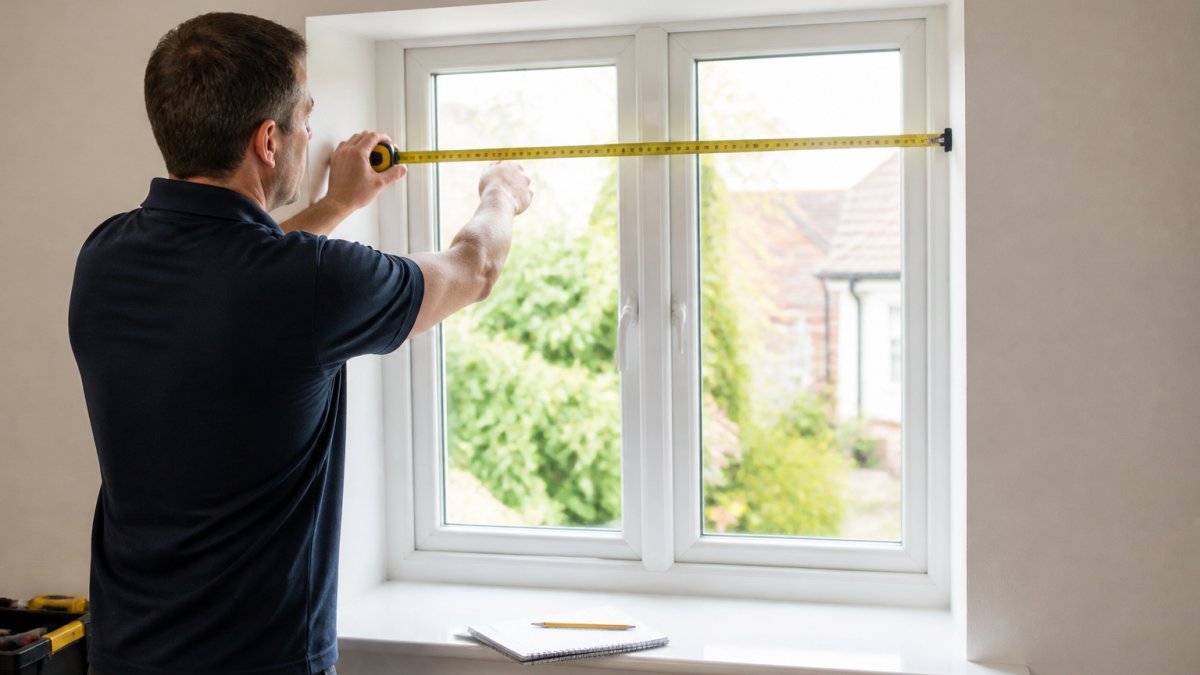
If you are unsure, check the guidance on measuring windows before you order. A few minutes with a tape measure can save a lot of frustration.
Window Recess Depth for Blinds: What You Need
Window recess depth for blinds is the distance from the front face of the recess to the window itself. You need enough of it to house the blind's headrail and, for Venetian blinds, the slats when tilted.
A common pattern is that depth requirements vary by blind type far more than most buyers expect. As a working guide:
- Roller blinds need the least depth, typically just enough to clear the headrail and the rolled fabric. A recess of around 50mm at the top is often sufficient for a standard roller, though cassette and enclosed-headrail styles need more.
- Pleated and perfect-fit blinds are shallow-friendly because the fabric stacks tightly. Perfect-fit styles that clip to the window frame rather than the recess top can work in recesses as shallow as the frame itself.
- Venetian blinds need the most depth because the slats tilt. You need clearance for the headrail plus the full slat width when tilted open, so a 50mm slat blind needs noticeably more recess depth than a 25mm slat blind. Measure with the slats in mind, not just the headrail.
Watch out: measuring depth at the centre of the recess and assuming it is consistent is a common error, plaster build-up, window handles and trickle vents can reduce usable depth at the top corners where brackets actually sit.
Matt Textured White Aluminium venetian blind →
Before you commit to an inside mount, check three things at the bracket position: the clear depth from recess front to window, any obstruction that projects into that depth (handles, espagnolette bolts, alarm sensors, trickle vents), and whether the window opens inward. A tilt-in or inward-opening window will clash with a blind mounted inside the recess unless the blind sits far enough forward to clear the swing, and if it sits that far forward, you have lost the flush look that made inside mounting attractive.
If the depth is tight, you have practical routes short of abandoning the inside mount: face-fix brackets hold the blind to the front of the frame where a top fix won't work, and low-profile headrails reduce the depth needed. Our face fix brackets for vertical blinds are the kind of fitting that makes this possible where a top fix simply won't.

Blinds for Shallow Window Recesses
Blinds for shallow window recesses usually need an outside mount or a low-profile fitting.
Face-fix brackets allow a blind to be mounted to the front of the frame rather than the top of the recess. Our face fix brackets for vertical blinds are the kind of fitting that makes this possible where a top fix simply won't.
If the recess is shallow but you still want a tidy look, a perfect-fit pleated blind can be a good compromise. The Neat Fit Pleated Blind in Infusion Ecru fits to UPVC windows and doors without screws and has a minimum width of 20cm.
Light Gaps with Inside Mount Blinds
Light gaps with inside mount blinds are the slim strips of light that appear at the sides and top where the blind meets the recess.
Edge-gap expectations differ by product:
- Roller blinds typically leave the most noticeable side gaps because the fabric runs edge to edge with only a small clearance. A tight recess fit keeps this to a few millimetres per side, but a roller will never seal the recess completely. Blackout roller fabrics reduce the glow through the fabric but do not close the side gaps.
- Venetian blinds can be fitted more tightly because the slats sit within the recess and the headrail brackets allow a close tolerance. A well-measured Venetian blocks most edge light when the slats are closed, though light still creeps around the slat ends and through the cord holes.
- Pleated and perfect-fit blinds vary widely. A standard pleated blind inside the recess leaves similar side gaps to a roller, but a perfect-fit pleated blind that clips to the window frame can sit much closer to the glass and reduce perimeter leakage, though it still is not a blackout solution unless the fabric itself is blackout-rated.
This is the distinction that matters: ordinary light filtering and blackout performance are different things.
Watch out: ordering a blackout fabric on an inside mount and expecting a dark room is the most common mismatch we see, the fabric does its job, but the side gaps undo it.
This is the honest trade-off: inside mount wins on looks, outside mount wins on darkness.
Choosing Made-to-Measure Blinds for Your Recess
Choosing made-to-measure blinds for your recess means matching the mount to your depth, your light needs and your room.
Before you order, it helps to understand what made-to-measure actually means compared with off-the-shelf sizes, so you know what you are paying for.
Our made-to-measure range includes aluminium Venetians such as the Matt Textured White Aluminium Venetian Blind with 25mm slats, faux wood options, and real wood finishes.
Frequently Asked Questions
What are the pros and cons of inside mount blinds?
Inside mount blinds sit within the window recess for a clean, built-in look and keep the sill clear. They suit most rooms and work well with curtains. The drawbacks are small light gaps at the sides, less room for window handles, and the need for enough recess depth to hold the brackets. Outside mount blinds cover more of the frame and reduce light leakage, but they project into the room and can look bulkier.
How much window recess depth do inside mount blinds need?
Most Venetian and pleated blinds need a minimum recess depth of about 5cm to 6cm for the brackets and headrail to sit safely. Slimmer products can work in less, while deeper recesses of 7cm or more let the blind sit further back for a neater finish. Always check the fitting instructions for your chosen blind before ordering, because the required depth varies by product and slat size.
Do inside mount blinds block out all the light?
No. Inside mount blinds leave a small gap at each side of the recess and often at the top, so some light will creep in around the edges. For a nursery or bedroom, a blackout blind fitted close to the recess walls may reduce this. If total darkness is the priority, an outside mount blind that overlaps the frame may reduce light leakage.
Can I fit blinds in a shallow window recess?
Yes, but choose the product carefully. Blinds for shallow window recesses include slim pleated and roller options that need less bracket depth, and no-drill systems such as the Neat Fit Pleated Blind fix directly to UPVC windows without screws. Measure the usable depth from the glass to the front edge of the recess, then compare it with the minimum depth stated for the blind you want.
Are inside mount blinds harder to measure?
They need more care than outside mount blinds because the blind must fit within the recess. Measure the width at the top, middle and bottom of the recess and use the smallest figure, then measure the drop in the same way. Check the depth at each bracket point too. Made-to-measure suppliers cut to your sizes, so an error of a few millimetres can mean a poor fit.
The difference between a blind that looks built-in and one that fights its window comes down to two things: an accurate recess measurement and the right mounting depth. If you are ready to order, Just Blinds makes every blind to your exact sizes, with free delivery on orders over £175 and replacement slats that fit most popular rails. Get started with Just Blinds and fit a blind that sits exactly where it should.

