
Table of Contents
- Made to Measure Blinds vs Ready Made: The Core Difference
- Upfront Cost Comparison
- How to Measure Windows for Blinds Accurately
- Average Cost of Made to Measure Blinds
- Best Blinds for Awkward Window Sizes
- Total Cost of Ownership: Hidden Expenses and Long-Term Value
- Installation, Durability, and Resale Impact
- Conclusion
- Frequently Asked Questions
Last Updated: September 23, 2026
Made to Measure Blinds vs Ready Made: The Core Difference
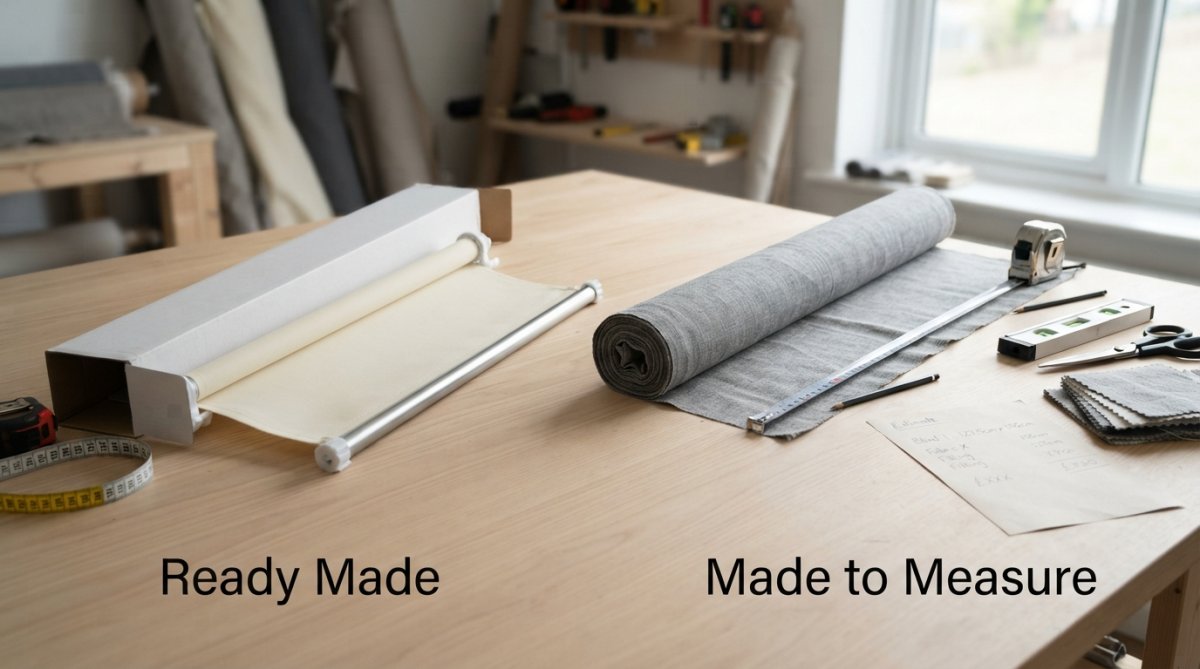
The choice between made to measure blinds and ready made options sits at the heart of every window dressing decision, and understanding what made to measure blinds cost is essential to making the right choice. At Just Blinds, we've helped thousands of homeowners navigate this choice, and the answer isn't simply about picking the cheaper option, it's about understanding what you're actually paying for.

Made to measure blinds cost more upfront because they're manufactured to your exact window dimensions. Ready made blinds come in standard sizes and cost less initially. But here's what most people miss: the real cost difference emerges over time, through fit quality, durability, and whether you'll need replacements or adjustments down the road.
This guide breaks down the financial reality of both approaches, the hidden costs most buyers overlook, and how to calculate the true value of each option for your home.
Upfront Cost Comparison
Ready made blinds win on initial price. You'll find standard options starting from as little as £15-30 at most retailers. Made to measure blinds typically start around £19.68 for basic vertical blinds at Just Blinds, rising to £50-100+ depending on size, fabric, and control systems.
The gap widens with window size. A large bay window in ready made might cost £80-120 for a single unit. The same window in made to measure could run £120-200, depending on your exact measurements and fabric choice.
But cost per window tells only part of the story. Ready made blinds come in fixed sizes, typically 60cm, 90cm, 120cm, and 150cm widths. If your window is 125cm wide, you have two choices: buy the 120cm blind and live with side gaps, or buy the 150cm blind and deal with excess fabric bunching at the edges. Either way, you're compromising fit to match available sizes.
Made to measure blinds eliminate this problem. Your blind is cut to your exact width and drop. No gaps. No bunching. No wasted fabric.
| Blind Type | Starting Price | Standard Sizes | Fit Quality | Typical Lead Time |
|---|---|---|---|---|
| Ready Made | £15-30 | 5-8 fixed options | Variable, gaps common | 3-7 days |
| Made to Measure | £19.68+ | Infinite, custom cut | Precision fit | 10-14 days |
The price difference is real but often smaller than expected. Just Blinds's made to measure vertical blinds start at the same price point as mid-range ready made options, with the advantage of perfect fit.
How to Measure Windows for Blinds Accurately
Measurement accuracy determines whether your blind fits perfectly or requires expensive adjustments. This is where made to measure blinds separate themselves from ready made, precision measurement is essential.
For recess fitting (blind inside the window frame), measure the width at three points: top, middle, and bottom. Use the smallest measurement. Measure the drop from the top of the recess to the sill, again at three points: left, centre, and right. Use the longest measurement. This accounts for uneven walls and window frames, common in older properties.
For face fitting (blind mounted on the wall above the window), measure the width of the area you want to cover, then add 5-10cm on each side for light control. Measure the drop from where you'll mount the blind to where you want it to end.
Write everything down. Photograph your window from multiple angles. If you're ordering made to measure blinds, most suppliers, including Just Blinds, provide detailed measuring guides with diagrams. Some offer free measuring services if you're uncertain.
Common mistakes: measuring in inches when the supplier works in centimetres, rounding up or down, forgetting to account for window frame depth, and not measuring at multiple points. Each mistake costs time and money in returns or adjustments.
Average Cost of Made to Measure Blinds
Made to measure blinds in the UK typically range from £20-150 per window, depending on size, fabric, and control mechanism. A single standard-sized window (around 120cm wide, 150cm drop) in basic fabric costs £40-70 in made to measure. The same window in premium fabric or with motorised controls can reach £150-250.
Just Blinds's made to measure vertical blinds start at £19.68 for basic options, with options like the Multiple Vertical Blind Deal offering savings when you're furnishing multiple rooms. A three-window package might cost £60-90 total, compared to £120-180 for equivalent ready made blinds across three windows.

Fabric choice drives cost more than size. Plain white or cream fabrics cost less. Patterned fabrics, blackout materials, or moisture-resistant faux wood options cost more. For a nursery requiring blackout capabilities, expect to add 15-25% to the base price.
Control systems matter too. Chain control is standard and included. Wand control (child-safe) adds £5-15. Motorised systems add £100-300.
Made to Measure Vertical blinds in →
The real advantage emerges when you calculate cost per year of ownership. A £60 made to measure blind that lasts 8 years costs £7.50 per year. A £30 ready made blind that warps or fades after 3 years costs £10 per year, and then you're buying again.
Best Blinds for Awkward Window Sizes
Awkward window sizes are where made to measure blinds prove their value. Bay windows, sloped ceilings, arched windows, and irregular frames all present challenges for ready made options.
A bay window typically requires three separate blinds, one for each panel. Ready made blinds force you into standard sizes that rarely align with your bay's actual dimensions. You end up with gaps where panels meet, uneven light control, and visible light leakage at night.
Made to measure blinds are cut to each panel's exact width and drop. They fit flush. No gaps. No light creeping in at the sides.
Sloped ceilings in loft rooms create another challenge. Ready made blinds hang vertically, leaving triangular gaps at the top. Made to measure blinds can be cut to follow the slope, maximising coverage and light control.
Arched windows present the biggest challenge for ready made options, most suppliers simply can't accommodate them. Made to measure manufacturers can, though the cost is higher due to custom cutting and fabric waste.
Bi-fold doors, French windows, and glass roof panels all benefit from made to measure solutions. The precision fit eliminates the light leakage and drafts that plague ready made alternatives in these spaces.
For these situations, made to measure blinds aren't a luxury, they're the only practical option. The cost premium is justified because the alternative (ready made blinds that don't fit) costs more in replacements and frustration.
Total Cost of Ownership: Hidden Expenses and Long-Term Value
This is where the real comparison happens. Upfront price tells only half the story.
Ready made blinds often require returns or exchanges. If your 120cm window is actually 125cm, you've either accepted gaps or bought a larger blind and dealt with bunching.
A realistic Total Cost of Ownership calculation:
| Cost Factor | Ready Made (3-year life) | Made to Measure (8-year life) |
|---|---|---|
| Initial purchase | £30 | £60 |
| Replacement (year 3) | £30 | , |
| Energy savings (year 1-3) | £0 | £60 |
| Replacement slats | £0 | £5 |
| Total 8-year cost | £120 | £125 |
Installation, Durability, and Resale Impact
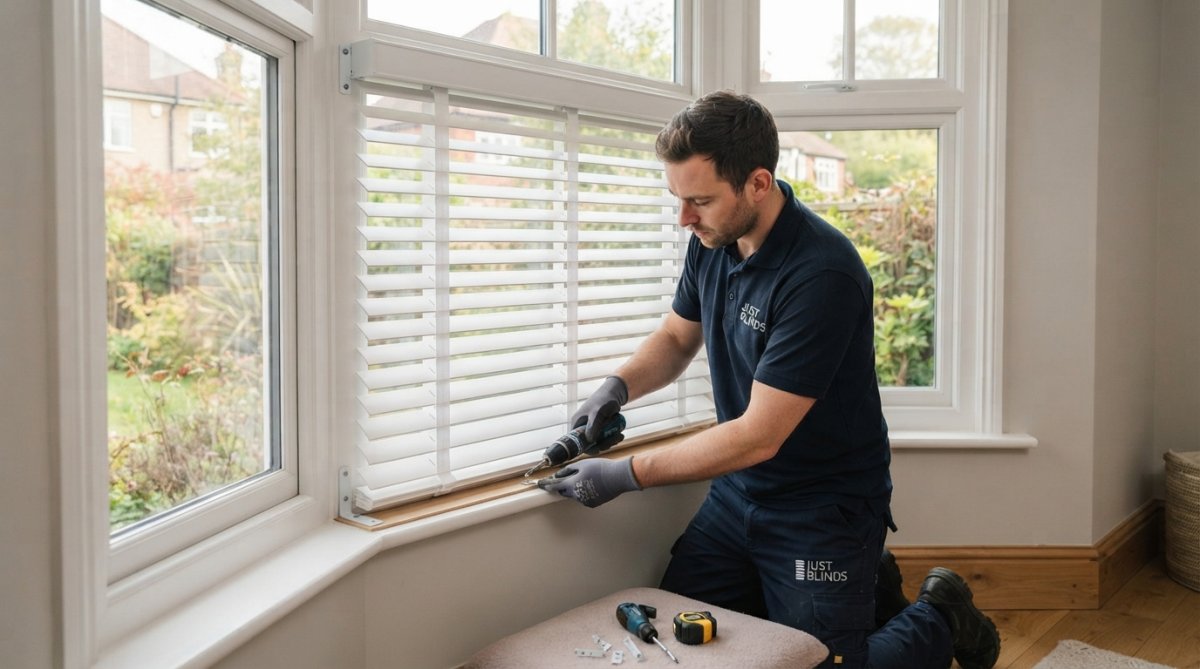
Professional installation versus DIY is another cost variable. Ready made blinds are simpler to install, most homeowners manage in 20-30 minutes with basic tools. Made to measure blinds require more precision, especially if you're fitting inside a recess.
Conclusion
The choice between made to measure blinds and ready made options depends on your window sizes, budget timeline, and long-term plans. For standard-sized windows and temporary solutions, ready made blinds offer acceptable value. For non-standard windows, perfect fit, and homes you plan to stay in long-term, made to measure blinds deliver better value over time.
Frequently Asked Questions
Are made to measure blinds significantly more expensive than ready made?
Made to measure blinds typically cost more upfront than ready made options, but the difference depends on window complexity. A single standard window in made to measure vertical blinds starts from £19.68, whilst ready made alternatives often require purchasing multiple units or accepting poor fit. For awkward sizes, bay windows, or multiple windows, made to measure becomes more cost-effective than buying several ready made sets. Long-term durability and reduced replacement frequency often offset the initial investment.
What are the main advantages of choosing made to measure blinds?
Made to measure blinds offer precision fit to your exact window dimensions, eliminating gaps that allow light leakage and heat loss. They provide aesthetic consistency across your home, work with any window architecture including bays and recesses, and reduce installation difficulty since they're cut to size. Quality materials and construction mean longer longevity than ready made alternatives, and customization options let you select fabrics, controls, and finishes that match your interior design perfectly.
How long do made to measure blinds typically last compared to ready made?
Made to measure blinds generally last longer due to higher material quality and precision manufacturing. Ready made blinds often fail within 2-3 years due to poor fit causing stress on mechanisms and repeated adjustments. Made to measure blinds with quality aluminium headrails can last longer with proper maintenance. Replacement slats cost from £0.85 each, allowing you to refresh tired blinds without replacing entire sets, extending value significantly.
Can you trim ready made blinds to fit any window?
Ready made blinds can sometimes be trimmed in width, but this is risky and rarely successful. Trimming disrupts the balance of the blind mechanism, often causing uneven operation or misalignment. Height adjustments are nearly impossible without professional equipment. Awkward window sizes, bays, and recesses cannot be properly accommodated by trimming. Made to measure blinds are manufactured to your exact dimensions, eliminating the need for modifications and ensuring reliable operation and appearance from day one.
