
Table of Contents
- What Does Made to Measure Actually Mean?
- Made to Measure Blinds: How the Process Works
- Bespoke vs Made to Measure: What's the Real Difference?
- How to Measure Windows for Blinds: Getting It Right First Time
- The Hidden Costs of Made to Measure (and What You Actually Save)
- Maintenance and Longevity: Making Your Made to Measure Blinds Last
- Beyond Windows: Cross-Industry Applications of Made to Measure
- Conclusion
- Frequently Asked Questions
Last Updated: October 3, 2026
What Does Made to Measure Actually Mean?
Made to measure means an item is manufactured to your specific dimensions rather than pulled from a standard size chart.

The term gets borrowed constantly, by tailors, kitchen fitters and blinds retailers, and each means something slightly different. That ambiguity causes real problems when you are spending money on a product that has to fit a fixed space.
Here is the short version: made to measure starts from an existing pattern and adjusts it to your measurements. It is not the same as bespoke, where a pattern is drafted from scratch.
The Block Pattern: The Technical Difference
A block pattern is the base template a manufacturer scales and adjusts to produce your finished item. In blinds, that template defines the headrail profile, slat or louvre spacing, and control mechanism positions. Your measurements then modify the width and drop within the limits that template allows.
This is the part most guides skip. A block pattern sets hard boundaries: go too wide and the headrail needs extra support; go too narrow and the control mechanism will not fit. That explains why some suppliers cap certain sizes, and why an unusually shaped recess sometimes pushes you toward a different product entirely.
Made to Measure Blinds: How the Process Works
The process runs from measurement to manufacture to fitting, and each stage depends on the accuracy of the one before it. A made to measure blind is built to the numbers you supply, so a measuring error carries straight through to the finished product.

Most orders follow a predictable path:
- Measure the recess or frame, deciding first whether the blind sits inside or outside
- Enter your exact width and drop when ordering
- The factory cuts the headrail, slats and fabric to those figures
- The blind arrives assembled, with brackets and fitting instructions
- You fit it, or arrange fitting if you would rather not
What Actually Happens on the Factory Floor
Step three is where the real work sits.
Fabric and slats are cut on a separate line. Vertical louvres are cut to the drop and the top hanger punched and set. Roller fabric is cut to width and drop, bonded or stitched to a tube cut to match.
Tolerances matter here. Most factories work to a tolerance of a few millimetres, which is why suppliers ask you to measure in millimetres and why a blind quoted at 1200mm may arrive at 1198mm or 1202mm.
Quality Control and Dispatch
Before dispatch, most manufacturers run a functional check: the blind is operated through a full cycle, the mechanism tested for smooth travel, and the fabric inspected for marks or weave faults. This catches a mis-cut headrail or mis-threaded slat before it reaches you, and it is why a made to measure order takes longer than pulling a stock item off a shelf.
From Order to Installation: A Step-by-Step Timeline
Lead time varies by product and fabric, so treat any single figure with caution. Vertical and roller blinds typically move faster than specialist fabrics. Ordering a sample first adds a few days but prevents the far more expensive mistake of ordering the wrong colour.
| Stage | What Happens | Typical Duration |
|---|---|---|
| Measuring | You record width and drop | 15-30 minutes |
| Ordering | You enter sizes and confirm fabric | 10 minutes |
| Manufacturing | Headrail cut and re-drilled, fabric cut, slats threaded, functional check | Varies by product |
| Delivery | Dispatched to your address | A few working days |
| Fitting | Brackets fixed, blind hung | 20-40 minutes per window |
Bespoke vs Made to Measure: What's the Real Difference?
Bespoke means a pattern is created from nothing, specific to one customer. Made to measure means an existing pattern is modified to fit you. That is the whole distinction, and in blinds it rarely changes the outcome.
For window treatments, the practical difference is small.
Where bespoke genuinely earns its name is in clothing and furniture, where posture, movement and irregular room shapes demand a fresh pattern. For a standard window, made to measure delivers the same fit for less.
How to Measure Windows for Blinds: Getting It Right First Time
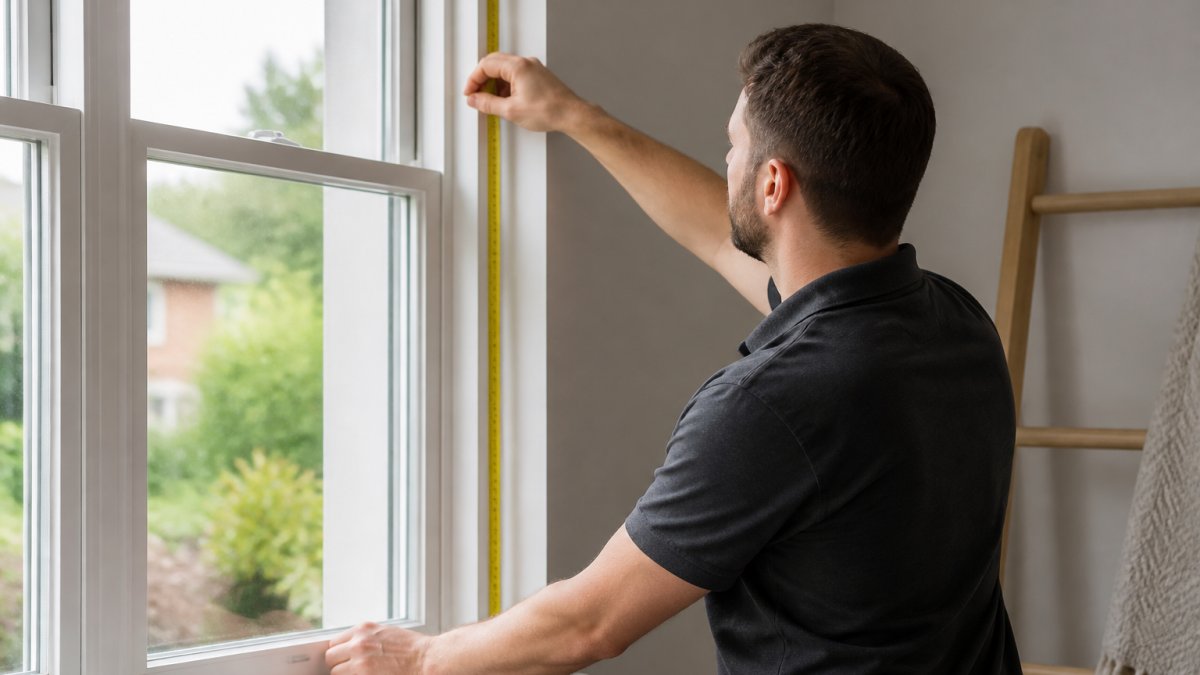
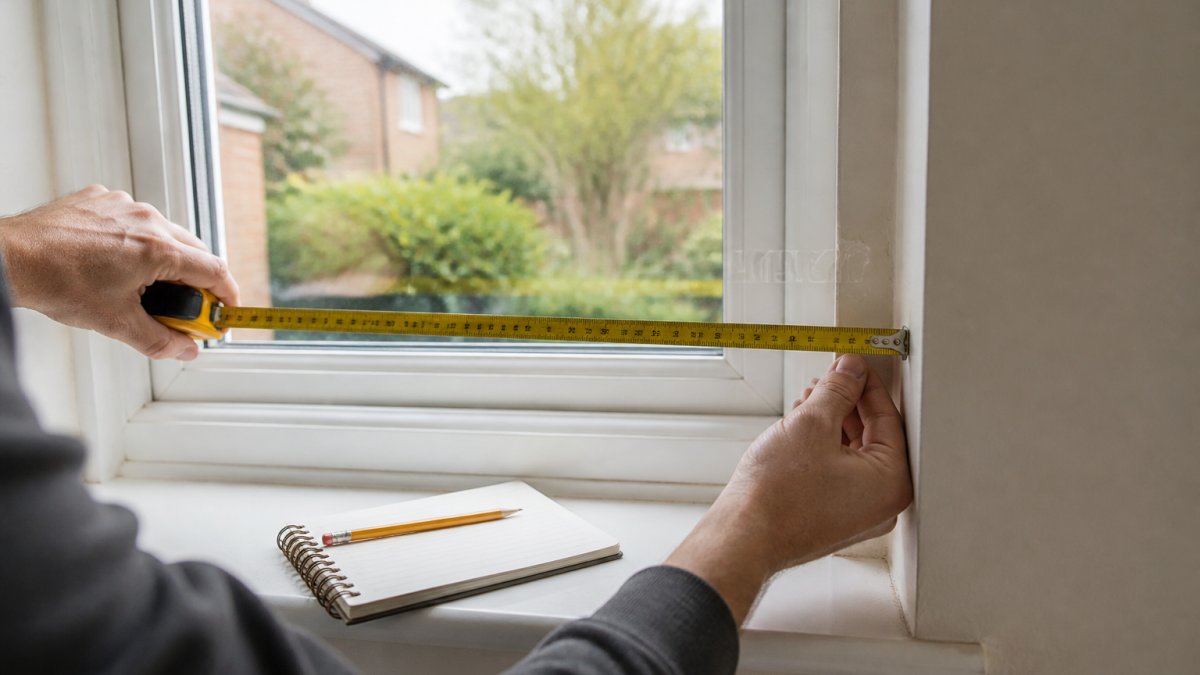
Measure the width in three places and the drop in three places, then use the smallest figure for width and the largest for drop. Windows are rarely perfectly square, and using a single measurement is the most common reason blinds arrive and do not fit.
- Decide inside or outside the recess before you start
- Measure width at the top, middle and bottom of the recess
- Measure drop at the left, centre and right
- Use the smallest width and the largest drop
- Check for handles, tiles or vents that obstruct the blind
- Write measurements down in millimetres, not centimetres
- Re-measure once before ordering
For a recess fitting, the blind sits inside the opening and needs a small clearance on each side. For an outside fitting, add an overlap on every edge so light does not leak around the fabric, the difference between a blind that blocks light and one that leaves a bright outline at dawn.
The Hidden Costs of Made to Measure (and What You Actually Save)
The headline price is not the full cost. Delivery, fitting, samples and the risk of a measuring error all add to the total, and most buyers only discover this after ordering.
Made to measure vertical blind in fiesta White Fabric →
Delivery is often the first surprise. Just Blinds offers free delivery on orders over £175, which removes one line from the total.
Against that, made to measure saves money in ways that are easy to overlook. Our made to measure vertical blind in Fiesta White Fabric starts at £4.92, and the Washed Wood Look Aluminium Venetian Blind starts at £41.95.

Maintenance and Longevity: Making Your Made to Measure Blinds Last
Dusting is the whole job for most blinds, and doing it monthly prevents the build-up that stiffens cords and dulls fabric. Vertical louvres respond well to a soft brush or vacuum attachment run down each slat. Roller and blackout fabrics need a dry cloth only, since moisture can mark the surface.
Where people go wrong is over-cleaning. Soaking fabric slats, pulling cords hard to force a stuck mechanism, or using abrasive cleaners on aluminium all shorten the life of a blind that would otherwise last years. Faux wood and aluminium handle moisture far better than fabric, making them the sensible choice for kitchens and bathrooms.
Beyond Windows: Cross-Industry Applications of Made to Measure
Made to measure is not a window-only concept, and treating it as one is why the term causes so much confusion online. The same principle, start from a base pattern, adjust it to a customer's exact dimensions, deliver something that fits a real space rather than an average one, runs through tailoring, cabinetry, furniture, joinery and window treatments. The vocabulary shifts between trades, but the logic is identical.
The Shared Logic Across Trades
In every trade, made to measure sits between two extremes. At one end is off-the-rack or stock sizing, where the product is built to an average and you adapt to it. At the other is bespoke, where a pattern is drafted from nothing for a single customer. Made to measure occupies the middle ground: an existing block pattern modified to your measurements within the limits that pattern allows.
Tailoring
A made to measure suit adjusts a standard block to your measurements, chest, waist, sleeve length, trouser inseam and rise. The tailor applies your numbers to the block, and the garment is cut and assembled. What made to measure cannot easily change is the block's fundamental architecture: shoulder slope, armhole position and jacket balance are largely fixed. A bespoke suit drafts those from scratch, which is why it can accommodate a dropped shoulder or pronounced posture that a made to measure block cannot.
Cabinetry and Joinery
Made to measure kitchen cabinetry is built to the actual dimensions of your room, not the nearest standard unit. A run of units is designed around your wall length, ceiling height and the position of your services, then the carcasses and doors are cut to suit. The block pattern here is the cabinet system, door style, carcass depth, hinge and drawer-box range, and your room dimensions modify the widths and heights within it. Bespoke cabinetry goes further, drafting a one-off design where the standard system cannot accommodate an unusual shape.
Furniture
Furniture makers use the same approach for alcoves, bay windows and awkward corners where nothing off the shelf will sit flush. A made to measure sofa adjusts a standard frame to your length and depth; a made to measure wardrobe adjusts a standard carcass system to your alcove. The block pattern is the frame and fitting system; bespoke furniture drafts the frame itself.
Why the Definition Matters
When a tailoring site, a home improvement site and a furniture retailer each define made to measure slightly differently, they are not contradicting each other, they are describing the same principle applied to different block patterns. For windows, the definition is narrow and practical: built to the dimensions you supply, within the limits of the headrail and mechanism the supplier uses.
The practical takeaway is the same in every trade: ask what the block pattern allows before you order. That single question tells you whether made to measure will deliver what you need, or whether your requirements push you toward bespoke.
Conclusion
Getting a made to measure order right comes down to two things: accurate measurements and a supplier who builds to them. Most disappointment in this category traces back to a number entered wrongly, not a product that failed.
At Just Blinds, we manufacture made to measure window treatments to your exact sizes, with free delivery on orders over £175 and replacement slats compatible with most rails.
Shop now with Just Blinds and get a blind built for your window, not the nearest standard size.
Frequently Asked Questions
What's the difference between made-to-measure and bespoke?
Made to measure starts with an existing block pattern that is adjusted to your measurements, so the fit is precise but the design is based on a standard template. Bespoke means a pattern is created from scratch for you alone, allowing unlimited design changes. For blinds, made to measure covers the vast majority of homes, while bespoke suits unusual window shapes or highly specific design requests. Both deliver a better fit than off-the-rack sizes.
How do I measure for made-to-measure window treatments?
Use a metal tape measure. For inside a recess, measure the width at the top, middle and bottom, and the drop at the left, centre and right, then use the smallest figure. For outside mounting, add an overlap to each side, top, and bottom for better light block. Always double-check your numbers before ordering, as made-to-measure items are cut to your exact sizes.
Are made-to-measure products worth the extra cost?
They often are, because a precise fit means better light control, fewer gaps and less draught. For blinds, made to measure starts at £4.92 for a vertical blind, so the entry price is lower than many people expect. The real value comes from avoiding the returns, reordering and fitting problems that come with standard sizes that don't quite work. If your window is an unusual size, made to measure is usually the only practical option.
How long does the made-to-measure process take?
Lead times vary by product and fabric. If you are working to a renovation deadline, order as soon as your window frames are installed and decorated, and check the estimated dispatch date before you buy.
