
Table of Contents
- What Are Blackout Blinds and How Do They Work?
- Do Blackout Blinds Block 100% of Light?
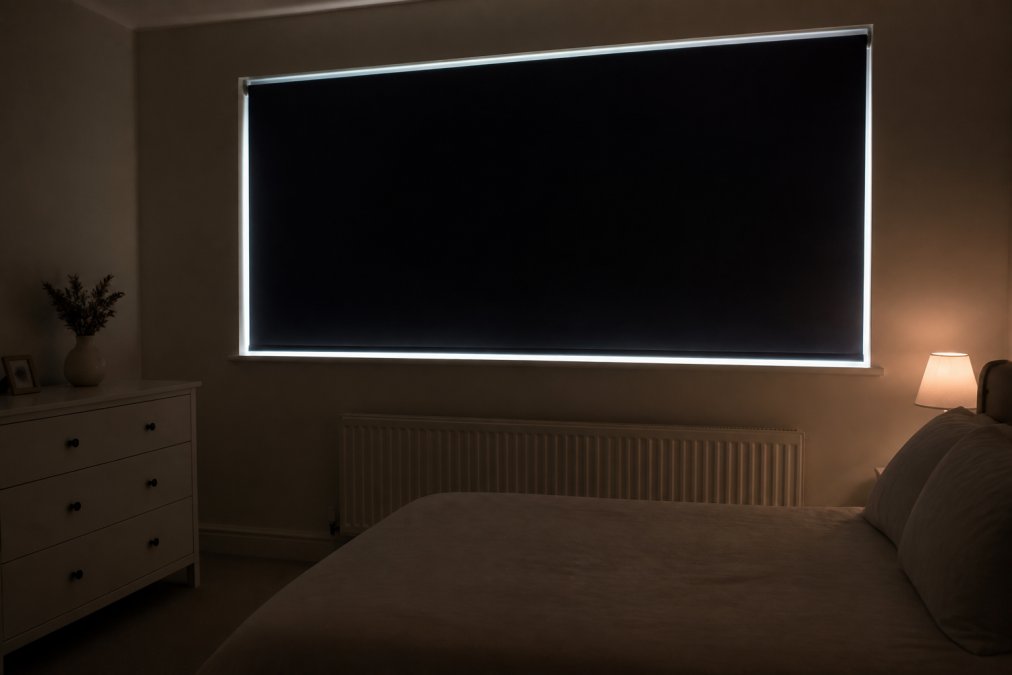
- Why Light Leaks Around the Edges of Blackout Blinds
- How to Stop Light Leaking from Blackout Blinds
- Fitting Blackout Blinds Inside vs Outside Recess
- Do Blackout Blinds Keep a Room Cool?
- Choosing the Right Blackout Blinds for Total Darkness
- Frequently Asked Questions
Last Updated: September 3, 2026
What Are Blackout Blinds and How Do They Work?
Blackout blinds are window coverings specifically designed to block out light, making them ideal for bedrooms, nurseries, and any room where light control matters. At Just Blinds, we manufacture made-to-measure blackout blinds using densely woven fabrics that absorb and reflect light rather than allowing it to pass through. The fabric density is the key, a tightly constructed blackout liner creates an opaque barrier that prevents sunlight from penetrating, delivering the total darkness many homeowners need.
The mechanism is straightforward: blackout fabric works through material composition rather than clever mechanics. The fabric's tight weave and often multi-layered construction trap light particles, preventing them from reaching the other side. When installed correctly, blackout blinds deliver excellent light control and also provide thermal insulation benefits by reducing heat transfer through your windows. This dual function makes them popular for both bedrooms and energy-conscious households.
However, understanding how blackout blinds work also means understanding their limitations. The fabric itself may block light effectively, but installation gaps, edge leakage, and mounting method all affect the final result. Many people assume that buying blackout blinds automatically means total darkness, and that's where the real conversation begins.
Do Blackout Blinds Block 100% of Light?
Blackout blinds do not block 100% of light in practice, even though the fabric itself may be rated as 100% blackout. The distinction matters because light leakage happens around the edges and gaps, not through the fabric itself.
A 100% blackout fabric means the material transmits zero light when light hits it directly. This is a common industry standard for fabric opacity. However, when you install blackout blinds in a real window, light finds alternative routes: around the sides, above the headrail, below the bottom edge, and through any gaps between the blind and the window frame. This is why even premium blackout blinds from quality manufacturers can allow some ambient light into a room if installation isn't precise.
The reality is that blackout blinds block the vast majority of direct light when installed properly. For most bedrooms and nurseries, this is more than sufficient for sleep and light control. Complete 100% darkness requires additional measures beyond the blinds themselves, light-blocking strips, heavy curtains layered over the blinds, or careful sealing of all edges.
Why Light Leaks Around the Edges of Blackout Blinds
Light leakage happens because windows have geometry, and blinds are fabric stretched across a frame. No matter how opaque the fabric, light can travel around the edges where the blind doesn't make contact with the window trim or wall.
The main culprits are straightforward. Side channels allow light to slip past the blind's edges, particularly on wider windows where the fabric doesn't fully seal against the window frame. The gap between the top of the blind and the window recess lets light in from above. The bottom edge, especially if the blind doesn't extend fully to the sill, allows light underneath. And if your window frame has any depth or reveal, light can bounce around inside that space and find its way into the room.
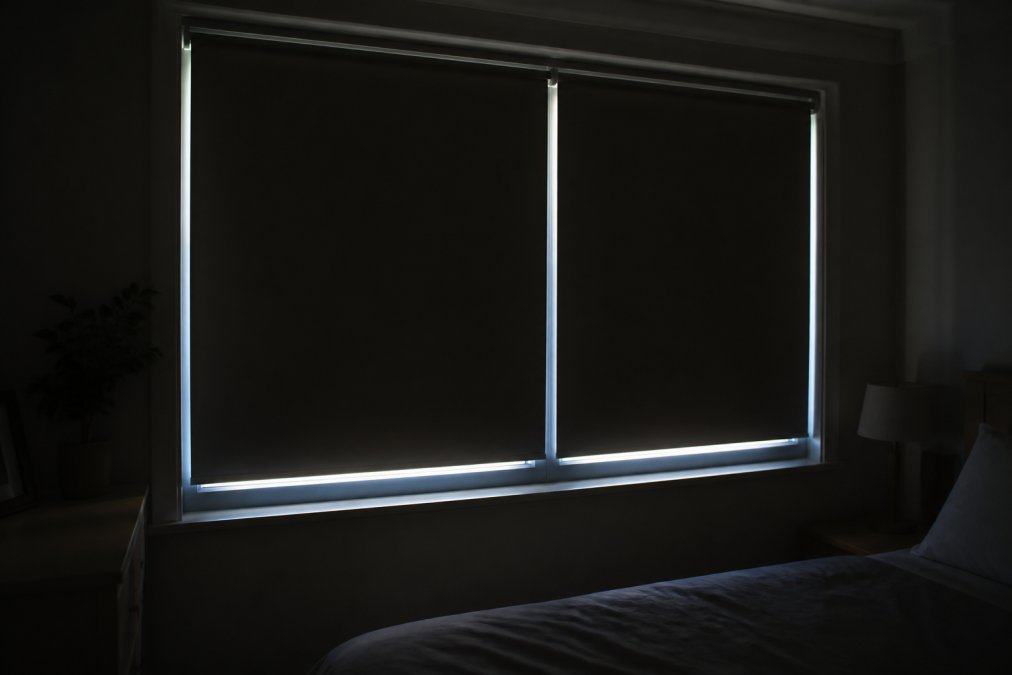
Installation method amplifies these gaps. An inside mount (where the blind sits within the window recess) typically has more light leakage than an outside mount because the window frame itself creates additional gaps. Conversely, an outside mount where the blind extends beyond the window frame on all sides can nearly eliminate edge light, but only if the blind is sized correctly and the mounting depth is sufficient.
Many homeowners don't realise that light leakage is a hardware and installation problem, not a fabric problem. You can have the most expensive blackout fabric in the world, but if it's mounted incorrectly or the edges aren't sealed, light will find its way in. This is why precise measurement and proper fitting are non-negotiable for achieving total darkness.
How to Stop Light Leaking from Blackout Blinds
Stopping light leakage requires a multi-layered approach. Start with proper installation: ensure your blackout blind is mounted at the correct depth and that it covers the full window opening without gaps. For an inside mount, the blind should sit flush within the window recess. For an outside mount, extend the blind at least 5-10 cm beyond the window frame on all sides to overlap the wall and prevent light from entering around the edges.
Light-blocking strips are your next line of defence. These adhesive-backed strips seal the gap between the blind and the window frame, blocking direct light paths. Install them along the top, sides, and bottom of the blind frame. They're inexpensive, removable, and dramatically reduce light leakage without requiring permanent modifications to your windows.
For maximum darkness, layer your window treatments. Blackout blinds paired with heavy curtains create a dual barrier. The curtains hang on the outside and can overlap the blind, catching light that might otherwise slip around the blind's edges. This combination is particularly effective in bedrooms and nurseries where total darkness is essential.
Consider the mounting depth carefully. A shallow mount means the blind sits close to the window glass, leaving more space for light to travel around it. A deeper mount, where the blind extends further into the room, reduces the angle at which light can enter around the edges. When you order made-to-measure blinds from Just Blinds, we account for your specific window depth to optimise coverage.
Finally, check your window frame itself. If your window has a deep reveal or significant gaps around the frame, those are additional light paths. Weatherstripping or simple caulking around the window frame (outside the blind) can eliminate these gaps entirely.
Fitting Blackout Blinds Inside vs Outside Recess
The choice between inside mount and outside mount affects both light control and room aesthetics, and understanding the trade-offs helps you make the right decision for your space.
An inside mount positions the blind within the window recess, the recessed area between the window frame and the interior wall. This arrangement looks neat and doesn't consume wall space, making it ideal for smaller rooms or where wall space is at a premium. However, inside mounts create more light leakage because the window frame itself creates gaps on all sides. Light can travel around the blind within the recess and enter the room. Inside mounts also limit how much the blind can overlap the window opening, so edge sealing is more critical.
An outside mount extends the blind beyond the window frame, typically onto the surrounding wall. This configuration allows the blind to overlap the window opening significantly, which dramatically reduces light leakage. When the blind extends 5-10 cm beyond the window frame on all sides, it catches light before it reaches the edges of the window itself. Outside mounts are superior for blackout performance and are the standard choice when total darkness is the goal.
The practical consideration is your window trim and wall space. Outside mounts require clear wall space around your window, if you have radiators, furniture, or other obstacles immediately adjacent to the window, an outside mount may not fit. Inside mounts work in any situation but require more careful edge sealing to achieve the same light blocking.
Just Blinds manufactures both inside and outside mount options in all our blackout blind ranges. For nurseries and bedrooms where light control is critical, we typically recommend outside mount with light-blocking strips for the best combination of darkness and ease of installation.
Do Blackout Blinds Keep a Room Cool?
Blackout blinds provide measurable thermal insulation benefits by reducing heat transfer through your windows, though the effect is most noticeable in summer when blocking direct sunlight. Research from organisations like the Energy Saving Trust indicates that effective window coverings can contribute to reducing heat gain in summer and heat loss in winter Energy Saving Trust.
Windows are a significant source of heat loss in winter and heat gain in summer. Blackout blinds reduce both by creating an insulating air gap between the blind fabric and the window glass. The dense fabric reflects and absorbs solar heat rather than allowing it to enter the room. In summer, this means your room stays cooler and your air conditioning doesn't work as hard. In winter, the same principle works in reverse, the blind reduces heat loss through the window, keeping warm air inside.
The energy efficiency benefit is real but modest. Blackout blinds alone won't transform your heating or cooling costs, but they contribute meaningfully when combined with other measures like proper window seals, insulation, and draught-proofing. The thermal benefit is highest on windows that receive direct sunlight for extended periods, south-facing windows in summer, for example.
Many homeowners choose blackout blinds primarily for light control and sleep quality, with the thermal efficiency as a welcome secondary benefit. The insulation effect is most noticeable on very hot or very cold days when the temperature difference between inside and outside is greatest.
Choosing the Right Blackout Blinds for Total Darkness
Selecting blackout blinds for total darkness requires attention to fabric quality, installation method, and window-specific factors.
Start with fabric density. Blackout fabrics vary, some are 100% blackout rated, meaning they transmit zero light. Others are lighter blackout fabrics that block most light but not all. For bedrooms and nurseries, 100% blackout fabric is the standard choice. Just Blinds offers blackout ranges like the Sahara White and Unilux White vertical blinds, both manufactured in premium blackout fabric that delivers consistent light blocking.

Next, consider your window type and size. Larger windows need larger blinds to minimise edge gaps. Bay windows, skylights, and windows with deep reveals all present specific challenges. Made-to-measure blinds solve this by fitting your exact window dimensions, eliminating the gaps that come with off-the-shelf options.
Installation precision matters as much as the blind itself. Measure your window carefully, ideally, have a professional measure for you to avoid errors that create gaps. Decide between inside and outside mount based on your wall space and light control priorities. Outside mount is superior for blackout performance.
Plan for edge sealing from the start. Budget for light-blocking strips or weatherstripping to seal gaps around the blind frame. This is not optional if you want total darkness, it's the difference between "mostly dark" and "genuinely dark."
Finally, think about your specific use case. A bedroom might prioritise total darkness for sleep. A nursery needs darkness for daytime naps but also easy operation for nighttime care. An office might prioritise glare reduction and thermal efficiency without needing complete blackout. Your priorities shape which blind style and fabric work best.
Just Blinds manufactures blackout blinds in vertical and roller styles, all made to measure for your exact window size. Our commitment to precise manufacturing and affordable pricing means you get professional-quality light control without the premium price tag of high-street alternatives.
Total darkness in your bedroom or nursery is achievable with blackout blinds, but only when you understand that the fabric is just one part of the solution. Light leakage happens around edges and gaps, not through the fabric itself. The real work is precise installation, proper mounting depth, and edge sealing with light-blocking strips.
Just Blinds manufactures made-to-measure blackout blinds designed to fit your exact window dimensions, eliminating the gaps that allow light in. Our Sahara White and Unilux White blackout vertical blinds start from £20.17 and deliver 100% blackout fabric with the precision fit that matters. Shop our full range of blackout blinds and discover how the right blind, properly installed, transforms your space into the dark, restful environment you need.
Frequently Asked Questions
Will blackout blinds completely eliminate all light from a bedroom?
Blackout blinds block the vast majority of light, but complete 100% darkness depends on installation precision. Light leakage occurs around edges, through side channels, and at the valance if gaps exist. For nurseries and shift workers needing total darkness, combining blackout blinds with light-blocking strips and ensuring proper installation depth makes a measurable difference.
What's the difference between blackout fabric and blackout blinds?
Blackout fabric refers to the material's opacity level, typically measured by GSM density. Blackout blinds are the complete window treatment product. A blind can have blackout fabric but still allow light penetration if installed poorly with gaps around edges. The fabric alone doesn't guarantee darkness, installation method, mounting position (inside vs outside recess), and edge sealing all affect actual light blocking performance.
Can I use light-blocking strips with any blackout blind?
Light-blocking strips work with most blackout blinds, but effectiveness depends on your mounting method. Outside mount installations benefit most from strips, as they seal the gap between the blind and window frame. Inside mount blinds in a deep recess may need strips only at the bottom. Adhesive strips are easiest to apply and work with vertical blinds, Venetian blinds, and roller options. Check your blind's hardware compatibility before purchasing strips.
Do blackout blinds also provide thermal insulation and energy efficiency?
Yes, blackout blinds improve thermal efficiency by reducing heat loss through windows during winter and blocking solar gain in summer. The opaque fabric creates an insulating air layer, lowering heating and cooling costs. Outside mount installation increases this benefit by preventing warm or cool air from escaping around blind edges. Combined with proper sealing, blackout blinds can reduce window-related energy loss, making them valuable for both comfort and energy bills.
This article was written using GrandRanker
