
Table of Contents
- Why Choose Professional Blinds Fitting Across the North West
- The Real Cost of Professional Blind Installation
- How to Measure Windows for Blinds Accurately
- Benefits of Professional Blind Fitting for a Flawless Finish
- Blind Types, Materials and Safety Standards Explained
- Avoiding Common DIY Fitting Mistakes
- Book Your Professional Blinds Fitting North West Service
- Frequently Asked Questions
Last Updated: September 4, 2026
Choosing the right window coverings can transform a room, but the difference between a stunning result and a frustrating one often comes down to the installation. Professional blinds fitting north west residents trust ensures your made-to-measure treatments hang perfectly, operate smoothly, and last for years.
This guide explains why professional installation is worth the investment, how to measure accurately, and what to expect from a true measure-and-fit service.
Why Choose Professional Blinds Fitting Across the North West
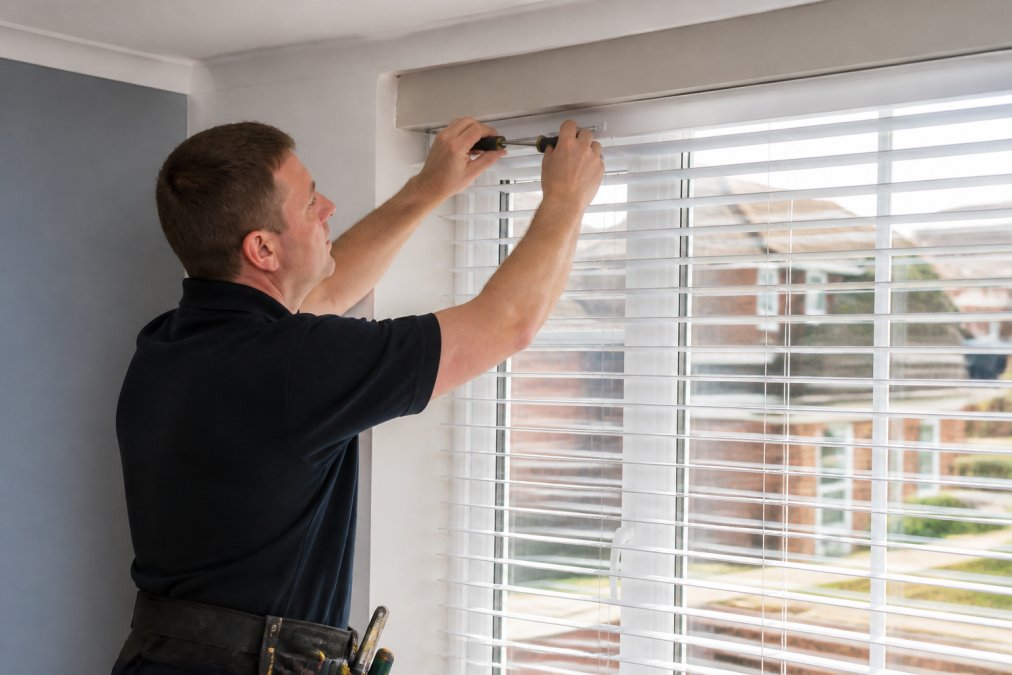
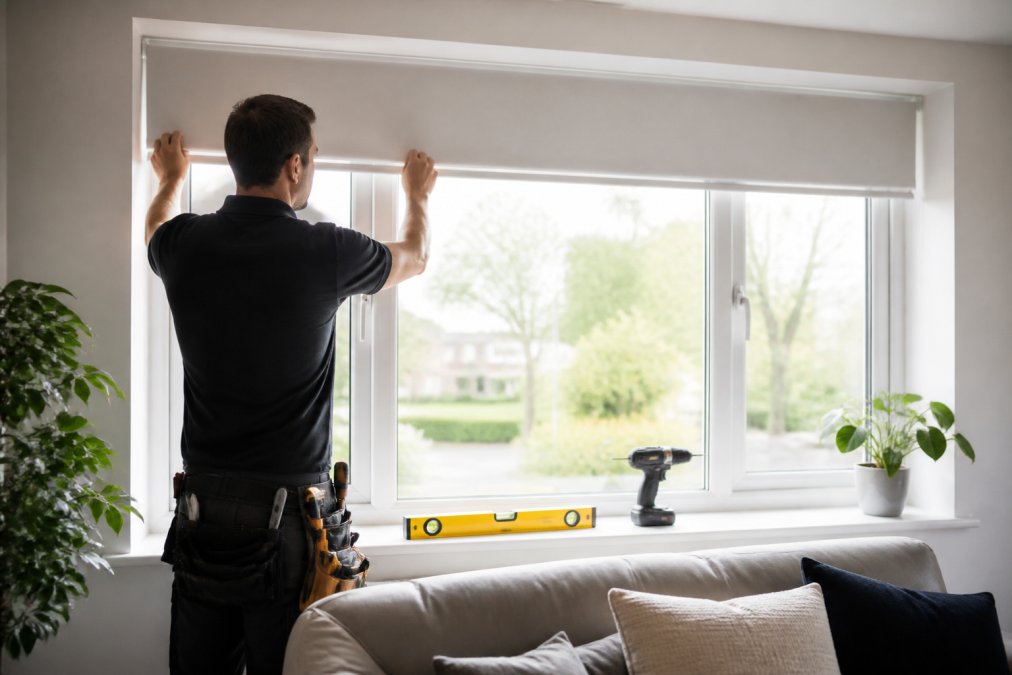
A professional blinds fitting north west service brings several distinct advantages beyond simply hanging a blind. The primary benefit is the assurance of a flawless finish, free from gaps, crooked lines, and operational issues. Professionals carry the correct fixings for various surfaces, including uPVC windows and plasterboard, ensuring a secure and durable mount that DIY kits rarely provide.
The Real Cost of Professional Blind Installation
The cost of professional blind installation is often far more competitive than homeowners expect, especially when you factor in the price of tools and the risk of mistakes.
Here is how the value typically breaks down:
- Materials: Measuring and cutting errors on made-to-measure blinds are almost always non-refundable.
- Tools: Drills, correct drill bits for masonry or uPVC, spirit levels, and fixings add to the DIY cost.
- Time: A professional can fit multiple blinds in a couple of hours, a task that can take a novice an entire day.
- Risk: Incorrectly fitted blinds can fall, damage window frames, or void manufacturer warranties.
:::\tip When budgeting for new window treatments, always factor in the potential cost of a mistake. If you are fitting more than two blinds, the cost of professional blind installation is usually offset by the peace of mind and the guarantee of a job done right. :::
How to Measure Windows for Blinds Accurately
Understanding how to measure windows for blinds accurately is the single most critical step in the entire process. A single mis-measurement on a made-to-measure blind is costly and non-refundable.
The Golden Rules Before You Start
- Use a metal tape measure. Fabric tapes stretch and give inaccurate readings. A 3-metre metal tape is ideal for most windows.
- Measure in millimetres. Most UK blind manufacturers, including Just Blinds, work in millimetres. Converting from centimetres or inches introduces rounding errors.
- Record every measurement immediately. Do not rely on memory, write each figure down as you take it.
- Measure twice, order once. If you are unsure of any measurement, take it again. It is far better to spend an extra five minutes than to order a blind that does not fit.
Inside Recess vs. Outside Recess: The Critical Decision
Before you measure, decide whether your blind will sit inside the window recess or outside, on the wall or frame above the window.
Inside Recess (Recess Fit):
- Pros: A neat, streamlined look that shows off the window frame. The blind sits flush with the wall, making it ideal for bay windows and windows with deep reveals.
- Cons: Requires a minimum recess depth of 50mm for most bracket types. If your recess is shallower, the blind will not fit inside.
- Measuring: Measure the width at the top, middle, and bottom of the recess. Record the narrowest measurement, this ensures the blind will slide in without catching. For the drop, measure the height on the left, centre, and right. Record the longest measurement to prevent light gaps at the bottom.
Outside Recess (Face Fit):
- Pros: Provides better light blockage and privacy, as the blind overlaps the window frame. It is also more forgiving of slightly uneven reveals.
- Cons: The blind protrudes from the wall, which may not suit all interior styles.
- Measuring: Measure the exact width and drop of the window frame. Add at least 50mm to the width (25mm each side) and 70mm to the drop to ensure full coverage. For blackout blinds, add more overlap, at least 75mm each side, to eliminate all light seepage.
Worked Example: A Standard North West uPVC Window
Consider a typical uPVC double-glazed window in a 1930s semi-detached house. The recess measures:
- Width: 1200mm at the top, 1198mm in the middle, 1201mm at the bottom.
- Drop: 1450mm on the left, 1452mm in the centre, 1451mm on the right.
For an inside recess fit, you would order a blind with a width of 1198mm (the narrowest) and a drop of 1452mm (the longest). This ensures the blind fits snugly without catching on the sides and reaches the bottom of the recess without leaving a gap.
For an outside fit, you would order a width of 1250mm (1200mm + 50mm overlap) and a drop of 1522mm (1452mm + 70mm overlap).
Bay Windows: The Trickiest Measurement
Bay windows are common in Victorian and Edwardian properties across the North West, and they present a unique challenge. You cannot simply measure the width of the entire bay, you must measure each window section individually.
- Measure each flat section of the bay as a separate window, using the inside recess method.
- For angled bay windows, measure the angle of each corner using an angle finder. Most blind manufacturers offer bay window blinds with angled headrails that match your exact measurements.
- If you are fitting vertical blinds on a bay window, measure each section's width and drop separately, and specify the angle of each corner when ordering.
:::\tip Bay windows are the most common source of measuring errors. If you have a bay window, it is worth booking a professional measuring service, the cost is minimal compared to the risk of ordering three or four blinds that do not fit the angles. :::
Common Measuring Mistakes to Avoid
- Assuming the window is square. Most uPVC and timber windows are slightly out of true. This is why you must take multiple measurements and use the narrowest width and longest drop for inside fits.
- Forgetting to account for window handles. If you are fitting an inside recess blind, check that the handle does not protrude further than the blind's depth. If it does, you will need to use face-fix brackets or order a blind with extra clearance.
- Measuring over the architrave. For outside fits, measure the window frame itself, not the surrounding architrave, unless you specifically want the blind to cover it.
- Not accounting for tiling. In bathrooms and kitchens, tiles often extend into the recess. Measure from the tile surface, not the bare wall behind it.
When to Call a Professional
If you have a bay window, a non-standard opening, or simply want the peace of mind of a guaranteed fit, a professional measuring service is the safest option. A professional fitter will bring a laser measure, check the window is level, and account for all the irregularities that a tape measure can miss. interior shutters guide.
Professional fitters across the North West routinely handle the quirks of period properties, from sash windows in Georgian terraces to modern uPVC installations in new-build estates.
Benefits of Professional Blind Fitting for a Flawless Finish
The benefits of professional blind fitting extend far beyond aesthetics, impacting the functionality and lifespan of your window treatments.
Professional fitting ensures brackets are anchored securely into the strongest part of the wall or frame, not just the plaster. This is particularly important for heavier materials like faux wood or wider blinds. A blind fitted correctly will not sag over time, and its mechanisms will function smoothly for years.
Blind Types, Materials and Safety Standards Explained
Selecting the right blind involves more than just colour and style; the material and mechanism must suit the room's function and comply with UK safety regulations.
Material Comparison: Choosing for the Room, Not Just the Look
The material you choose determines how your blind performs in the face of moisture, heat, sunlight, and daily wear. Here is how the main options stack up in real North West homes.
- Faux wood (PVC/Composite): The most practical choice for kitchens and bathrooms. Unlike real wood, it will not warp, swell, or discolour when exposed to steam and condensation. High-quality faux wood blinds are made from a dense PVC composite that resists cracking and fading. They are also heavier than aluminium or fabric, so they require secure fixings into brick or timber, a task where professional fitting ensures the brackets are anchored correctly.
- Real wood: Offers a premium, warm aesthetic that suits living rooms and dining rooms. However, real wood is porous and will absorb moisture, causing the slats to bow and the finish to peel in humid environments. It is best avoided in kitchens, bathrooms, and conservatories that are not temperature-controlled. Real wood also requires more careful cleaning, a dry microfibre duster only, never a wet cloth.
- Aluminium Venetian: A lightweight, durable option that is resistant to moisture and easy to wipe down. Aluminium is an excellent choice for bathrooms and kitchens if you prefer a slim, contemporary slat profile. The trade-off is that aluminium can dent if knocked and tends to conduct heat, making it less effective at thermal insulation than wood or fabric.
- Fabric (Roller, Roman, Vertical): Fabric blinds offer the widest range of colours, patterns, and light-filtering properties. For thermal efficiency, look for fabrics with a thermal or blackout coating. A blackout roller blind with a thermal backing can reduce heat loss through a single-glazed window by up to 25%, a significant saving in older North West properties. The main consideration with fabric is maintenance, it traps dust and odours, so regular vacuuming with a soft brush attachment is essential.
Thermal Regulation: A Unique Angle Most Fitters Ignore
In the North West, where homes are often exposed to wind and rain, the thermal performance of your blinds matters. The right blind acts as an insulating layer, trapping air between the fabric and the glass.
- Honeycomb (cellular) blinds are the gold standard for thermal regulation. Their unique cellular structure traps air in pockets, creating a barrier that keeps heat in during winter and out during summer. They are particularly effective on large, north-facing windows that lose heat rapidly.
- Blackout roller blinds with a thermal coating are a cost-effective alternative. The coating reflects heat back into the room, reducing reliance on central heating.
- Vertical blinds are less effective at insulation because the slats do not form a tight seal. However, they are often the only practical choice for large patio doors, where they allow easy access while still providing some draught-proofing.
When you book a professional fitting service, ask the fitter about the thermal properties of the materials you are considering.
Child Safety Compliance: The UK Standards You Must Know
Child safety is non-negotiable, and in the UK, it is governed by specific regulations that every blind supplier and fitter must follow. The key document is BS EN 13120:2009, the British Standard for internal blinds, which includes requirements for the safe operation of corded blinds (bsigroup.com).
Since 2014, all blinds sold in the UK must be supplied with the appropriate safety devices (gov.uk). This includes:
- Cord tensioners: These hold the operating cord or chain taut against the wall or window frame, preventing the formation of a loose loop that could pose a strangulation risk.
- Cord cleats: These are fixed to the wall at a height of at least 1.5 metres from the floor, allowing you to wrap the excess cord securely out of reach of young children.
- Breakaway connectors: These are designed to snap apart under pressure, releasing the cord if a child becomes entangled.
:::\warning If you have young children or grandchildren, never assume that a blind is safe just because it was purchased recently. Check that all looped cords are secured with a tensioner or cleat, and that the devices are fitted correctly. A professional fitting service will always install these devices as standard, and will also check the safety of any existing blinds you ask them to adjust. :::
A professional fitter will not only install the safety devices correctly but will also advise you on the safest blind type for each room. For nurseries and children's bedrooms, cordless or motorised blinds are the safest option, as they eliminate the loop hazard entirely. Many manufacturers, including Just Blinds, offer replacement headrails and cord safety kits that bring older blinds up to current UK safety standards.
Maintenance: Protecting Your Investment
The lifespan of your blinds depends on how well you maintain them. Here is a practical, room-by-room maintenance guide:
- Kitchens and Bathrooms: Wipe down faux wood and aluminium blinds monthly with a damp cloth and a mild detergent to remove grease and condensation marks. Avoid abrasive cleaners that can scratch the surface.
- Living Rooms and Bedrooms: Vacuum fabric blinds every two weeks using a soft brush attachment to prevent dust build-up. For deeper cleaning, check the manufacturer's label, some roman and roller blinds are dry-clean only.
- Vertical Blinds: Dust the slats regularly and spot-clean with a damp cloth. The slats are removable, so you can wash them in a sink with warm soapy water if they become stained.
- Mechanisms: Lubricate the chain and cord mechanisms annually with a silicone-based spray to keep them operating smoothly. Do not use oil-based lubricants, as they attract dust and can cause the mechanism to stiffen.
Avoiding Common DIY Fitting Mistakes
Even the most competent DIY enthusiasts make errors when fitting blinds. The most frequent mistake is using the wrong fixings for the wall type.
Another common issue is misalignment. Marking only one end of the bracket position and assuming the rest will follow often results in a blind that hangs at an angle. Other frequent errors include:
- Ignoring obstacles: Not accounting for window handles, pipes, or tiling that protrude further than the bracket depth.
- Incorrect bracket depth: Buying face-fix brackets when you need extra clearance for handles, or vice versa.
- Not pre-drilling: Trying to screw directly into hardwoods or uPVC without pilot holes, causing cracking or stripping.
- Forgetting the cord safety: Fitting blinds without installing the required cord cleats or tensioners.
:::\takeaway The most common DIY fitting mistakes all stem from a lack of preparation and the right tools. A professional service eliminates these risks entirely, ensuring your blinds are safe, level, and built to last. :::
Book Your Professional Blinds Fitting North West Service
When you search for professional blinds fitting north west, you are looking for a service that combines convenience with craftsmanship. Just Blinds offers a comprehensive solution, starting with made-to-measure blinds manufactured to your exact specifications and delivered across the UK.
Our service covers everything from a free home consultation to the final installation. We handle the complexities of custom sizing, ensuring your blinds fit your window recess perfectly, with no gaps for light to creep in around the edges. Whether you need moisture-resistant faux wood blinds for a bathroom, total blackout for a nursery, or durable vertical blinds for an office, our team will recommend and fit the right solution. We also offer replacement slats and headrails compatible with most existing systems, a cost-effective way to refresh your windows without a full replacement.
To book your professional blinds fitting north west service, contact our team today to arrange a free home consultation.
Getting the perfect window treatment is about more than just buying a blind; it is about ensuring it is fitted correctly for a flawless finish that lasts. From navigating the cost of professional blind installation to understanding how to measure windows for blinds accurately, the benefits of professional blind fitting are clear: safety, durability, and a polished look that DIY often fails to achieve. With Just Blinds, you get a dedicated team that measures, supplies, and installs your blinds, backed by our commitment to affordable prices and expert craftsmanship. Browse our full range of made-to-measure blinds and experience the difference of a professional touch. Get started with Just Blinds and enjoy perfectly fitted, high-quality blinds in your home.
Frequently Asked Questions
How much does it cost for someone to fit blinds?
The cost of professional blind installation varies depending on the number of windows and the blind type. While we can't quote a single industry-wide figure, our service provides expert fitting for your made-to-measure blinds, ensuring a flawless finish that protects your investment. For an accurate price tailored to your home, it's best to contact our team. We'll discuss your requirements and provide a clear, upfront price for professional fitting in your area.
Do blinds need to be professionally installed or can I DIY?
While DIY fitting is possible, professional blind fitting guarantees a flawless finish and ensures your blinds operate correctly for years. Incorrect installation can lead to gaps, uneven operation, or damage to your window recess. Our experts handle everything, from precise measuring to secure fitting on uPVC windows and other surfaces. Choosing professional installation also saves you time and avoids the frustration of fixing mistakes, making it a reliable choice for a quality result.
What are the benefits of choosing made-to-measure blinds?
Made-to-measure blinds are cut precisely for your windows, offering superior light control and privacy compared to off-the-shelf options. They eliminate unsightly gaps that let in light and reduce thermal efficiency. With custom sizing, you can achieve a perfect fit inside your window recess, which is especially important for bay windows or non-standard openings. This bespoke approach ensures a polished, professional look that enhances your interior design while providing the exact light control and privacy solutions you need.
How do I find a reliable blind fitter in my local area?
When searching for a reliable blind fitter in the North West, look for a company that offers a complete service, including a free home consultation, accurate measuring, and professional installation. Just Blinds provides exactly that: expert guidance from choosing the right blind to having it professionally fitted. We handle the entire process, ensuring your blinds are fitted securely and correctly, giving you peace of mind and a premium result without the hassle of coordinating separate suppliers.
This article was written using GrandRanker
