
Table of Contents
- Assessing the Damage to Your Venetian Blind Slats
- Tools and Materials You'll Need
- Step-by-Step Guide to Straightening Bent Slats
- How to Fix Uneven Venetian Blinds with Tilt Mechanism Adjustments
- Venetian Blind Slat Replacement Parts and When to Replace
- How to Replace Vertical Blind Slats
- Preventing Future Warping and Damage
- Common Mistakes to Avoid When Repairing Bent Slats
- Frequently Asked Questions
Last Updated: September 21, 2026
Assessing the Damage to Your Venetian Blind Slats
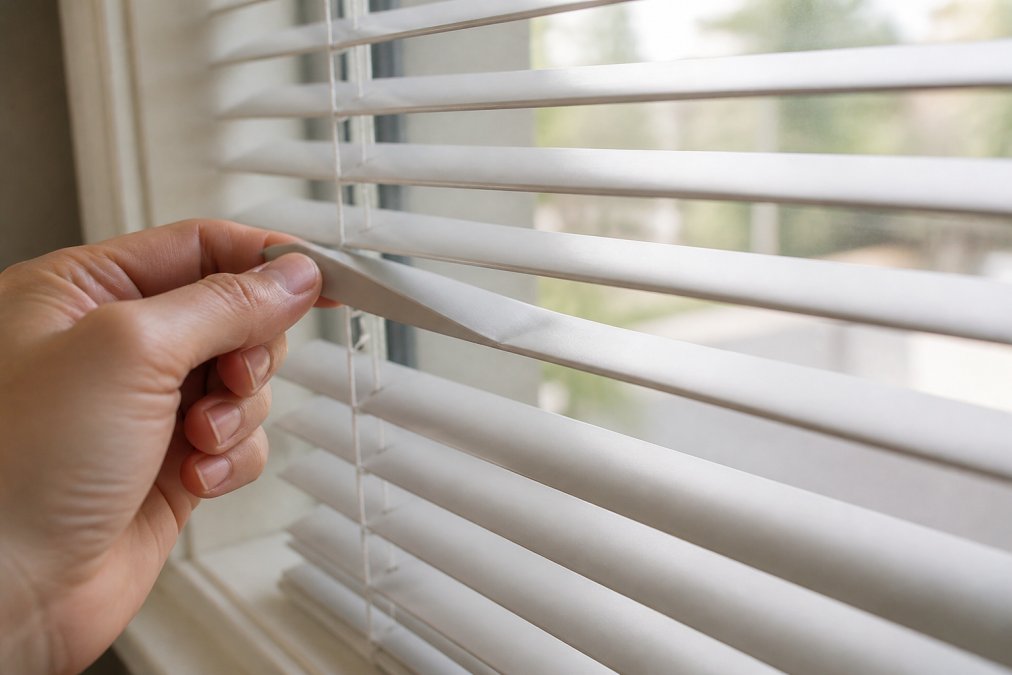
Bent venetian blind slats may be repairable depending on damage type and material. The key is assessing whether you have a minor crease or permanent structural damage.
Understanding damage types across different materials
Damage varies by material, aluminium, plastic, faux wood, and vinyl each respond differently to bending and heat, with some damage types irreversible in certain materials.
Aluminium slats show damage as sharp creases or dents. Minor dents (less than 2mm deep) are repairable, but creases perpendicular to the slat's length are often permanent, the metal grain breaks and won't spring back. A sharp ridge on the underside indicates fracture and permanent damage.
Plastic slats (PVC or acrylic) warp rather than crease.
Visual and tactile troubleshooting guide
Use this decision tree to assess your specific damage:
Step 1: Inspect the bend visually
- Smooth curve → Likely repairable
- Sharp crease or ridge → Permanent, especially in aluminium
- Visible cracks, splits, or splintering → Replacement required
- Twisted slat → Permanent damage; replace
Step 2: Run your finger along the underside
- Smooth curve → Temporary warp; manual pressure or heat will work
- Sharp ridge or crease → Permanent deformation; heat may help but results uncertain
- Rough texture, splinters, or cracks → Structural damage; do not repair
Step 3: Test the slat's flexibility Gently flex the slat by hand.
- Bends smoothly and returns to shape → Repairable
- Resists bending or feels stiff → Possible internal damage; replacement safer
- Makes cracking sounds → Structural failure; replace immediately
Step 4: Close the blinds and observe from the side Minor kinks don't disrupt the overall line. Permanent deformation creates obvious gaps, causes slats to stick out, or prevents full closure. Visible gaps indicate damage too significant for repair.
Checking structural integrity and mounting
Pull the slat gently downward, it should move smoothly without cracking sounds or splitting. Visible cracks in plastic require replacement; any structural weakness in faux wood or composite means replacement. Check mounting brackets; bent brackets must be straightened or replaced, or a newly straightened slat will bend again. Listen for grinding or clicking when tilting the mechanism; this suggests the slat is catching on rails or the tilt rod.
Tools and Materials You'll Need
Straightening bent venetian blind slats requires minimal equipment, depending on slat material and damage type.
Essential tools for all repair types
- Flat, clean surface (ironing board, kitchen counter, or table), Critical for reshaping. Ensure it's at least 30cm longer than your slat.
- Hair dryer (for heat application on plastic, aluminium, and vinyl), Set to medium heat only. High heat can permanently warp plastic or damage finishes.
- Greaseproof paper or parchment paper, Protects slats from direct heat damage and prevents discolouration. Use a double layer for extra protection.
- Soft cloth or towel, For wiping the slat before and after repair, and for applying manual pressure without scratching the surface.
- Measuring tape, Essential for confirming slat width (standard sizes are 16mm, 25mm, or 35mm). Measure the inner edge of the mounting brackets.
Material-specific tools
For aluminium slats:
- Wooden block (3-5cm thick), Distributes pressure evenly without denting.
- Soft-bristled brush, Clean before and after repair to prevent oxidation discolouration.
For plastic and vinyl slats:
- Rubber mallet (optional), Use only light taps; heavy blows can crack plastic.
- Protective gloves, Prevent burns during heat treatment.
For faux wood slats:
- Do not use heat or heavy pressure. Faux wood is composite material and will splinter or delaminate. If repair is necessary, use only gentle manual pressure over an extended period (several minutes).
Tools for slat removal and reinstallation
- Masking tape, Holds slats in place during reshaping and marks the correct orientation for reinstallation.
- Notepad and pen, Record the slat's position (e.g., "3rd from top") before removal. This prevents confusion when reinstalling, especially if you have multiple bent slats.
- Torch or mobile phone light, Helps you see inside the blind mechanism when removing or installing slats, especially in dimly lit rooms.
Sourcing replacement parts
If repair isn't viable, you'll need compatible replacement slats. This requires identifying your blind's system and material.
Identify the slat material. Your options are:
- Aluminium, Durable, lightweight; keep away from radiators.
- Plastic (PVC or acrylic), Lightweight, moisture-resistant, prone to warping in high heat.
- Faux wood, Heavier, more rigid; cannot be repaired if damaged.
- Vinyl, Soft, pliable, highly moisture-resistant; ideal for kitchens and bathrooms.
Order replacement slats matching your original material and width.
Step-by-Step Guide to Straightening Bent Slats
Using manual pressure and flat surfaces
Step 1: Remove the slat from the blinds
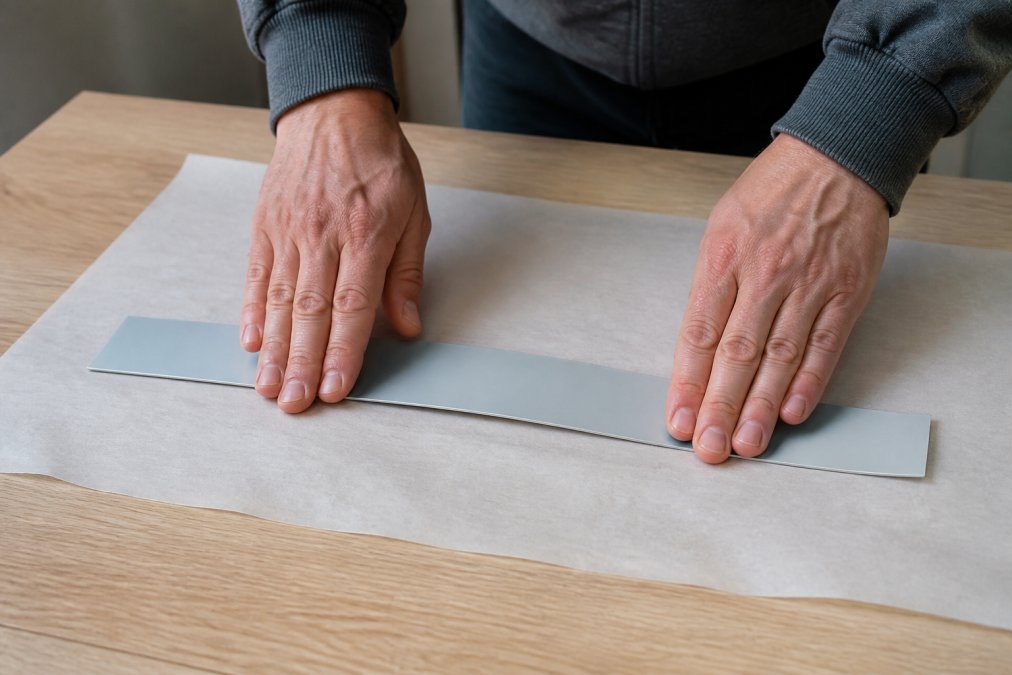
Open the blinds fully. Tilt the affected slat at an angle and slide it toward the center. If your blinds have a bottom rail, remove it first. Lay the slat on your flat surface with the bent section facing upward.
Step 2: Apply even pressure
Step 3: Check your progress
Applying gentle heat to reshape aluminum and plastic slats
Heat makes aluminium and plastic slats more pliable, especially for creases that manual pressure won't fix.
Step 1: Prepare the slat
Step 2: Apply heat carefully
Step 3: Reshape while warm
Step 4: Cool and check
How to Fix Uneven Venetian Blinds with Tilt Mechanism Adjustments
Bent slats sometimes cause the tilt mechanism to misalign, making blinds look uneven even after straightening. Check the cord lock (usually at the bottom) and ensure it's centered and not twisted. Loosen and retighten it to redistribute tension evenly. If the mechanism still feels stiff or uneven after straightening the slat, the internal mechanism may be damaged and requires professional repair or replacement.
Venetian Blind Slat Replacement Parts and When to Replace
Sometimes straightening isn't enough. Permanent deformation, cracks, or structural damage means replacement is your best option.
Sourcing compatible replacement slats
Replacement slats must match your blind's rail system. Slats from different manufacturers rarely fit together.
Removing and installing individual slats
Removal: Open the blinds fully. Tilt the damaged slat at a 45-degree angle and slide it toward the centre. Installation: Slide the new slat into the brackets at an angle, then rotate it flat. Test the tilt mechanism; the new slat should move smoothly with the others.
How to Replace Vertical Blind Slats
Vertical blind slats hang independently and are easier to replace. Locate the top rail where slat hooks attach. Unhook the damaged slat by lifting and sliding it away. Slide the new slat into place, aligning the hook with the rail slot. Ensure the new slat matches the original length, vertical slats must be cut to exact window height. Just Blinds offers made-to-measure replacement slats.
Preventing Future Warping and Damage
Bent venetian blind slats are often preventable with basic care.
Common Mistakes to Avoid When Repairing Bent Slats
Most repair failures happen because of rushed technique or wrong assumptions about the damage.
Frequently Asked Questions
Can you repair permanently creased venetian blind slats, or do they need replacing?
Minor creases and kinks in venetian blind slats can often be repaired using heat and manual pressure, especially in aluminum and plastic materials. However, if a slat has deep permanent creasing that affects how it tilts or sits flat, replacement is usually the better option. Bent slats that won't straighten properly compromise the blind's appearance and light control. Just Blinds offers replacement venetian blind slat replacement parts compatible with most rail systems, making it straightforward to swap individual damaged slats rather than replacing the entire blind.
What tools do I need to straighten bent window blinds at home?
You'll need a hair dryer or heat gun for warming plastic and aluminum slats, a flat surface like an ironing board or table, greaseproof paper to protect against heat damage, and gentle hand pressure or a soft cloth for reshaping. For removal, a small flathead screwdriver helps release slats from the bottom rail. If you're replacing slats entirely, you may need a step ladder to access the mounting brackets. Most of these items are already in your home, making DIY repair straightforward and cost-effective.
Why do venetian blind slats bend and warp in the middle?
Venetian blind slats bend due to uneven tension from the cord lock or tilt mechanism, prolonged heat exposure near windows, or moisture absorption in plastic and vinyl materials. Aluminum slats can develop kinks from impact or misalignment in the bottom rail. Warping often occurs when blinds are exposed to direct sunlight for extended periods, causing thermal stress. Proper maintenance, including regular dusting and avoiding excessive heat, helps prevent deformation. If your blinds consistently bow in the middle, the tilt mechanism may need adjustment to distribute tension more evenly.
Is it better to repair or replace bent blind slats?
Repair is worth attempting for minor kinks and creases that don't affect the blind's functionality. However, if a slat is permanently warped, severely dented, or no longer tilts properly, replacement is more practical. A single damaged slat can be replaced affordably without replacing the entire window treatment. Just Blinds supplies individual replacement slats that work with most standard rails, including those from Hilarys, Argos, and Dunelm. Replacement is especially recommended if the blind is relatively new and the damage is isolated to one or two slats.
