
Table of Contents
- What Are Roller Blinds and Why They Work for Most Homes
- How to Measure for Roller Blinds Accurately
- Blackout Roller Blinds for Bedrooms and Nurseries
- Made-to-Measure vs Ready-Made Roller Blinds
- Fabric Types: Light Filtering, Sunscreen, and Thermal Options
- Fitting Roller Blinds: Installation Steps and Mechanisms
- Energy Efficiency and Long-Term Durability
- Frequently Asked Questions
Last Updated: September 28, 2026
What Are Roller Blinds and Why They Work for Most Homes
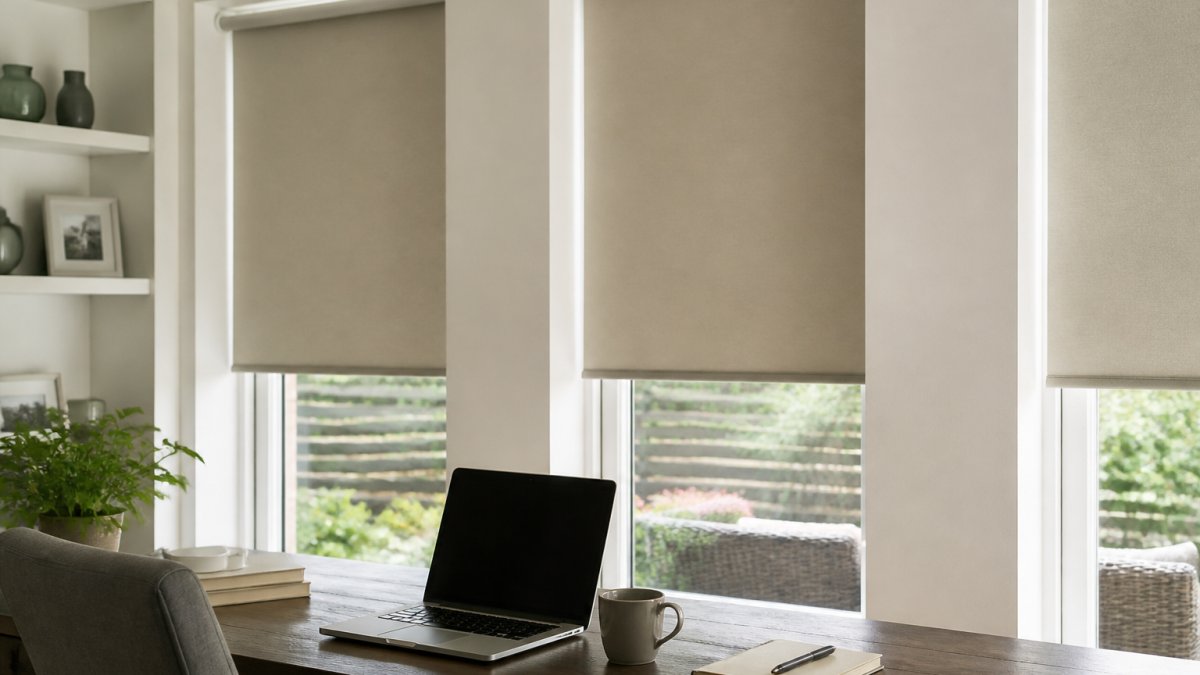
Roller blinds are window coverings that roll up and down on a spring mechanism or motorized system, offering simple light control and a clean aesthetic for any room. They're among the most versatile window treatments available because they work in virtually any space, from bedrooms to offices, and come in styles ranging from sheer light-filtering fabrics to complete blackout options.
The appeal is straightforward. Unlike traditional curtains that require regular washing or venetian blinds with fiddly slats, roller blinds operate with minimal fuss. You pull a cord, press a button, or set them on a schedule. They take up minimal space when raised, leaving your windowsill clear. And because they come in made-to-measure and ready-made options, you can find a solution whether you're renovating a single room or outfitting an entire property.
Homeowners choose roller blinds most often when they need reliable light control without visual clutter. Parents fitting nurseries want blackout versions for daytime naps. Office managers need cordless options for safety and professionalism. Renters appreciate the clean lines and ease of installation. The fabric you select, whether light filtering, sunscreen, or thermal, determines how much privacy and temperature control you get.
The real advantage comes down to flexibility. A single roller blind design works across bay windows, standard recesses, and even sloped ceilings with the right measurement approach. That's why understanding how to measure accurately and choose the right fabric type matters far more than picking a specific brand.
How to Measure for Roller Blinds Accurately
Getting measurements right is the difference between blinds that fit perfectly and ones that leave gaps or hang awkwardly. Most measurement mistakes happen because people measure inconsistently or confuse recess fit with face fit. The process itself takes ten minutes per window, but it determines whether your roller blinds will actually do their job.
Recess Fit vs Face Fit Measurement
Recess fit means the roller blind sits inside the window frame, while face fit means it mounts on the wall or frame exterior. Choose recess fit when you have a deep, clean window reveal and want a flush, built-in appearance. Choose face fit when your reveal is shallow, your frame is uneven, or you want the blind to cover the entire wall area around the window for maximum light control.
Recess fit blinds must be slightly narrower than your window opening, typically 5-10mm narrower, so they slide freely without catching. Face fit blinds should extend at least 50-75mm beyond the window frame on each side to prevent light leakage around the edges. This distinction changes your entire measurement approach.
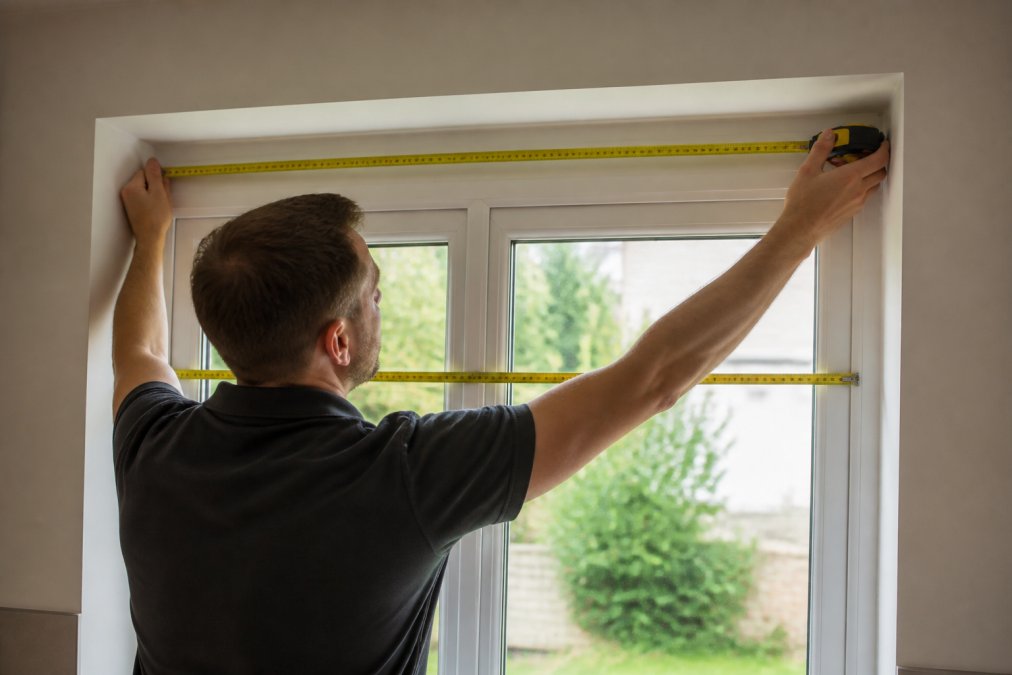
For recess fit, measure the width at the top, middle, and bottom of the opening. Windows are rarely perfectly square, so the smallest measurement is your blind width. For face fit, measure from the wall or existing trim where your brackets will mount, accounting for how far you want the blind to extend beyond the frame.
Recording Drop Length and Blind Width
Drop length is how far your blind travels from top to bottom. Measure from where your bracket will sit down to your desired stopping point, typically the windowsill or slightly below. Again, take measurements at the left, centre, and right of the window. Use the longest measurement for recess fit blinds (they'll stop at the sill naturally) and the shortest for face fit (to avoid the blind hitting the frame).
Write everything down immediately. Take photos of your measurements on your phone. Don't trust memory, window dimensions vary room to room, and mistakes discovered after your made-to-measure blinds arrive cost time and money to correct.
Blackout Roller Blinds for Bedrooms and Nurseries
Blackout roller blinds serve a specific purpose: they block virtually all light, making them essential for bedrooms, nurseries, and shift workers who sleep during daylight. The fabric is densely woven with a light-blocking backing layer that prevents even thin slivers of light from creeping around the edges.
The effectiveness depends on installation. A blackout blind mounted as face fit, extending well beyond the frame, will perform far better than a recess fit version, because less light sneaks in around the sides. In nurseries, blackout blinds help establish consistent sleep routines and protect young eyes from harsh morning light. For parents, they're often non-negotiable.
Blackout fabrics are specifically engineered for total darkness, which matters when you're trying to help a child sleep through summer mornings. The trade-off is that blackout fabric is heavier and slightly stiffer than light-filtering alternatives, so the spring mechanism must be strong enough to handle the weight. This is why specification matters, a lightweight spring mechanism won't reliably raise and lower a heavy blackout blind over time.
Made-to-Measure vs Ready-Made Roller Blinds
Ready-made blinds come in standard sizes and are available immediately, ideal if you have common window dimensions and need something fast. Made-to-measure blinds are cut and assembled to your exact specifications, ensuring a perfect fit even for unusual windows, bay windows, or angled frames.
The cost difference varies, but made-to-measure typically costs more because each blind is individually manufactured rather than mass-produced. However, the investment often pays back through longevity. A made-to-measure blind fitted correctly lasts significantly longer because it's not fighting against a frame that doesn't quite fit. Ready-made blinds may require additional brackets or spacers to fit properly, which adds complexity and can compromise the mechanism over time.
For most homeowners, made-to-measure is worth the investment if your windows are non-standard or if you're furnishing multiple rooms where consistency matters. Ready-made works well for straightforward rectangular windows where you don't mind minor gaps or where you're replacing a blind temporarily.
Fabric Types: Light Filtering, Sunscreen, and Thermal Options
Your fabric choice determines how much light enters, how much heat you retain, and how easy the blind is to maintain. Light-filtering fabrics allow diffuse daylight through while maintaining privacy, ideal for living rooms and kitchens where you want natural light without direct glare. Sunscreen fabrics block more light and UV rays while still allowing a view outside, making them popular for offices and south-facing rooms. Blackout fabrics block virtually all light and are essential for bedrooms and nurseries.
Thermal linings add insulation value, helping retain warmth in winter and reflect heat in summer. They're particularly useful in older properties with single-glazed windows or rooms where temperature control is difficult. The trade-off is weight, thermal blinds are heavier, so they require a stronger spring mechanism or motorized operation.
Fabric texture and opacity also matter for aesthetics. A smooth, tightly woven fabric looks more contemporary, while textured fabrics add warmth and hide dust better.
Fitting Roller Blinds: Installation Steps and Mechanisms
Installing roller blinds correctly ensures smooth operation and longevity. The process varies slightly depending on whether you're doing recess fit or face fit, but the fundamental steps are the same: position brackets, secure them firmly, insert the blind, and test operation.
Bracket Installation and Spring Mechanism Setup
Start by positioning your brackets exactly where they belong, typically 20-30mm from the top of the window frame for recess fit, or on the wall above the frame for face fit. Use a spirit level to ensure brackets are perfectly horizontal. Uneven brackets cause the blind to bind or operate unevenly.
Cordless and Motorized Options
Cordless roller blinds eliminate dangling cords, making them safer for homes with children and pets. Instead of a cord, you simply grasp the bottom bar and pull down to lower the blind, then release to stop it. They require no mechanism adjustment and operate reliably for years.
Energy Efficiency and Long-Term Durability
Roller blinds contribute meaningfully to home energy efficiency. Thermal-lined blinds reduce heat loss through windows by up to 20 percent in winter, while reflective sunscreen fabrics reduce solar gain in summer. Closing blinds at night insulates your home; closing them during the day blocks heat before it enters. This is particularly valuable in period properties or homes with poor window insulation.
| Fabric Type | Light Control | Best For | Maintenance |
|---|---|---|---|
| Light Filtering | Diffuse daylight, privacy | Living rooms, kitchens | Dust monthly |
| Sunscreen | Blocks UV, view outside | Offices, south-facing rooms | Dust monthly |
| Blackout | Total darkness | Bedrooms, nurseries | Dust monthly |
| Thermal Lined | Insulation + light control | Period homes, heat loss areas | Dust, avoid moisture |
Frequently Asked Questions
How do I measure my windows for made-to-measure roller blinds?
Measure the width at the top, middle, and bottom of your window opening in millimetres, recording the smallest measurement. For drop length, measure from where your brackets will sit to your chosen endpoint (sill or floor). If fitting inside the recess, measure the depth to ensure clearance. Record measurements to the nearest millimetre. Many suppliers, including Just Blinds, provide free measuring guides and support to help you get accurate dimensions before ordering.
Are blackout roller blinds dark enough to block all light in a nursery?
Quality blackout roller blinds with proper blackout fabric and well-fitted brackets eliminate most light, though some seepage around edges is common in very bright conditions. Thermal-lined blackout options offer additional insulation and light blocking. For maximum darkness in a nursery, ensure your blinds are fitted snugly with minimal gaps, and consider pairing them with blackout pelmet boxes. Just Blinds's blackout fabrics are designed specifically for bedrooms and nurseries where complete darkness matters.
What's the difference between light filtering and sunscreen roller blinds?
Light filtering blinds allow soft, diffused daylight through while maintaining privacy, ideal for living areas. Sunscreen blinds reduce glare and UV damage whilst still providing an outside view, making them popular for offices and kitchens. Blackout blinds block nearly all light and are best for bedrooms and nurseries. Your choice depends on the room's purpose and your need for privacy versus natural light.
Can I fit roller blinds myself, or do I need professional installation?
Most roller blinds can be fitted by homeowners using basic tools if you follow instructions carefully. Installation typically involves securing brackets to your window frame or wall, then inserting the blind roller. Motorized or complex systems may benefit from professional fitting. Just Blinds provides clear fitting guidance with every order, and many customers successfully install their own blinds. If you're uncertain or have bay windows requiring precise angles, professional fitting ensures optimal performance and warranty protection.
