
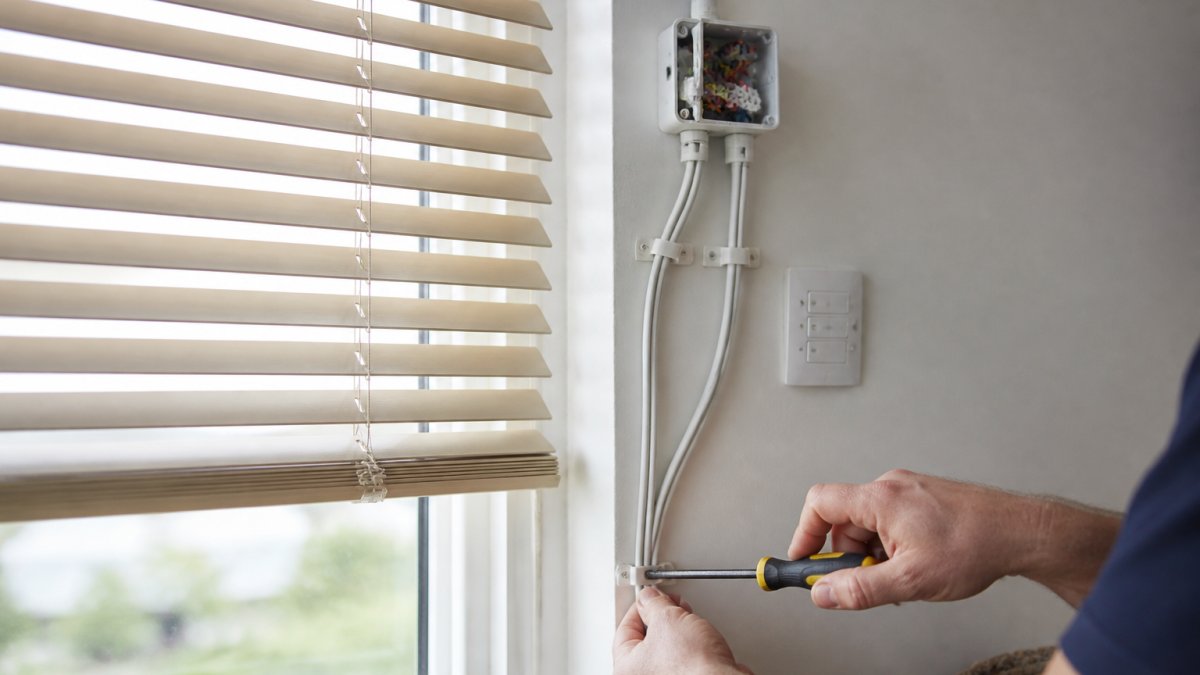
Last Updated: October 24, 2026
Quick Summary
Battery-powered smart blinds are the best alternative to hardwired smart blinds, needing no in-wall wiring and pairing with a remote or app for scheduling and voice control. Solar-assisted motors, retrofit kits and manual made-to-measure blinds also cover most of what hardwiring was needed for. Ask for the manufacturer's stated charge interval at your exact window size before buying.
- Battery and solar blinds keep working in a power cut because the motor runs on its own cell.
- Solar charging only helps where the headrail panel sees genuine daylight, so treat it as an aid.
- Hardwiring is the only route that reliably needs a qualified electrician plus making good and redecoration.
- Roller and Venetian blinds retrofit well, but Roman and pleated blinds often do not.
- Our made-to-measure Day and Night blinds start at £64.82, well below most motorised systems before installation.
Table of Contents
- Why Buyers Look for Alternatives to Hardwired Smart Blinds
- Motorised Blinds Without Wiring: The Main Options Compared
- Battery-Powered Smart Blinds: What to Expect Day to Day
- Solar-Powered Motorised Blinds: Do They Really Work Indoors?
- Motorised Blinds Pros and Cons Before You Commit
- Retrofit Motors and Manual Blinds That Still Do the Job
- Total Cost of Ownership: What Each Route Really Costs
- Choosing Made-to-Measure Blinds for Your Windows
- Frequently Asked Questions
Why Buyers Look for Alternatives to Hardwired Smart Blinds
Hardwired smart blinds solve a problem most people do not have: a permanent power supply at the window.
At Just Blinds, we speak to buyers every week who want motorised light control without that disruption. The reasons stack up predictably:
- Rental properties. You cannot chase walls in a home you do not own.
- Period and listed homes. Cabling and trunking change the fabric of the building.
- Solid or rendered walls. Cable runs become messy and expensive.
The alternatives have caught up. Battery-powered smart blinds, solar-assisted motors, retrofit kits and well-chosen manual blinds now cover most of what hardwiring used to be needed for. Below, we compare the routes honestly, including running costs and the trade-offs most roundups skip.
Motorised Blinds Without Wiring: The Main Options Compared
Motorised blinds without wiring fall into four families: battery-powered, solar-assisted, retrofit motors fitted to existing blinds, and manual blinds chosen for their light control. Each solves a different problem, and none is universally best. What most roundups skip is what buyers actually argue about: how often you will be up a step stool with a charging cable, and what happens when the power or the Wi-Fi drops.
Battery, Solar, Retrofit and Manual at a Glance
| Option | Power Source | Best For | Main Trade-Off |
|---|---|---|---|
| Battery-powered smart blinds | Rechargeable lithium battery in the headrail | Renters, retrofits, no electrician needed | Periodic recharging; battery ages |
| Solar-powered motorised blinds | Small photovoltaic strip plus battery | Bright, south-facing windows with long daylight hours | Panel needs genuine daylight to top up |
| Retrofit motor kits | Battery motor driving existing tube or tilt mechanism | Keeping current blinds and rails | Compatibility varies by blind type and tube size |
| Plug-in low-voltage motors | Mains via a low-voltage transformer and cable | Windows near a socket, where a discreet cable is acceptable | Visible cable; still needs a socket |
| Manual made-to-measure blinds | None | Budget projects, instant control, nurseries | No app or voice control |
Power Sources Compared Honestly
Replaceable batteries (typically AA or D-cell packs). The cheapest entry point and simplest long term, because you swap cells rather than wait for a built-in pack to charge.
Rechargeable lithium packs. Usually built into or clipped onto the headrail and charged by USB-C.
Solar-assisted charging. A small photovoltaic strip on the headrail trickles charge into the battery, but only where the panel sees real daylight.
Plug-in low-voltage power. A transformer plugs into a nearby socket and feeds the motor at low voltage.
Real-World Battery Life: What Actually Shortens It
Battery life is not a single number. The variables that matter most are window size, fabric weight, daily movements and motor efficiency. A small light-filtering roller used twice a day will comfortably outlast a full-height blackout blind on a bay window used six times a day.
A sensible rule: ask for the manufacturer's stated charge interval for your exact size, then assume a little better in summer and a little worse in winter.
Outage and Connectivity Behaviour
This is where non-hardwired systems differ sharply, and where the questions are worth asking before you pay:
- Power cut. Battery and solar blinds keep working because the motor runs on its own cell. Plug-in and hardwired blinds stop unless they have a manual override.
- Wi-Fi or hub outage. Bluetooth-only systems usually keep working from the remote or app nearby; hub-dependent systems may lose scheduling and voice control until the network returns.
- Flat battery. Every decent system allows manual operation by hand. Confirm this, and confirm how easy the headrail is to reach.
If you want concrete recommendations and real-world performance notes for bedrooms, our guide to the best battery operated blinds for bedrooms covers exactly that.
Battery-Powered Smart Blinds: What to Expect Day to Day
Battery-powered smart blinds run on a rechargeable battery built into the headrail, so they need no in-wall wiring at all. They pair with a remote or smartphone app, and most support scheduling and voice control through a hub.
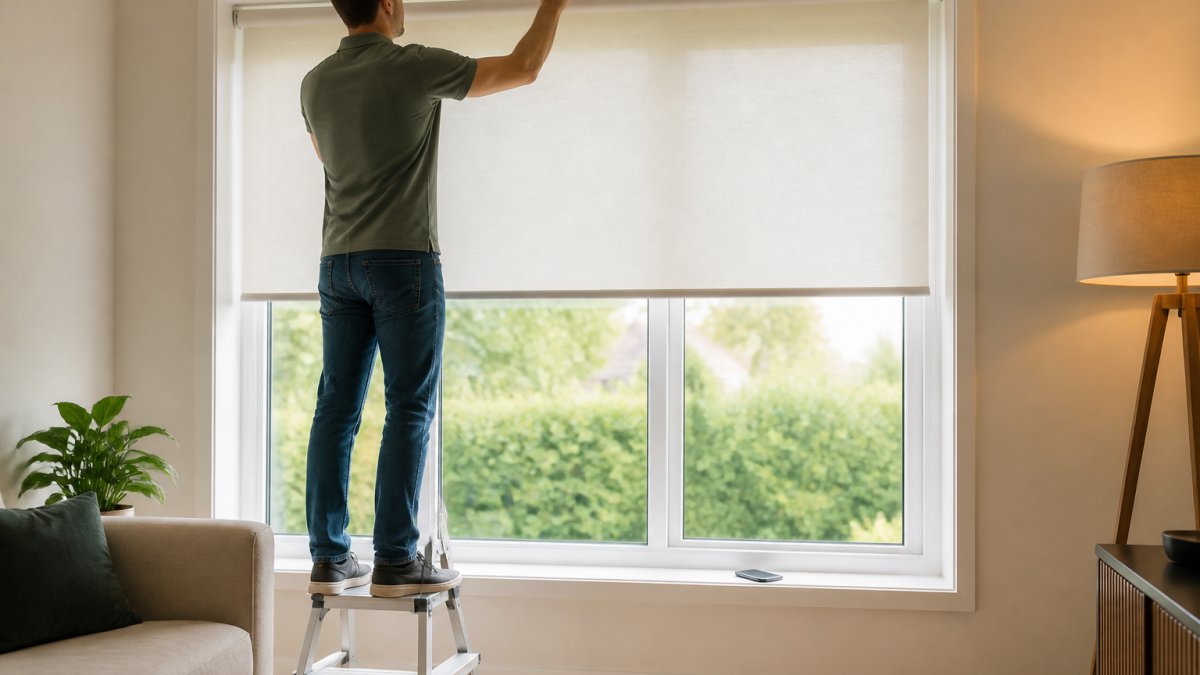
In practice:
- Charging frequency is the real variable. Larger windows and heavier fabrics draw more power, so a wide blackout roller will need charging more often than a small light-filtering blind. Ask for the manufacturer's stated charge interval for your exact size.
- Motor noise matters in bedrooms. Quieter motors are worth paying for if the blind sits beside a cot or bed.
- Manual override is not optional. Every decent system lets you operate the blind by hand during a power cut or a flat battery. Check this before buying.
Solar-Powered Motorised Blinds: Do They Really Work Indoors?
Solar-powered motorised blinds work indoors, but only where the panel receives genuine daylight. A small photovoltaic strip on the headrail tops up the battery, reducing manual charging.
The catch is placement. North-facing windows, heavy blackout fabrics and deep reveals all limit how much light reaches the panel, so the solar element becomes a bonus rather than a replacement for charging.
Motorised Blinds Pros and Cons Before You Commit
Motorised blinds pros and cons come down to convenience versus dependency. The benefits are real: scheduled opening for privacy and daylight, effortless control of high or awkward windows, and voice control that ties into home automation.
The drawbacks deserve equal billing:
White Day and Night Blinds Made To Measure in Ice White →
- Batteries age. Rechargeable cells lose capacity over years, and replacement depends on the manufacturer's support.
- Wireless reliability varies. Thick walls and crowded Wi-Fi can interrupt app control; a hub often fixes it.
- Repairability is uneven. Ask what happens if the motor fails in year four, and whether parts are stocked.
None of these are deal-breakers. They are questions to ask before you pay, not after.
Retrofit Motors and Manual Blinds That Still Do the Job
A retrofit motor is a battery-powered unit that drives your existing blind's roller tube or tilt mechanism, letting you keep the blinds and rails you already own.
Manual blinds remain a serious option, not a compromise. A well-specified made-to-measure blind with a child-safe control cleat gives you precise light filtering, room darkening and privacy with zero charging, zero apps and zero connectivity risk.
Total Cost of Ownership: What Each Route Really Costs
Total cost of ownership separates the routes far more than the sticker price does. Hardwired blinds carry an electrician's bill and possible making good; battery blinds carry charging time and eventual battery replacement; manual blinds carry neither. Most roundups stop at the purchase price, which is why buyers are surprised later.
The Cost Categories That Matter
| Cost category | Hardwired | Battery / solar | Retrofit motor | Manual made-to-measure |
|---|---|---|---|---|
| Blind or motor purchase | Highest | Moderate | Lowest (keep existing blind) | Moderate |
| Electrician labour | Yes, chasing, first fix, making good | None | None | None |
| Charging or battery cost | None | Periodic cells or charging time | Periodic cells or charging time | None |
| Hub or bridge | Often required | Sometimes required | Sometimes required | None |
| Installation | Trades plus blind fitter | DIY or fitter | DIY | DIY or fitter |
| Maintenance and repair | Motor and wiring | Motor and battery | Motor and battery | Cords and mechanisms |
| Reversibility (renters) | Poor | Excellent | Excellent | Excellent |
Electrician Labour and Making Good
Hardwiring is the only route that reliably requires a qualified electrician, and the cost is not just the visit, it is chasing cable runs into finished walls, adding or extending a circuit, then making good and redecorating. In a finished room, that making-good bill can rival the cost of the blind itself; in a rental, it is usually not permitted at all.
Batteries, Charging and Hubs
Battery-powered blinds trade the electrician's bill for a running cost. Replaceable cells are a modest but recurring expense; rechargeable packs cost nothing per charge but eventually need replacing, and availability depends on the manufacturer's support. Add a hub or bridge for whole-house scheduling and voice control, and add the value of your own time if you are charging four blinds every few months.
Maintenance and Repair Allowance
Motors, batteries and wireless modules are the parts most likely to fail, and repairability varies widely. Before buying, ask whether the motor is replaceable, whether spares are stocked, and what the warranty covers. Manual blinds are not maintenance-free, cords, cleats and mechanisms wear, but the parts are inexpensive and widely available, which is why they remain the lowest-risk long-term buy.
A Worked Comparison
Take a typical living-room window. A hardwired motorised blind carries the blind price plus an electrician's visit, cable, containment, making good and redecoration.
The pattern is consistent: the more wiring you remove, the more of the cost moves from trades to your own time and small recurring purchases.
For a like-for-like comparison, our breakdown of made to measure vs ready made blinds sets out the cost and value of each approach. If you are weighing whether made-to-measure is worth it at all, this guide on whether made to measure blinds are expensive answers that directly.
Our own made-to-measure Day and Night blinds start at £64.82, which puts a full manual room refresh well below the cost of most motorised systems before installation is even counted.
Choosing Made-to-Measure Blinds for Your Windows
Made-to-measure blinds are cut to your exact window dimensions, so they fit the recess properly and control light at the edges where ready-made sizes leave gaps.
For a full walkthrough of measuring, fabrics and options, our made to measure blinds buying guide covers the whole process. When you are ready to order, the Steel Grey Day and Night blind is a strong neutral choice for living rooms and bedrooms alike.

A common mistake is measuring the recess at one point only. Width and drop can vary by several millimetres across an older window, so measure at the top, middle and bottom and use the smallest figure.
Frequently Asked Questions
Can smart blinds run on batteries instead of being hardwired?
Yes. Battery-powered smart blinds use a built-in rechargeable lithium battery rather than in-wall wiring, so no electrician is needed and nothing has to be chased into the plaster. Charging frequency depends on how often the blind moves and the size of the window, with larger, heavier blinds drawing more power. The trade-off is that you need to remember to recharge, and battery performance drops in cold conditions. For most bedrooms and living rooms, a rechargeable battery is the simplest route away from hardwired smart blinds.
What are the downsides of motorised blinds?
The main drawbacks are cost, dependence on power and repairs. Motorised blinds pros and cons usually come down to price: a motor adds to the cost of any blind, and if the motor fails out of warranty you may be replacing a whole headrail rather than a cord. Battery models need periodic charging, and hardwired models need an electrician. Motor noise varies between models, so check reviews before buying for a bedroom. Manual blinds avoid all of this but lose scheduling and voice control.
Are solar-powered motorised blinds reliable for everyday use?
Solar-powered motorised blinds work best where the panel gets direct daylight, which usually means a south or west-facing window. On a shaded or north-facing window the panel may not generate enough to keep the battery topped up, so you fall back to manual charging. Treat solar as a helper rather than a replacement for charging. If your window gets strong sun for several hours a day, solar charging can noticeably cut how often you need to plug the blind in.
Are manual blinds a good alternative to smart blinds?
For many rooms, yes. A made-to-measure Day and Night blind gives you adjustable light control through two layers of translucent and opaque fabric, and costs from £64.82 at Just Blinds. You lose scheduling and voice control, but you also lose batteries, apps, hubs and motor repairs. Manual blinds suit guest rooms, box rooms and rentals where the fitting has to be reversible. Keep smart controls for the rooms you actually automate, such as a nursery or a living room.
What should I consider when choosing smart blinds for each room?
Match the power source to the window and the room to the control. Bedrooms and nurseries benefit from blackout and quiet operation, so check motor noise before buying. Bathrooms and kitchens need moisture-resistant fabrics, where faux wood and wipe-clean materials work well. Rooms with direct sun suit solar charging. For rentals, choose options that need no screws, such as a Neat Fit pleated blind from £19.59, which fits UPVC windows and doors without tools.
The real challenge is not finding a smart alternative to hardwiring; it is choosing the right one for each window without overpaying for features you will not use. At Just Blinds, we make made-to-measure blinds to your exact dimensions, with child-safe controls, blackout and Day and Night options for genuine light control, and free delivery on orders over £175. Get started with Just Blinds and specify blinds that fit your windows and your budget the first time.

